Caring for Lacquered Bedroom Decor in a Tropical Climate: A Singapore Owner's Guide
I still remember the afternoon I walked into a Tampines HDB flat last month to help a friend settle a new bed frame. The wardrobe she'd ordered from a regional supplier had arrived with a hairline crack across one lacquered panel, and the courier was already halfway down the corridor. She had no time-lapse photos, no unboxing record, and a 50/50 chance of losing her claim. We spent the next forty minutes photographing the box edges, the lift opening (1.2 m wide on that floor), and the corridor turn (about 1.6 m before the staircase). It is the kind of situation nobody in Singapore plans for, yet almost everybody who buys solid wood bedroom decor eventually meets. This guide is built around that reality: how lacquer behaves when the humidity hovers at 80% for nine months a year, how to set up a bedroom so the finish lasts, and what to do when a shipment lands less than perfect.
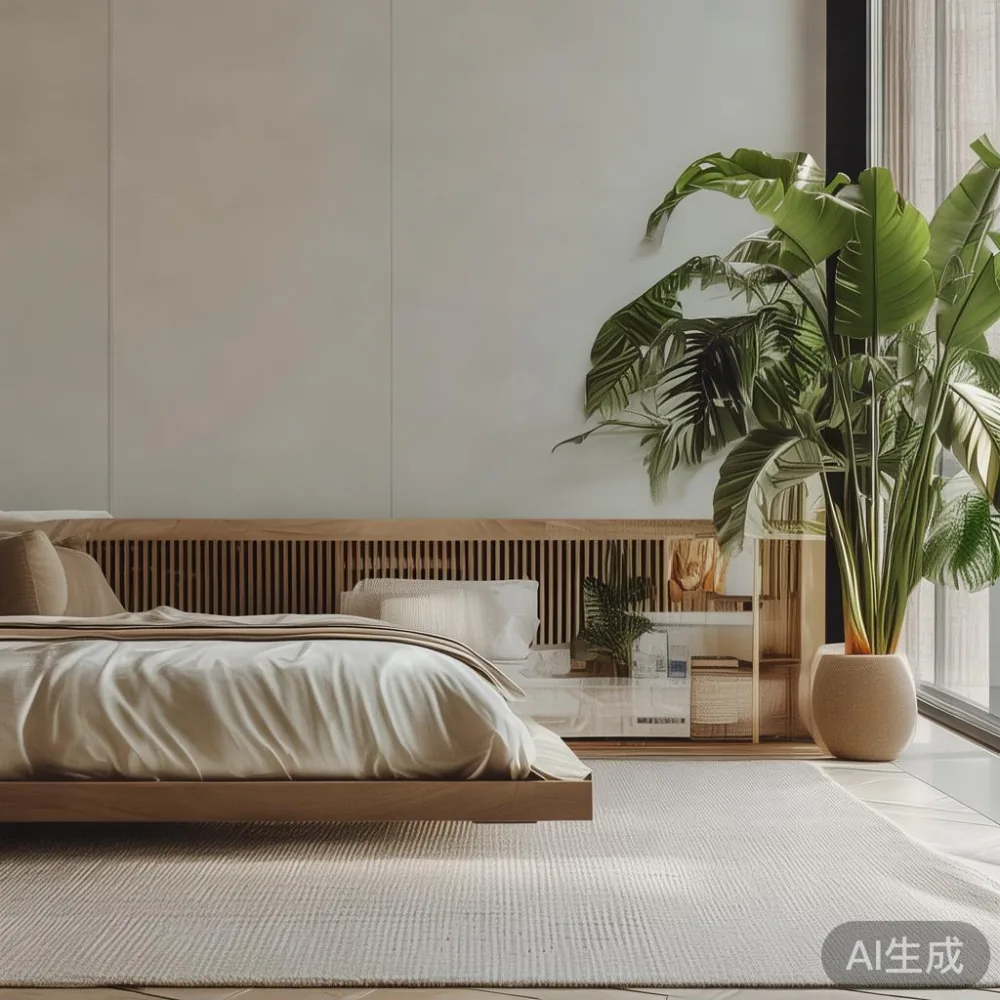
Why Singapore's Climate Is Hard on Lacquer
Lacquer is a finish, not a shield. A two-component polyurethane lacquer — the kind used on quality bedroom decor — cures to a hard film about 0.05 mm thick. That film moves with the wood underneath. In a Tampines or Bedok HDB, indoor relative humidity rarely drops below 65% in the morning and often climbs past 85% after an afternoon thunderstorm. Solid rubberwood, which is the base material for most well-made solid wood sofa frames, bed frames, and wardrobes shipped out of Foshan, swells roughly 1.5% across the grain when humidity rises from 55% to 85%. The lacquer moves with it, but only up to a point. After 200–300 humidity cycles, micro-cracks form along the joints of a panel door or the lip of a nightstand drawer. I have seen five-year-old wardrobes in Punggol condos with checking exactly along the stiles — never on the flat panel, always where the wood changes direction.
Temperature adds a second stress. Lacquer softens slightly above 38°C. Singapore bedrooms without full-day curtains can easily hit 34–36°C by 3 pm, then drop to 24°C at midnight. That 12°C swing, repeated 365 times a year, ages a finish the way sunlight ages skin. The good news: a few habits slow this down by years.
The First 30 Days: Setting Up Your Bedroom for the Finish
Unbox on a dry day if you can. Singapore gets dry afternoons in January and February when the northeast monsoon is active; relative humidity can dip to 55–60% between 2 pm and 5 pm. Unbox during that window, wipe every panel with a microfiber cloth (the static lifts dust rather than pushing it into pores), and let the piece breathe for 6–8 hours before you push it against the wall. Leave a 4–6 cm gap at the back of a wardrobe so air circulates. I learned this the hard way with a client's Punggol four-room HDB: a wardrobe pushed flush to the wall developed a dark tide line 30 cm up from the floor within four months because the back panel could not dry after evening condensation.
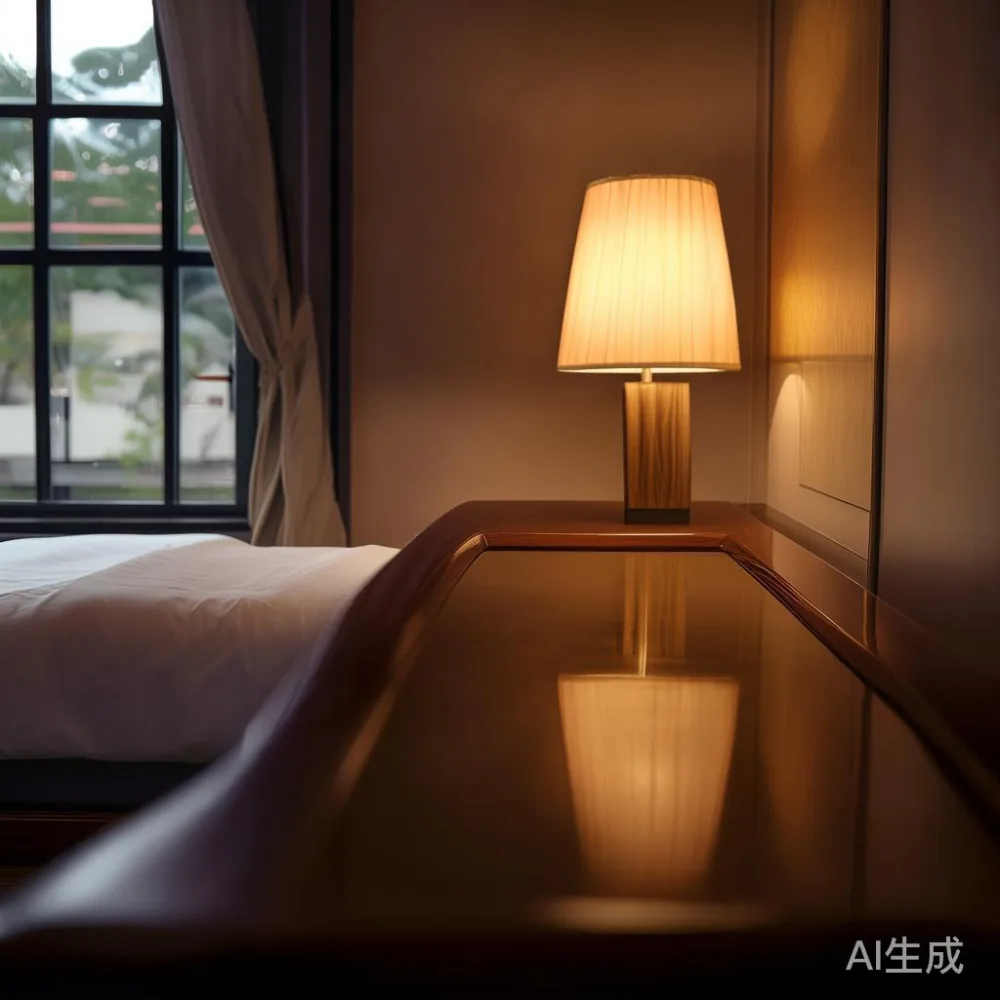
Place the bed frame and nightstand away from the air-con vent. Direct cold air at 18–20°C blowing across a lacquered headboard creates a micro-climate that is 10°C cooler than the rest of the room. Condensation forms on the underside of the lacquer overnight and evaporates by morning. Repeating that cycle produces the white bloom you sometimes see on the lower edge of a headboard. Keep vents at least 60 cm away from any lacquered surface.
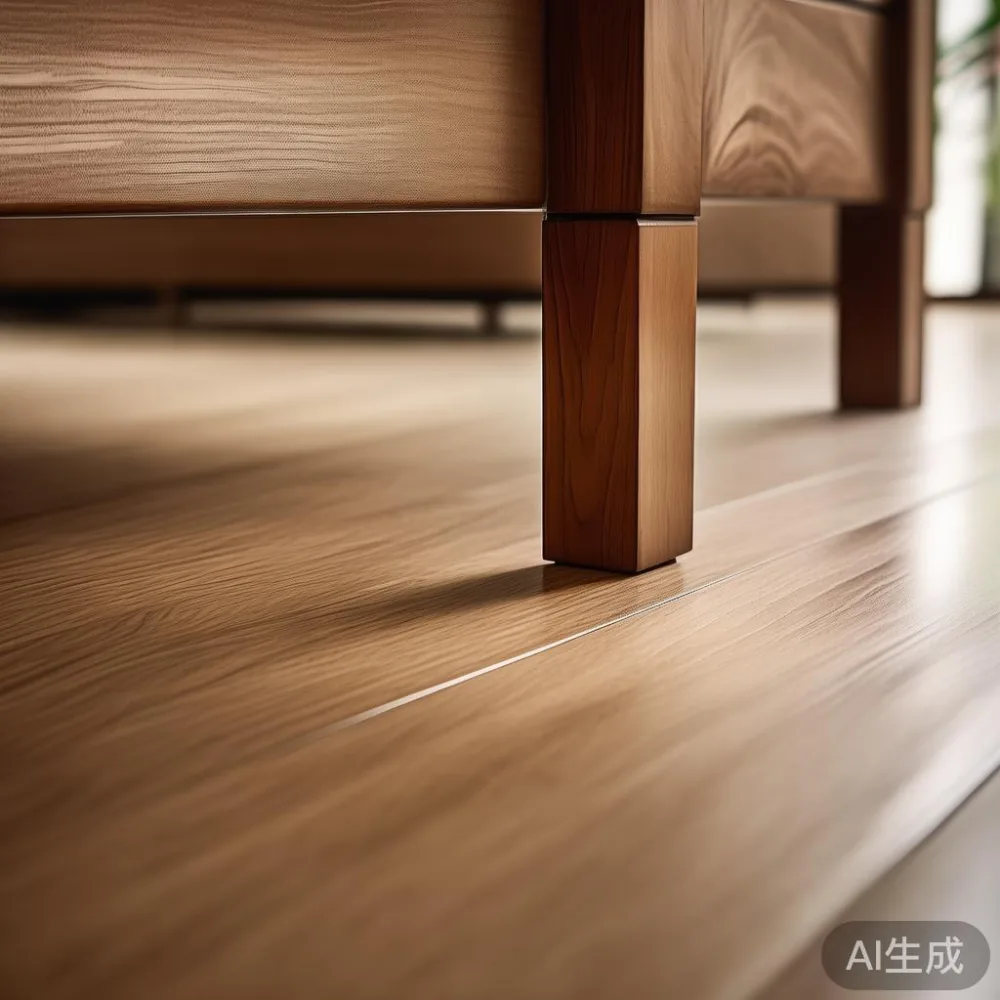
For flooring underneath, use felt pads under every leg of the bed frame, the nightstand, and any marble table you bring into the bedroom. Marble is cold and holds moisture on its underside; without pads, the marble legs of a side table can leave permanent rings on a wooden floor after a wet season.
Daily and Weekly Care That Actually Works
Dust with a dry microfiber cloth, not a feather duster. Feathers push dust into the open grain of rubberwood and leave oily streaks on lacquer. Microfiber lifts it. Do this twice a week; in a HDB with corridor dust, that is the minimum. For a weekly clean, use a cloth barely damp with distilled water — Singapore tap water leaves mineral spots because it is slightly hard (about 80 mg/L CaCO₃). Wipe with the grain, then immediately wipe dry with a second cloth.
Skip the supermarket polishes. Most silicone-based sprays (Pledge, Mr Sheen, generic "wood polish") build up a soft film that catches dust, yellows under UV, and is a nightmare to remove later. If the surface feels dry after six months — usually around the lock area of a wardrobe, the top of a dining table if you have one in the bedroom suite, or the handle zone of a nightstand — rub a pea-sized amount of paste wax (Renaissance Wax is the standard, about SGD 38 for a 65 ml tin) into the area with a soft cloth, let it haze for 4 minutes, buff off. Do this once or twice a year, not weekly.
Spills happen. Blot, do not wipe. A kopi spill on a lacquered nightstand wiped sideways spreads the caffeine stain across 200 cm² of finish. Blotted within 30 seconds with a dry cloth, it leaves a faint ring you can polish out later. Wiped, it embeds.
How do I choose a shipping damage for a bedroom?
Start the moment the box enters your corridor, not after the courier leaves: photograph the outer carton on all four sides, the lift opening, the corridor turn, and the threshold of your bedroom door before you cut any tape, because a damage claim without unboxing evidence is almost always rejected and you will absorb the repair cost of roughly SGD 80–220 per panel out of pocket.
Now expand that into a routine. When a bed frame or wardrobe is being delivered to a Singapore home, the lift is the bottleneck. Most HDB passenger lifts are 1.1–1.2 m wide and 1.4–1.6 m deep; condo service lifts run to 1.8 m wide but are not always available. Measure first. A king-size bed frame packaged flat is usually 215 cm long and 95 cm wide — it will not fit through a 1.1 m lift turned sideways. If the supplier (I am thinking of factories like MIDHILL, who ship flat-pack across 15+ countries and have a 10-year structural warranty) offers a knock-down assembly option that splits the headboard into two pieces under 100 cm each, take it. The 30 minutes saved on assembly is worth more than the 2% loss in rigidity on a properly engineered bolt system.
During unboxing, photograph every layer of foam, every corner protector, and the piece itself on the floor before you lift it. If a corner is crushed, photograph the crushed corner and the box edge that hit it. Singapore's consumer protection (the Lemon Law under the Consumer Protection (Fair Trading) Act) requires you to prove the damage happened before delivery, not during your assembly. A timestamped photo at 2:14 pm wins; a verbal complaint at 9 pm does not.
Refuse to sign "received in good condition" if it is not. Couriers in Singapore routinely hand you a tablet pre-filled with that phrase. Tick the damage box on the e-POD instead, or write "subject to inspection" before you sign. You have 14 days under most retailer policies — MIDHILL's 14-day returns window is on the longer end of the regional norm — to file a formal claim with photos and the delivery order number.
Long-Term Storage and the Wet Season Playbook
Singapore does not have a winter. It has a wet season (November to January, sometimes extending into March) and a drier inter-monsoon. During the wet months, run a dehumidifier in the bedroom at 50–55% RH. A standard 12 L/day dehumidifier costs about SGD 220 and uses roughly 0.4 kWh per hour — about SGD 0.12/hour at today's regulated tariff (around SGD 0.30/kWh before GST). Running it 8 hours overnight for a month adds roughly SGD 28 to your utility bill, before the 9% GST. That is cheaper than refinishing one wardrobe door.
If you travel for two weeks or more, do not close the wardrobe fully. Leave both doors ajar 2–3 cm so the interior dries with the room. A sealed wardrobe in a closed HDB with the air-con off can hit 95% RH inside within ten days; the inner faces of the doors will develop a white haze that takes a professional 2–3 hours to buff out.
For pieces you rotate out — a spare nightstand, a wardrobe in the guest room — store them with a 1 kg silica gel canister inside each drawer and door cavity. Replace or recharge the canisters every 6 months (recharge in a 120°C oven for 3 hours). A canister costs SGD 6–9 and prevents the musty smell that signals lacquer breakdown.
When to Call a Specialist (and When Not To)
Surface scratches under 0.1 mm deep — the kind you can feel with a fingernail but not see from 1 m away — respond to a walnut meat rub. Crack a raw walnut, rub the meat across the scratch for 30 seconds, let the natural oils sit overnight, buff. The dark oil fills the scratch and matches most medium-tone finishes used on solid wood bedroom decor. It works on rubberwood, ash, and walnut; it does not work on painted white finishes because the colour is wrong.
Deeper scratches, white heat rings from a hot laptop left on a nightstand, or checking along joints need a refinisher. Singapore has several mobile lacquer repair specialists charging SGD 120–280 per panel for spot refinishing, or SGD 600–1,200 for a full wardrobe door respray. Ask whether they use a spray gun or a brush; spray is always better because brush strokes show on cured lacquer under raking light.
Many Foshan factories — MIDHILL among them — offer lifetime refinishing on their solid wood pieces for a small freight cost. If your bed frame or bedroom decor set is under eight years old and structurally sound, shipping it back for a factory respray (about SGD 280–450 door-to-door including pickup in Tampines or Bedok, GST inclusive) is usually cheaper than local spot repair and gives a more uniform finish than any on-site work.
A Note on Style: Light Luxury and Bedroom Decor Choices
Lacquer finishes sit at the heart of three movements that show up regularly in Singapore showrooms: French light luxury (cream-and-gold palettes, fluted wardrobe fronts, marble-topped nightstands), American light luxury (wider bed frames, oversized nightstand silhouettes, brushed brass pulls), and post-modern light luxury (geometric bed frames, lacquered rubberwood in muted sage or terracotta, mixed-metal hardware). All three rely on a stable lacquer film to carry the look. A French fluted wardrobe in a Punggol condo with morning sun will check along every flute within three years if the room runs above 70% RH; the same piece in a dehumidified bedroom will look new at year six.
If you are specifying bedroom decor for a new BTO or a resale HDB in Tampines, ask the supplier two questions before you pay the deposit. First, what is the film thickness of the lacquer in microns? Anything under 30 µm is furniture-grade; 50–80 µm is the band where the finish survives tropical humidity cycles. Second, what is the joinery on the wardrobe back panel — is it a full dust panel fitted into a groove, or a thin sheet stapled on? The full dust panel lets the casework expand and contract with humidity; the stapled sheet traps moisture and bows. The answer to that second question predicts whether your wardrobe will look good in year five or year ten.
The 60-Second Daily Habit That Saves the Finish
Open a window for 10 minutes each morning, even during a rainstorm. Singapore's outdoor air, paradoxically, is often drier than indoor air after the air-con has run all night. A 10-minute cross-ventilation drops bedroom RH by 5–8 percentage points without any equipment. Combine that with the microfiber dust routine, the felt pads, and the 14-day unboxing discipline, and a lacquered bed frame or wardrobe from a maker with a 10-year structural warranty should serve you quietly for 12–15 years before any refinishing is needed. That is the trade: a minute a day in exchange for a bedroom that still photographs well a decade from now.