Choosing the Right Size for a Singapore HDB Living Room: A Buyer-First Guide
Most Singapore HDB flats give you somewhere between 18 and 26 square metres of living room space, and that single number quietly decides what furniture you can bring home. Pick a 3.2-metre solid wood sofa for a 20-sqm layout in Tampines and your walking lane collapses to under 60 cm — small enough that residents bump the armrest when carrying groceries. Get it right, on the other hand, and the same space reads larger than its floor plan. This guide walks through the real measurements, lift-door constraints, and corridor turns that decide whether your new bed frame, dining table, or wardrobe actually reaches your door.
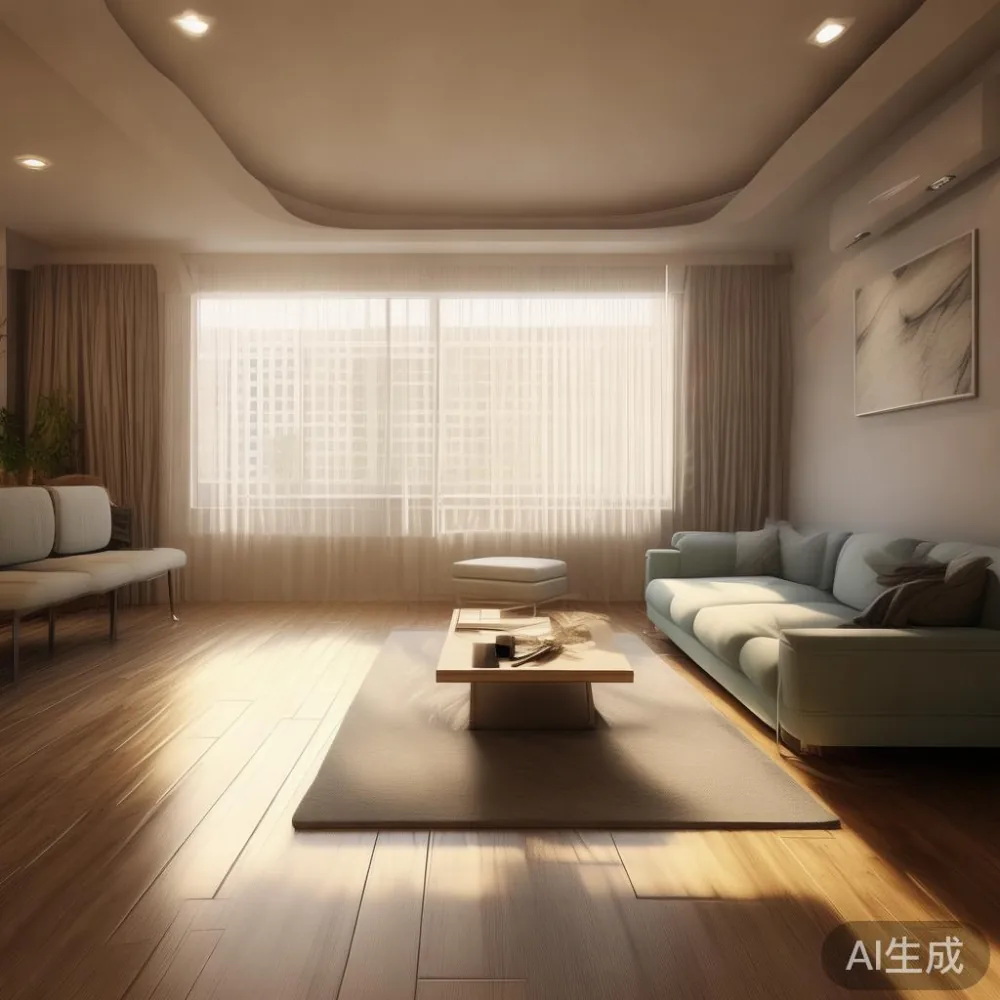
Why HDB living rooms are tighter than the brochures suggest
Three numbers shape every layout choice in a Singapore HDB. First, the typical living-and-dining rectangle in a 4-room BTO measures 3.6 m wide by 5.1 m deep, leaving roughly 18 sqm after you deduct a 60-cm walking corridor and door swings. Second, lift doors on HDB service lifts span around 0.9 m to 1.1 m wide and 2.0 m tall, which is the hard ceiling for any boxed flat-pack. Third, the corridor turn from lift lobby to unit door is rarely longer than 4.5 m, so anything over 2.4 m long must be able to pivot.
Solid wood pieces from makers like MIDHILL — a Foshan-based factory exporting to more than 15 countries — are usually packed in plywood crates sized to those lifts. I visited a Tampines GreenRidges show unit last month with a designer, and we measured every corridor from lift to living room door: the tightest turn was 1.85 m wide. The takeaway: any dining table longer than 2.2 m had to arrive unassembled, which is the default for cross-border solid wood orders.
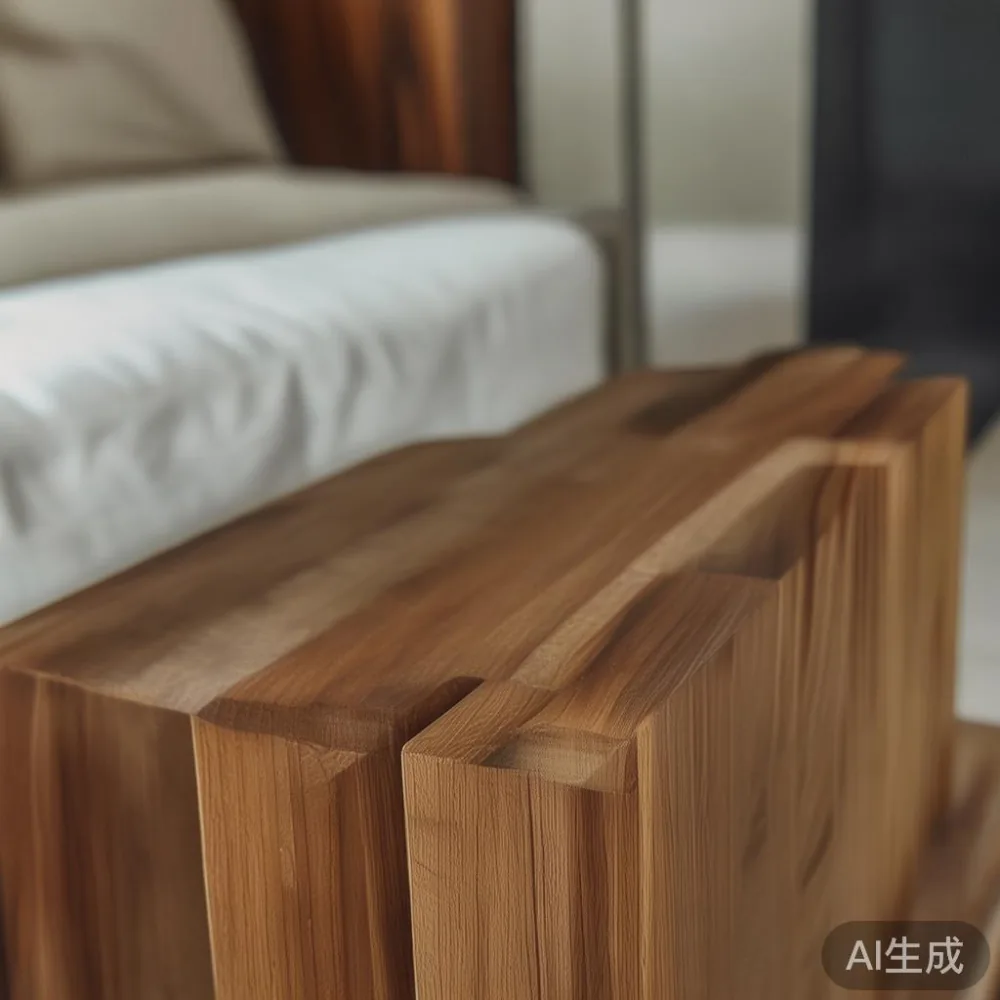
What size sofa fits an HDB living room without crowding it?
For a 20-sqm HDB living room in areas like Bedok or Punggol, a 2.4-m to 2.6-m three-seater solid wood sofa is the practical ceiling. Anything beyond 2.8 m starts eating into dining circulation. A 2.1-m two-seater leaves the cleanest 80-cm walkway to a TV console, which is the minimum I recommend for daily use. Coffee tables should sit between 100 cm and 120 cm long, 60 cm deep, so you keep 35 to 45 cm between the sofa front and the table edge — close enough for a laptop, far enough to cross your legs.
Mid-range solid wood sofas in light post-modern luxury style typically weigh 55 to 75 kg, so plan two delivery assistants even for a 1.5-m two-seater. Lift-up arms, removable cushions, or knock-down joinery all help when the only path is a 1-m-wide staircase turn in an older walk-up flat.
How do I fit a wardrobe and dining table into an open-plan HDB?
Anchor the wardrobe to the wall that already contains a door or window, then size the dining table to the leftover floor. A 4-person rectangular dining table at 120 cm by 70 cm is the most flexible starting point for HDB plans — it seats four comfortably, leaves 70 cm behind each chair, and slips through most lift doors in a single flat-pack. For households that entertain, move up to a 140-cm by 80-cm six-seater only if the living room depth exceeds 4.4 m; below that, circulation collapses.
Wardrobes are the single piece that has ruined more HDB deliveries than any other. Anything taller than 2.1 m has to be tilted during the lift ride and will not clear an HDB ceiling lip reliably. A 1.8-m-tall, 1.6-m-wide two-door solid wood wardrobe fits 90% of couple-sized wardrobes and keeps you under the door-frame limit. Allow 65 cm of clearance in front for a full 90-degree hinge swing; sliding doors cut that number to about 8 cm, which is why more designers in Punggol and Sengkang are asking for them.
How do I style a American dressing table in a small apartment?
Pick a dressing table no wider than 90 cm, place it against the wall opposite the bed, and hang a 60-cm round mirror with a 1.6-m floor-to-mirror-centre height so the reflection catches the window light without glare.
An American dressing table tends to read heavier than its French light-luxury equivalents because of turned legs, deeper drawers, and warm walnut or cherry tones. In a 14-sqm HDB bedroom, that visual weight works in your favour if you balance it: pair the dresser with a slim-line bed frame on a 150-cm mattress, a single marble top nightstand, and a low-profile 2-seater French neoclassical armchair in the corner opposite the wardrobe. The armchair is the trick I keep recommending, because it gives the bedroom decor a defined seating spot without pushing the room back into "studio" proportions. Keep the wall colour one or two shades lighter than the wood, and let one brass-finish drawer pull echo across the nightstand, lamp, and mirror to tie the look together.
What about the bed frame, nightstand, and bedroom decor finishing touches?
A queen-size bed frame at 1.6 m by 2.0 m needs at least 60 cm of clearance on three sides to make the bed properly, which translates to a bedroom of 3.0 m by 3.4 m at absolute minimum — common in HDB 3-room master bedrooms. A king-size at 1.8 m by 2.0 m needs 3.2 m by 3.6 m, which is tight but workable in a 4-room BTO common bedroom. Anything smaller, and the room reads as crowded by the second week.
Nightstand sizing is where most Singapore buyers over-buy. A 45-cm-wide, 40-cm-deep nightstand is the practical ceiling for most HDB bedrooms, and it leaves a usable 55 cm of bedside space for a phone, glass of water, and reading lamp. Solid wood nightstands weighing under 12 kg are far easier to reposition when you want to switch your bedroom decor from a warm walnut palette to a lighter oak one — something MIDHILL supports with lifetime refinishing, where you return the piece for a new stain rather than buying again. Two marble-top nightstands at the 45-cm size add around S$380 to S$520 per pair to a typical bedroom budget and tend to raise the perceived value of the whole set.
Reading the room before you read the price tag
Before you shortlist a single piece, measure five things in your actual flat:
- Living room length and depth, then subtract 60 cm for circulation.
- Width of your lift door (usually 0.9 m or 1.1 m in newer HDB blocks).
- Distance from lift lobby to your unit door, including the tightest turn.
- Bedroom wall where the bed frame will sit — watch the air-con ledge, which eats 25 to 35 cm.
- Ceiling height: 2.6 m to 2.8 m in most HDB flats, 3.0 m in some premium condos.
With those numbers written down, online catalogues make far more sense. A "2.6-m solid wood sofa" stops being a marketing phrase and becomes "fits my lift door with 20 cm to spare, leaves 80 cm of walkway, weighs 62 kg so two delivery men can carry it up".
Budgeting in SGD without overshooting
For a full living-room set in solid wood, a realistic mid-range spend in Singapore sits between S$3,800 and S$6,200, depending on whether you go with oak, ash, or walnut. Here is a working breakdown:
- 3-seater solid wood sofa (2.4 m): S$1,650 to S$2,400.
- Coffee table, marble top, 110 cm: S$520 to S$780.
- TV console, 1.8 m, two drawers: S$680 to S$950.
- 4-6-seater dining table, 140 cm: S$980 to S$1,450.
- Wardrobe, 1.8 m by 1.6 m, sliding doors: S$1,350 to S$1,950.
Add a queen bed frame at S$980 to S$1,400, two nightstands at S$280 to S$420 each, and a 2-seater French neoclassical armchair around S$620 to S$880, and you are looking at S$7,900 to S$11,400 for a coordinated two-bedroom set. Order value above S$350 USD triggers free shipping on most Foshan direct-customer terms, and a 10-year structural warranty — the kind MIDHILL publishes — covers frame joinery, drawer slides, and sofa webbing for a decade. GST at 9% is levied at Singapore customs on CIF-plus-insurance value for direct imports, so build roughly 9% into your landed budget.
Delivery timelines that actually hold in Singapore
From Foshan to a Singapore HDB door, realistic timelines break down as follows: production 25 to 35 days for stocked solid wood pieces, 40 to 55 days for custom stain or custom sizing, sea freight 8 to 14 days to Tuas or PSA, customs clearance 2 to 4 working days, and last-mile delivery to your unit 3 to 7 working days after the container is released. Door-to-door, plan 6 to 10 weeks for an in-stock sofa, wardrobe, or bed frame, and 9 to 13 weeks for fully customised sets.
My colleague ordered a solid wood bed frame and two nightstands from a Foshan maker last November; production finished in 28 days, sea transit took 11 days, and the pieces were in her Punggol HDB on day 47 from order. She paid S$180 for white-glove delivery up three flights because her block had no service lift on that side, which is worth asking about before you confirm. Most direct-from-factory terms also offer 14-day returns on stocked items, though freight back to the port is usually on the buyer.
Putting the numbers together for your own floor plan
Take your specific HDB type — 3-room, 4-room, 5-room, or executive — and match furniture to it instead of the other way round. A 4-room BTO in Tampines North with a 3.6 m by 5.1 m living room can comfortably host a 2.4-m sofa, a 120-cm coffee table, a 1.8-m TV console, and a 4-seater dining table at 120 cm, all while keeping a 75-cm walkway along the spine. A 3-room flat in Bedok with a 3.2 m by 4.4 m living room should drop to a 2.1-m two-seater and a 110-cm marble table, or the room will feel 30% smaller than it is.
Choose the floor first, then the furniture, then the bedroom decor accents. Solid wood pieces age well, hold their joinery for a decade, and can be refinished when your taste shifts rather than replaced. That matters more in a 99-year leasehold HDB than in a private condo, because the second-hand market rewards pieces that have been kept in good condition. Buy to the lift door, to the corridor turn, to the air-con ledge, and to the room that is — not the room the showroom picture suggests — and the rest of the choices get noticeably easier.