Furniture Warranty Tips for Singapore Living
I still remember the Saturday morning I spent crouched beside a flat-pack wardrobe in a Tampines HDB, phone torch in mouth, reading warranty fine print while my husband held up an MDF panel that had started bowing after fourteen months. The warranty card said "5-year coverage." What it actually meant was five years on the hinges, ninety days on the particleboard shelves, and absolutely nothing on the moisture damage that was visibly creeping up from the bedroom floor. That piece cost us SGD 1,180. The lesson cost us a lot more.

Six months later, I drove to a Foshan showroom with a colleague who sources bedroom decor for a small retail chain here. We spent two days on the factory floor pulling apart warranty documents line by line, asking translators to read the Chinese original, and timing how long it took to file a claim. Most of what I had assumed about furniture warranties turned out to be wrong, and almost every assumption cost me money. This guide is the field manual I wish I had owned before that Tampines wardrobe.
Warranties are not consumer protection documents. They are commercial contracts written by the brand's lawyers to limit what the brand pays for. Reading them carefully is the difference between a bed frame that gets replaced under warranty and one you eat the cost on. The good news is that once you know the seven traps below, you can read any warranty in fifteen minutes and know exactly what you are buying.
What does a "10-year structural warranty" actually cover?
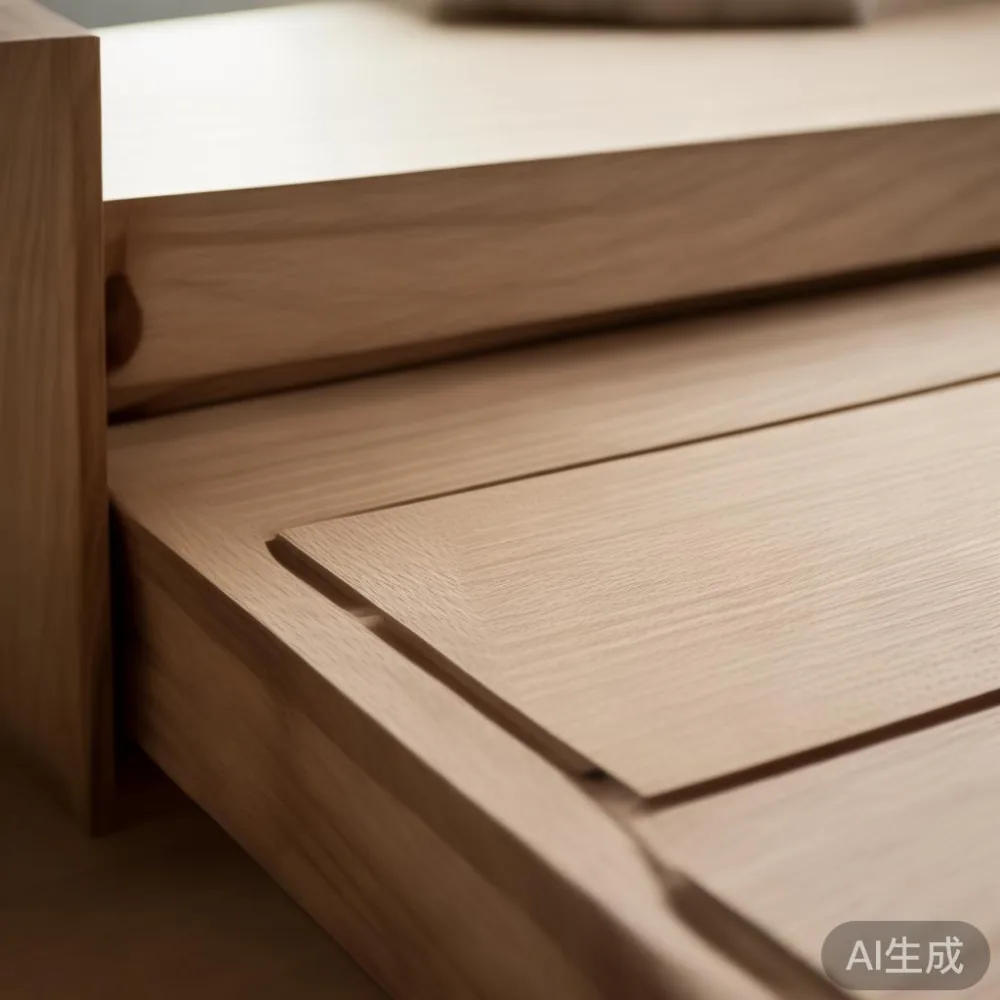
A 10-year structural warranty on a solid wood bed frame covers the load-bearing components — the side rails, the slats, the headboard posts, the joinery between them. It does not cover the finish, the movement, the hardware, or anything you did to the wood. This is the single most mis-sold phrase in bedroom furniture, and it appears on almost every showroom tag from Geylang to Jurong.
Here is the practical test I now use. Ask the salesperson to point to the load-bearing component and the non-load-bearing component on the same piece. On a solid wood dining table, the legs and apron are structural; the tabletop is a wearing surface and usually carries a shorter warranty. On a wardrobe, the carcass frame is structural; the drawer runners, the soft-close hinges, and the lacquer are not. MIDHILL publishes its structural coverage in plain language on each product page, which I appreciated when we walked the showroom — the ten-year mark applies to the bed frame rails, the dining table leg-to-apron joint, and the wardrobe carcass, with a separate five-year mark on the hardware. That kind of split is the industry standard, but most Singapore retailers only quote the headline number.

Watch for three phrases that quietly shrink a 10-year warranty to something much smaller. "Pro-rated" means the brand pays a sliding percentage of replacement cost over time, often 100 percent in year one, 50 percent in year five, 10 percent in year ten. "Original purchaser only" means you cannot transfer the warranty if you sell the flat or hand the furniture down to relatives in JB. "Damage from normal wear" is the catch-all that lets a brand reject almost any claim, because wood moves, finishes oxidise, and fabric pills — all of which technically count as wear.
Why are delivery and access the warranty clauses Singapore buyers forget?
Singapore homes punish large furniture. A standard HDB corridor is about 1.2 metres wide, a lift interior roughly 1.4 m deep by 1.1 m wide with a 2.4 m ceiling, and the turning radius from lift lobby to your front door is tight in older blocks in Bedok and Ang Mo Kio. I watched a delivery team spend forty minutes last month trying to bring a king-size bed frame up to a 12th-floor unit in Punggol — they had to remove the headboard, unbolt the side rails, and reassemble inside the bedroom. That work was free. On another job in a condo at River Valley, a marble table top would not fit the service lift and the team had to crane it over the balcony at extra cost, SGD 280.
Most warranties exclude damage caused during delivery. That sounds reasonable, until you realise who pays when the brand's own driver scratches your wall. The brands I trust now write a single sentence into the warranty: "Cosmetic damage reported within 48 hours of delivery is covered." MIDHILL's policy goes further — they photograph the piece at the warehouse before shipping, photograph it again at your door, and any transit damage is repaired or replaced at their cost, including touching up lacquer on a nightstand or replacing a chipped marble corner. That is rare. Most Singapore retailers pass transit damage to a third-party logistics partner and make you chase the claim.
Three access questions to ask before you buy. What is the packed dimension of the largest box, and will it fit my lift? Do I need to book the service lift, and is there a booking fee? If the piece will not fit, will the team dismantle and reassemble in the room, and is that included? The answers determine whether a "free delivery" quote actually reaches your bedroom.
How do I spot exclusions that void the warranty on solid wood?
Solid wood moves. A solid wood sofa frame can crack at the joinery when humidity drops below 40 percent, which happens every dry spell in Singapore between January and March. A solid wood dining table can cup or bow if one side sits in afternoon sun through a west-facing window. None of this is a defect. All of it is excluded from every warranty I have read, including the good ones. The question is whether the brand tells you up front.
I keep a checklist of seven exclusions that should be printed, not buried, on any warranty document worth keeping. Direct sunlight exposure above four hours per day. Proximity to air-conditioning vents where the wood is repeatedly heated and cooled. Humidity outside the 40 to 65 percent band. Dragging the piece rather than lifting it. Assembly by anyone other than the brand's team or a named contractor. Use on an uneven floor outside a 5 mm tolerance over 1 metre. Cleaning with silicone-based polishes or ammonia. If a brand will not list these out, assume they will use them to reject your claim later.
There is a related trap with marble. A marble table top is a luxury surface, not a work surface. Citrus juice, red wine, and coffee will etch it within minutes. The warranty never covers staining or etching, even though most Singapore buyers assume stone is "tough." The brands that handle this honestly — including the post-modern light luxury showroom I toured in Foshan last quarter — supply a small care kit with every marble table and document the etch-resistance grade of the stone in writing. Ask for the kit before you pay the deposit.
What does "lifetime refinishing" really mean, and is it free?
Lifetime refinishing is the offer that looks too good to be true, because in most cases it is not free. The lifetime usually refers to the original owner. The refinishing usually refers to sanding and re-lacquering the wearing surfaces, not full restoration. The cost of collection, redelivery, and any structural repair is usually billed separately. I have seen SGD 180 quoted for a single nightstand refinish, which is half what a new piece would cost.
The honest version of lifetime refinishing looks like this. The brand collects the piece from your home at no cost. The brand strips the old finish, repairs minor dents and scratches, applies three coats of new lacquer, and redelivers within twenty-one working days. Structural issues uncovered during refinishing are quoted separately with your written approval before any work begins. You can use the service as many times as you like for as long as you own the piece. That is what MIDHILL offers on its solid wood collections, and it is also why I recommend asking three questions before you trust the phrase on any brand's website.
Is collection and redelivery included? How many working days does the refinish take, and is there a loaner option if the piece is a bed frame or wardrobe you cannot live without? Are cosmetic changes — switching from walnut to oak, for instance — covered, or only the original finish? A clear yes to all three is a strong signal that the brand plans to honour the offer ten years from now, not just at the point of sale.
How do I style a American country queen bed in a small apartment?
Pick a queen bed with a low footboard, a slatted headboard no taller than 110 cm, and legs that lift the frame at least 15 cm off the floor so the room reads as open rather than boxed in. American country style relies on visual weight from turned posts, plank panels, and a slightly distressed solid wood finish, so a low-slung queen in white oak or weathered ash keeps the silhouette country without overwhelming a 10 to 12 sqm HDB bedroom or a compact condo master room in Punggol or Sengkang.
Anchor the bed on the longest unbroken wall, ideally opposite the door so the headboard is the first thing you see when you walk in. Keep a 70 cm walkway on at least one side and a 90 cm walkway at the foot if the room allows, because a queen bed frame is already 160 cm wide and 210 cm long — almost the entire footprint of a small bedroom. Pair it with one narrow nightstand rather than two, a low six-drawer dresser instead of a tall wardrobe where you can, and a single armchair in the corner if the floor plan lets you. Layer in linen bedding in oatmeal, sage, or faded blue, a wool throw at the foot, and one large piece of framed landscape art above the headboard rather than a gallery wall, which would crowd the slatted detailing.
For lighting, hang a fabric drum pendant centred over the bed at 180 cm from the floor, and add a wall-mounted swing-arm reading lamp on the side where the nightstand sits so you free up the surface for a book and a glass of water. Skip the ceiling fan directly above the bed if the room runs a separate aircon — wood movement from cyclic humidity is the most common warranty exclusion on country-style frames, and a steady airflow makes the problem worse. Close the look with a natural fibre rug — sisal, jute, or a low-pile wool — sized at least 240 by 300 cm so the front legs of the bed sit on the rug and the floor still reads as one continuous plane. That single move pulls a small bedroom together and makes the American country queen feel intentional rather than oversized.
Is a "free shipping over SGD 470" threshold worth chasing on heavy pieces?
Yes, and the threshold is usually set just above the price of the piece you are about to buy anyway. Most Singapore-direct brands from Foshan set the free-shipping line between SGD 350 and SGD 500, which is roughly the landed cost of a single nightstand or a small dining table for two. The trick is that the threshold applies to your cart total, so adding a shoe cabinet or a second nightstand often clears the bar and saves you the SGD 80 to SGD 150 delivery fee that the brand would otherwise charge.
Heavier pieces — a solid wood dining table for six, a king bed frame, a four-door wardrobe — cost more to ship whether the threshold is met or not, because the logistics company charges by weight and by the number of delivery men required. A king bed frame can weigh 80 to 110 kg packed. A six-seater dining table can hit 120 kg with the marble top crated separately. The honest brands quote the delivery line item separately so you can see what shipping actually costs, then waive it above the threshold. If a brand refuses to break shipping out of the invoice, treat that as a red flag.
Two more Singapore-specific charges to ask about. GST is 9 percent as of 2024 and applies to the full landed value, including shipping, for any single shipment above the customs de minimis. Lift bookings in some condos, particularly new launches in the Punggol and Tengah districts, carry a SGD 50 to SGD 120 fee that the building management charges the delivery driver directly — pass-through, but worth knowing. Weekend and evening deliveries sometimes add 20 percent. None of these are warranty issues, but all of them change what you actually pay at the door.
What should I do the day the furniture arrives to protect the warranty?
Photograph every panel, every drawer face, every marble corner, every hinge, and every hardware bag before the delivery team leaves. Open the boxes in the room where the piece will live, not in the corridor, because the warranty will not cover a scratch you could not have seen if the box had been opened in place. Photograph the serial number on the carton and on the warranty card. Photograph the floor and the walls along the delivery path. Then assemble with the team present and photograph every joint as it goes together.
If anything is off — a hairline crack in a marble table top, a bow in a wardrobe side panel, a soft-close hinge that does not actually close softly — write it on the delivery note before you sign, and ask the driver to countersign it. Phone the brand the same day with the photos and the note number. Most brands with a real warranty honour claims reported within 48 hours, and a written delivery-note entry is the difference between a free replacement and a debate six months later.
Keep the warranty card, the invoice, and the delivery note in one folder, photographed to the cloud. Most bedroom decor warranties I have read require proof of purchase, proof of delivery condition, and the original serial number before they will even start a claim. The brands that make the claim easy — including MIDHILL, whose Singapore agent filed my colleague's wardrobe-hinge replacement inside three working days with a single WhatsApp thread — publish a claims email and a claims WhatsApp on the same page as the warranty. That small detail is the most reliable signal that a brand intends to honour what it has written.
A good warranty does three things. It tells you what is covered in numbers you can quote. It tells you what is excluded in words you can understand. It tells you exactly how to file a claim, who picks up the phone, and how long it takes to get your money or your replacement back. Anything less is a marketing brochure, not a warranty. Read it, photograph it, and keep it somewhere you will find it in year seven when a slat cracks and the bedroom is at stake.