Humidity, Solid Wood, and Singapore Bedroom Decor
Humidity is rarely visible in a Singapore home, yet it can shape the way solid wood furniture behaves for years. Warm, moisture-laden air enters through open windows, corridor doors, and balcony glazing. It gathers in wardrobes, beneath bed frames, and around nightstands where ventilation is limited. The result is not always dramatic swelling or cracking. More often, a timber bed frame develops a slightly uneven surface, drawer runners feel tighter, and a solid wood sofa shows subtle movement across its frame.
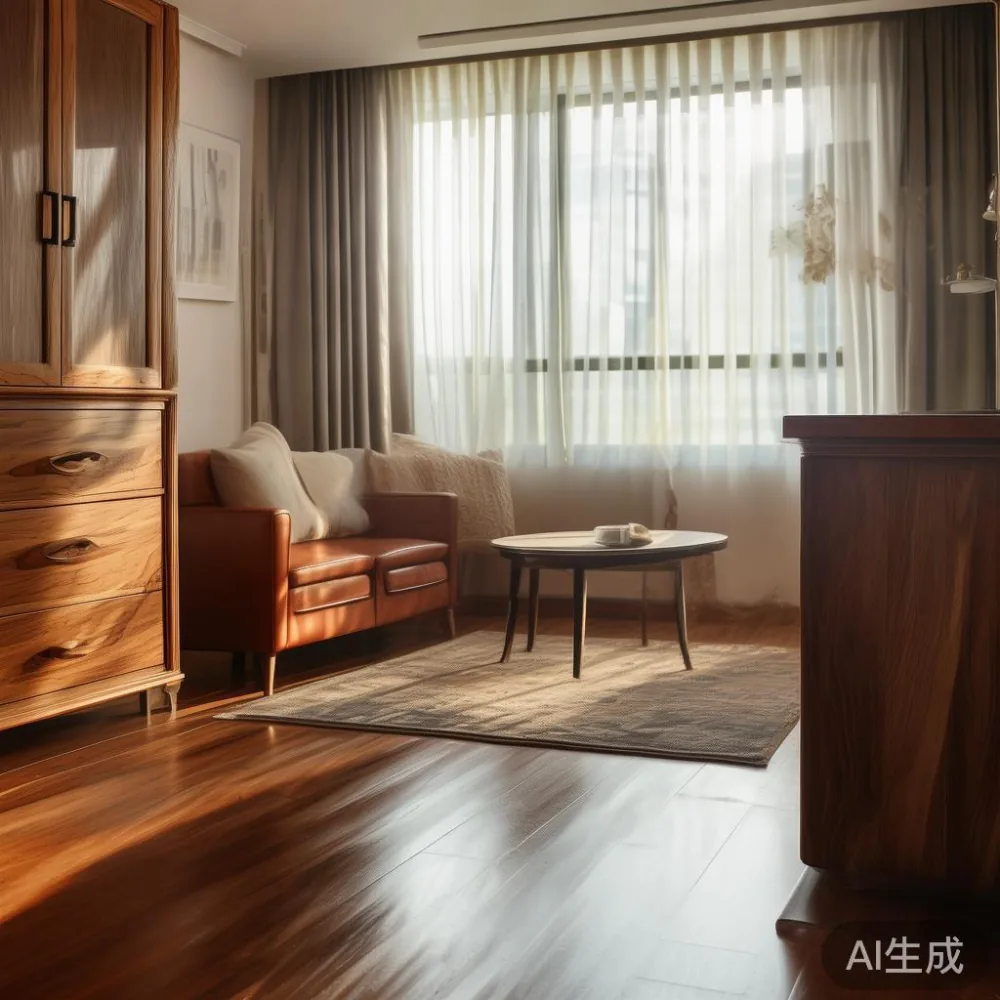
Singapore’s HDB flats and private condos make this a practical concern rather than a decorative one. A family bedroom measuring 3 by 4 metres may hold a queen bed, 2 nightstands, and a wardrobe with little clearance. In developments around Tampines, Bedok, and Punggol, newly fitted interior doors and air-conditioning can create sharp differences between a dry, air-conditioned room and a humid corridor. Wood responds to those differences by taking in or releasing moisture.
Good bedroom decor is not simply about coordinated finishes. It also involves stable indoor conditions, sensible spacing, and furniture selected for the climate. MIDHILL has built solid wood furniture since 2008 and exports to more than 15 countries, giving its production team practical experience with changing climates. Its 10-year structural warranty and lifetime refinishing service also place attention on long-term care, which matters in a humid environment where timber remains in service for many years.
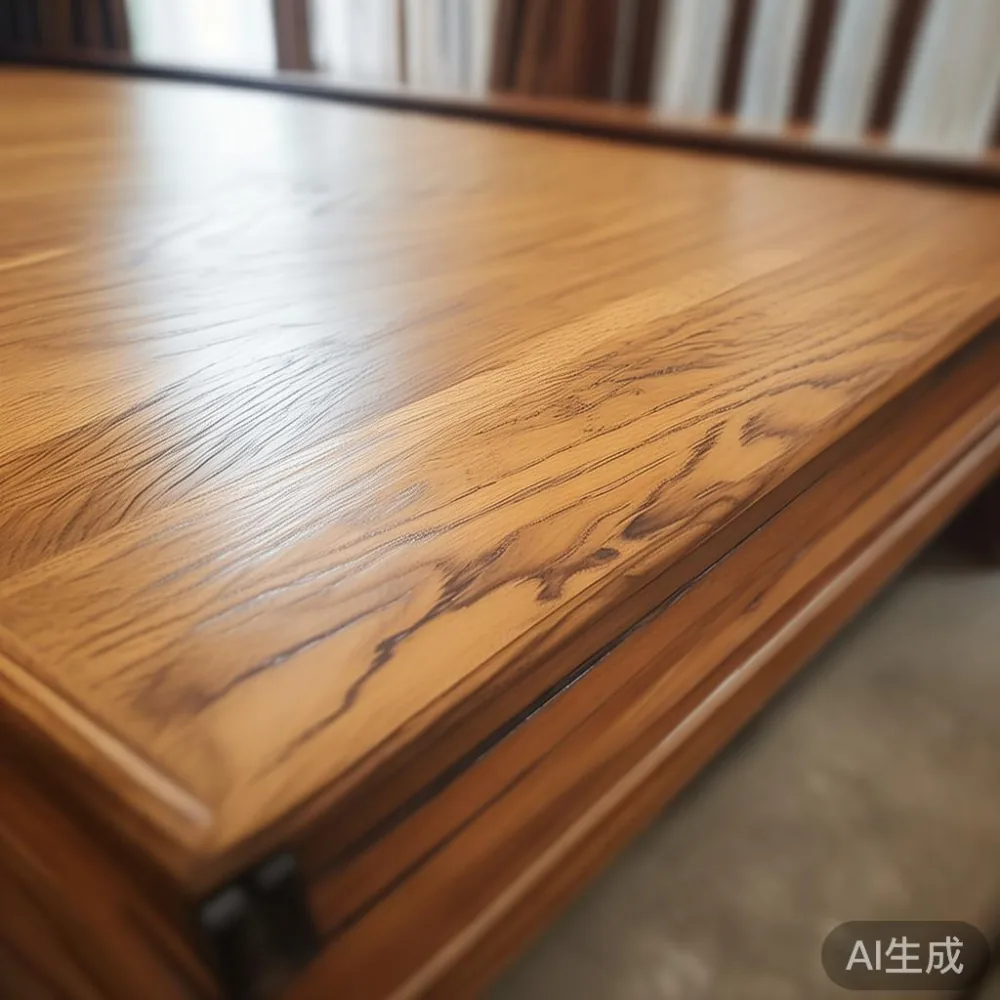
How much humidity can Southeast Asian weather put into wood?
Relative humidity is expressed as a percentage. At 60% relative humidity, the air contains roughly 60% of the maximum moisture it can hold at that temperature. Wood is hygroscopic: it absorbs atmospheric moisture when the air is humid and loses moisture when the air becomes dry.
Singapore’s monthly average relative humidity commonly sits around 70% to 85%, with wet periods and shower activity pushing indoor readings higher. Air-conditioning may lower a bedroom to 50% to 60% relative humidity, especially overnight. A wardrobe close to an exterior wall could experience 70% humidity while its central interior remains closer to 55%. Those fluctuations can produce stresses inside a panel even when the finished surface looks perfectly normal.
For general indoor furniture, a relative humidity range of approximately 45% to 65% is easier to maintain. Timber will still move outside that range, but smaller and steadier changes reduce repeated expansion and contraction. A practical target of 50% to 60% is suitable for most occupied Singapore bedrooms. Use a calibrated hygrometer rather than estimating from weather forecasts. Place one near a wardrobe or bed frame, not directly against an air-conditioning outlet, where readings can be misleadingly low.
Temperature matters as well. A 30°C day and a 24°C air-conditioned night can alter the air’s capacity to hold moisture. This daily cycle is often more noticeable than a gradual seasonal change. In a compact HDB bedroom, a humidifier running beside a solid wood bed frame could keep the timber from adapting too quickly to the drier evening air.
What happens to solid wood in a Tampines or Punggol bedroom?
Solid wood expands across its grain when it gains moisture. The movement depends on species, panel orientation, thickness, and how the timber was dried during manufacture. A wide solid wood dining table may show more visible movement along its length than a narrow wardrobe side. Veneered panels can move too, although their construction may distribute changes differently from solid timber.
A queen bed frame typically uses rails, legs, slats, and headboard sections that experience different levels of exposure. The headboard may touch a cooler bedroom wall, while the base sits in warmer air near the floor. If a bed frame is pushed tightly against a wall, seasonal movement may cause the headboard or rails to press against adjacent surfaces. Leaving a 5 to 8 cm gap behind a movable headboard is a sensible precaution.
Drawers are another useful indicator. High humidity can make swollen drawer boxes rub against their runners; low humidity can cause shrinkage and looser movement. Do not force a tight drawer immediately after a rainy afternoon. Check that the room has been ventilated, then open and close the drawer gradually over several days. Persistent binding should be inspected before moisture-related damage develops.
Solid wood surfaces may also develop mould if they remain damp and poorly ventilated. Cleaning with a lightly damp cloth and drying the surface promptly is more suitable than leaving a wet mop or cloth against timber. Keep wet laundry, leaking water pipes, and unventilated damp patches away from wardrobes and nightstands.
During my visit to a client’s three-room HDB flat last month, I tested a bedroom with an external wall. A hygrometer beside the wardrobe read 71%, while the centre of the room read 58%. The client’s solid wood bed frame had developed a faint movement line at one rail joint. After 14 days of measured ventilation and a lower humidity setting, the gap narrowed to under 1 mm. The experience confirmed how much a small sensor can reveal beyond a general weather report.
Can air-conditioning alone protect bedroom furniture?
Air-conditioning is useful, but cooling and humidity control are not always the same task. A unit may lower temperature while the operating fan continues to remove moisture. Some dehumidifiers remove moisture without lowering temperature as sharply. Combining the two can create a comfortable result, yet drafts should not blow continuously across a solid wood sofa, bed frame, or dining table.
Set the room to around 24°C to 26°C during humid afternoons, with relative humidity ideally held between 50% and 60%. Avoid repeated rapid switching between 22°C and 28°C. Frequent changes can create larger moisture swings as the timber warms and cools. If condensation appears on a window, begin ventilation before the room becomes heavily damp.
Condo environments can be just as varied. A bedroom with floor-to-ceiling glazing in Bedok may receive direct rain and strong afternoon sun. West-facing windows can heat timber and nearby finishes, accelerating moisture loss. Use blinds or curtains to moderate direct exposure, and maintain at least 30 cm of space between a wardrobe and an external wall when the installation allows it.
For compact rooms, the furniture layout itself can improve drying. A 60 cm-wide wardrobe placed against a corridor wall may block airflow around its back. A 50 cm-wide bed frame leaves more usable space than an oversized 65 cm model, while a 45 cm-deep nightstand can stand clear of a bed without wasting floor area.
Furniture also arrives through shared spaces. A delivery lift in many Singapore developments may be approximately 90 to 120 cm wide and 140 to 180 cm deep, with a door opening of roughly 80 to 100 cm. A long wardrobe or bed frame package must be checked before delivery, particularly where corridors turn sharply. Secure packing is one part of the journey; controlled acclimatisation after arrival is another.
Should solid wood furniture be sealed against Singapore humidity?
Sealing can slow moisture movement, but no finish makes timber completely moisture-proof. Hard wax oil, lacquer, and film-forming finishes each offer different protection. Hard wax oil preserves a tactile, natural appearance and allows the wood to age visibly. Lacquer creates a more uniform surface and can simplify wiping, although damaged areas may require careful repair. For a French light luxury or post-modern light luxury bedroom, the finish should support the visual intent without disguising natural grain.
Coordinate a protective finish with the piece’s use. A dining table near an open kitchen may receive more frequent wiping and should have a durable sealed surface. A nightstand may benefit from a hard wax oil finish that can be maintained locally. A marble table has a different moisture profile: the stone itself is not hygroscopic in the same way as timber, but its base, frame, and surrounding fittings still need stable conditions.
When evaluating a European light luxury sofa vs Nordic sofa, consider both design and internal construction. The European light luxury sofa vs Nordic sofa comparison often focuses on silhouette, cushion density, and visual character. In Singapore, solid wood frames, joinery, and removable covers deserve equal attention. A solid wood sofa with a replaceable cover and accessible frame joints is easier to maintain than a tightly upholstered construction.
The same care applies when comparing a Japanese sofa vs Japandi sofa. Low profiles and pale finishes create a calm bedroom, yet tightly fitted upholstery can trap humidity beneath the cushions. The frame may need at least 5 cm of clearance from a wall, and seat cushions should be lifted occasionally so trapped moisture can evaporate.
For buyers researching for sale Italian light luxury furniture, provenance should not replace climate-specific inspection. Ask how panels were dried, whether back panels are sealed, how drawers are fitted, and what maintenance is recommended. MIDHILL provides a 10-year structural warranty, while its lifetime refinishing policy offers a route for maintaining eligible timber surfaces over time.
How can Singapore homeowners create better bedroom decor?
Bedroom decor works best when it accounts for air movement, humidity, and the dimensions of the home. Begin with a wall measurement rather than a standard product size. In a 3 by 4 metre HDB bedroom, a queen bed measuring approximately 152 by 190 cm can dominate the floor area. A 55 to 60 cm wardrobe may provide useful storage without closing the room, and a 40 to 50 cm nightstand can sit beside the bed.
Keep furniture in contact with the floor where appropriate, but do not trap it against walls. A 45 cm-deep wardrobe needs around 3 to 5 cm of rear space for movement and cleaning. Bed frames with slatted bases allow air to pass below, unlike solid boxed storage bases that can create a damp, enclosed area. A solid wood dining table should be positioned away from frequently opened wet-room doors and direct rain entry.
Use rugs and textile layers with moisture-aware care. A wool or cotton rug may feel natural under a solid wood bed frame, yet it can hold humidity if the floor is damp. Choose a washable rug or lift it periodically during wet seasons. Avoid placing bedroom furniture immediately beside an ensuite bathroom where warm air is frequently vented into the room.
For light-luxury styling, restraint is useful. European for small living room principles favour proportion, visual breathing space, and fewer well-chosen pieces. If searching Nordic for dining room options, pale oak and clean proportions can suit Singapore interiors, but pale finishes show dust and water marks more readily. Medium-toned timber or a sealed finish may be easier to maintain in an active family home.
A light luxury dining table can work well in an open-plan apartment if its scale matches the circulation zone. Allow about 90 cm behind each occupied chair and 120 cm along a main passage where possible. A table measuring 160 to 180 cm may seat 4 to 6 people, but it should not narrow a route from the lift lobby to the home entrance.
Maintain surfaces every 1 to 2 weeks during humid weather. Dust with a soft cloth, wipe spills promptly, and avoid silicone-based furniture polish that creates a sticky film. Check hinges, drawer runners, and bed frame fixings every 6 months. Annual care can include inspecting the back of a wardrobe, checking wall contact points, and renewing oil or wax where the finish calls for it.
What should you do before and after a solid wood delivery?
Allow new furniture to acclimatise to the room before tightening or filling it completely. Solid wood can settle as its moisture content changes. Keep packaging away from wet floors, remove plastic only when practical, and maintain steady ventilation for at least 24 to 72 hours. Do not place bedding or heavy objects into a newly delivered wardrobe during this period.
Confirm delivery access before the truck arrives. Record lift dimensions, door widths, turning radii, and the distance from the lift lobby. Check whether the building requires a booking, protective floor covering, or a service elevator. MIDHILL offers free shipping for orders over US$350, although local site pricing and delivery terms should be confirmed in SGD at checkout.
Singapore’s 9% GST should be shown clearly when comparing products. For budgeting, an item listed at SGD 1,800 before GST becomes SGD 1,962 after GST. Delivery timing, lift booking, and return arrangements can also affect the final cost. Returns are available within 14 days under the stated policy, subject to its conditions, and should be considered for items that cannot be delivered through the intended access route.
Use a stable furniture placement plan rather than chasing perfect weather. Keep relative humidity near 50% to 60%, ventilate on humid days, protect timber from direct rain and prolonged air-conditioning drafts, and inspect movement points twice a year. With those habits, solid wood furniture can remain structurally sound and visually refined across Singapore’s changing seasons.
For light-luxury interiors built around a solid wood sofa, bed frame, dining table, wardrobe, nightstand, or marble table, controlled moisture is part of the design. It protects the details that make bedroom decor feel composed: aligned joints, smooth drawer movement, enduring finishes, and furniture that looks well considered every day of the year.