Caring for Lacquered Bedroom Decor in Singapore's Tropical Climate
When my colleague Priya moved into her new 4-room BTO in Punggol last March, the first thing she did was wipe down the high-gloss lacquered wardrobe her interior designer had just installed. Within three weeks, she noticed a faint haze blooming along the panel that faced the kitchen door. The culprit wasn't dust or fingerprints. It was the 78-80% relative humidity that clings to most Singapore HDB flats between October and February, paired with the dry-bulb temperatures that rarely drop below 24°C even at 3 a.m.
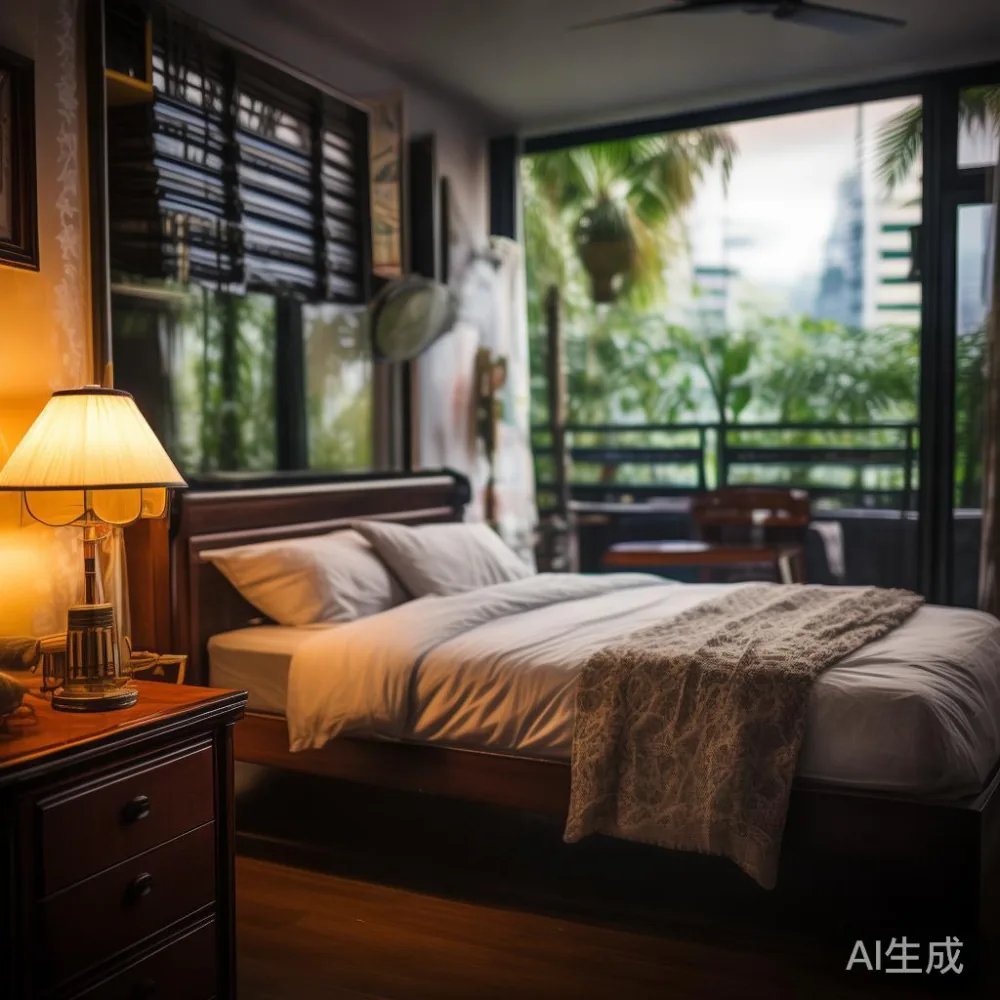
Lacquered surfaces look immaculate on day one — that mirror-flat sheen is exactly why so many homeowners choose them for wardrobes, nightstands, and bed frames in a bedroom decor scheme. In a tropical climate, however, lacquer behaves differently than in the temperate showrooms where it was first specified. The good news: with a 15-minute monthly routine, the right cleaning agents, and a few adjustments to how the piece sits in your Tampines or Bedok flat, you can keep that factory-fresh reflection for ten years or more.
This guide covers what lacquer actually is, why Singapore's humidity challenges it, and a precise care protocol that protects a lacquered bed frame, wardrobe, or nightstand without stripping the finish. I'll also explain when a Midhill refinishing visit is worth scheduling, especially for solid wood pieces built in the brand's Foshan workshop since 2008.

What exactly is a lacquered finish, and why does it react to tropical humidity?
A true lacquer is a film-forming coating — usually nitrocellulose, acid-catalysed (AC), or pre-catalysed (PC) — dissolved in solvents and sprayed in 4 to 8 coats onto a sealed wood substrate. Each coat is sanded with 400- to 1500-grit paper before the next is laid, producing a film 60-120 microns thick. On a Midhill solid wood bed frame or wardrobe, that film sits over a moisture-barrier primer and a kiln-dried hardwood core (typically ash, oak, or rubberwood at 8-12% moisture content).
Singapore's ambient relative humidity averages 82% annually, climbing above 90% during the December monsoon and the April inter-monsoon. Lacquer is hygroscopic at its edges — meaning the film absorbs and releases moisture at every cut joint, mitre, and panel gap. The wood underneath expands 1.8-2.4% across the grain as humidity rises, and the rigid lacquer film, which cannot stretch the same amount, develops micro-checks. You see them as a dull bloom or, eventually, as a hairline crack that telegraphs the timber beneath. Direct afternoon sun through an east-facing corridor window — common in Punggol Northshore units — adds another stress: surface temperatures can hit 48°C, which softens the film and accelerates that bloom.
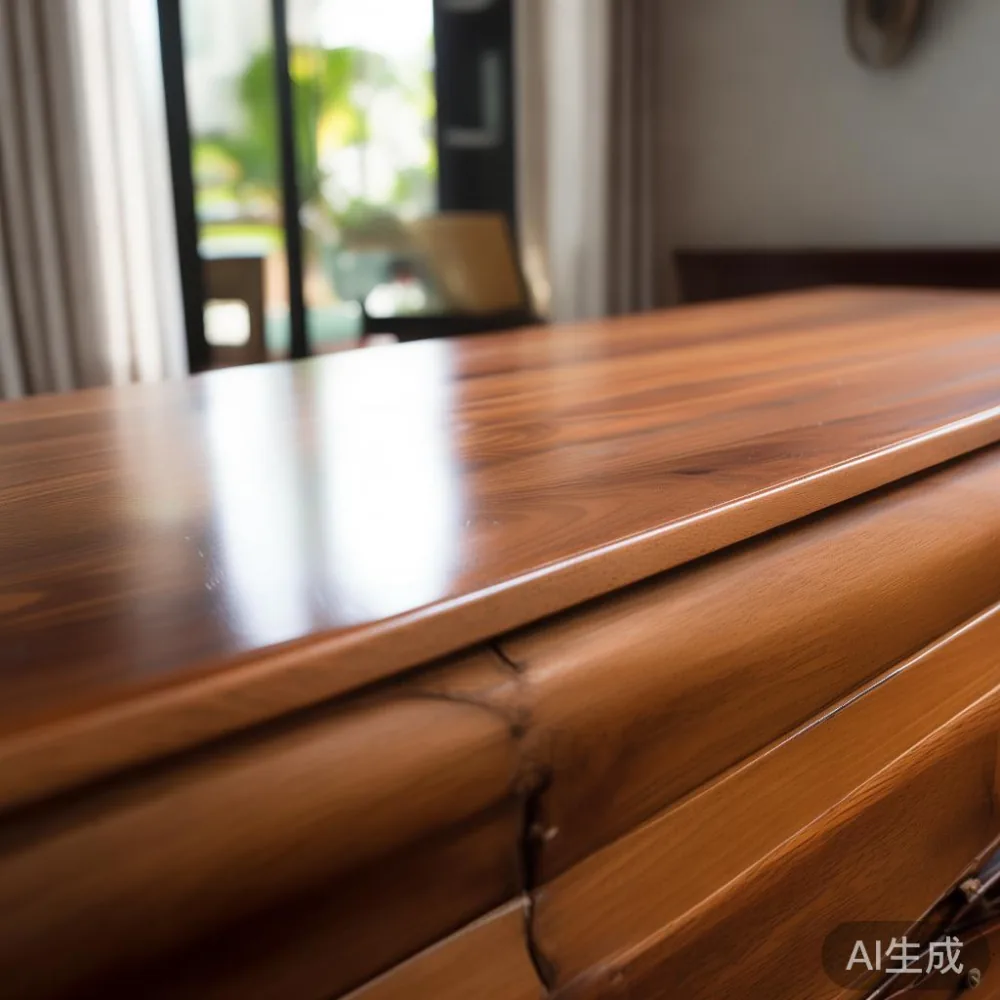
How often should I dust and wipe a lacquered wardrobe or nightstand?
Once a week for dusting, once a month for a deeper clean, and once every six months for a condition check. That rhythm works for 95% of Singapore households.
Weekly dusting: use a clean microfiber cloth (GSM 250-300, washed without fabric softener) folded into a pad. Wipe with the grain direction in 30 cm strokes. Avoid feather dusters — they catch lacquer edges and lift micro-checks. Dry dusting alone removes 70% of household particulates, which matters because fine grit is the primary cause of swirl marks on gloss surfaces.
Monthly wipe-down: lightly mist a fresh microfiber with a 1:30 solution of isopropyl alcohol (99.9%) and distilled water. Wring the cloth until it feels barely damp — never wet enough to leave a film. Wipe in 60 cm sections, then immediately buff dry with a second cloth. This removes body oils from handles (a major haze source on wardrobes) and cooking aerosols that migrate from kitchen doors into adjacent bedroom decor zones.
Six-monthly condition check: kneel beside the piece at eye level with a torch angled across the surface. You're scanning for haze patches, micro-cracks along the grain, and any yellowing at the corners. If you spot hairline cracks longer than 5 cm, book a professional inspection before the next wet season.
Which cleaning products damage lacquer, and what should I use instead?
Skip silicone polishes, ammonia-based glass cleaners, vinegar solutions stronger than 1:50, and any product containing d-limonene (citrus solvents). These will either etch the film, soften it permanently, or leave a residue that repels future recoats.
Safe choices, all easily bought off Lazada or at Watsons in Tampines Mall, cost between SGD 6 and SGD 18:
- Microfiber cloths (6-pack, 30x30 cm): SGD 7-SGD 12. Replace every 12 months; old cloths hold grit that scratches.
- Isopropyl alcohol 99.9% (500 ml): SGD 8-SGD 14. The same bottle sold for electronics cleaning is ideal for lacquer.
- Distilled water (5-litre refill at FairPrice): SGD 3.50. Tap water in Singapore carries 30-80 ppm of minerals that leave a chalky film when dry.
- Carnauba wax paste (200 ml tin, furniture grade, NOT automotive): SGD 16-SGD 18. A pea-sized amount twice a year adds a sacrificial layer.
For fingerprints on a lacquered nightstand handle, plain saliva on a cloth actually outperforms most commercial sprays — the amylase enzyme breaks down skin oils without chemistry. It's an old French polishing trick that still works.
How do I protect lacquered pieces during Singapore's wet season?
Control the microclimate, not the weather. Three practical moves make the biggest difference.
First, position the piece away from the bathroom door. In a typical 4-room HDB, the bathroom is 1.5-2 m from the bedroom door, and a wardrobe placed within 1 m of that opening absorbs humidity spikes every time someone showers for 15 minutes. Move the wardrobe 30 cm further into the room, or fit a magnetic door seal strip (SGD 4-SGD 9 at any neighbourhood hardware shop) to limit moisture migration.
Second, run a dehumidifier sized to your room. For a 12 m² bedroom, a 10-litre compressor unit (Dezent, Midea, or Novita, SGD 189-SGD 299 at Gain City) running 8 hours overnight will hold the room at 55-60% RH. That's the sweet spot for lacquer: dry enough to prevent film swell, humid enough to keep the timber core from drying out and shrinking at the joints.
Third, deflect direct sun. UV-cured lacquer yellows and micro-checks fastest under UV-A exposure. A 3-pass black-out curtain (SGD 25-SGD 60 from IKEA Alexandra or Taobao) cuts UV by 99% and keeps panel temperatures 8-12°C cooler. In a condo corridor unit facing west, like many in Bedok Reservoir, this single addition adds roughly three years to the cosmetic life of a gloss white wardrobe.
What is the difference between Post-modern sofa and modern furniture?
The difference is one of attitude, not just silhouette: Post-modern pieces reference, quote, and playfully remix earlier design movements — Art Deco curves, Memphis-era geometry, or neoclassical carved feet — whereas modern (or modernist) furniture adheres to the "form follows function" principles of the early-to-mid 20th century, prioritising clean lines, exposed structure, and unornamented surfaces.
A solid wood sofa or dining table in the American light luxury register, for instance, often pairs a lacquered post-modern silhouette with traditional joinery: a 220 cm walnut dining table with a softly chamfered edge and a satin-finished top that reads as classic but feels current. By contrast, a Scandinavian-inspired modern dining chair might use the same walnut with a soap finish that highlights raw grain without any decorative gesture. Both are valid, but the lacquered post-modern approach is more forgiving in a tropical bedroom decor because the film hides minor humidity movement in the timber.
If you're choosing a coordinated set — bed frame, wardrobe, nightstand, and perhaps a marble table at the foot of the bed — decide which register suits the architecture. Post-modern works beautifully in a Singapore condo with 2.8-3.2 m ceilings and recessed cove lighting; modern reads best in compact HDB rooms where minimalism expands perceived space.
Can I repair small scratches myself, or do I need a specialist?
Surface scratches under 0.3 mm deep — those you can feel with a fingernail but not catch — are easy to fix at home in under 20 minutes. Anything deeper, or any crack that exposes bare wood, needs a workshop visit.
DIY method for light scratches on gloss lacquer: clean the area with the 1:30 alcohol solution, let it dry 10 minutes, then apply a single drop of clear nitrocellulose lacquer retouching fluid (Holts or similar, SGD 12-SGD 22 at hardware shops in Simei or online). Let it flash off for 60 seconds, level with 2000-grit wet-and-dry paper wrapped around a cork sanding block, then polish with a soft cloth and a pea of carnauba paste. The repair will be 80-90% invisible to a casual observer.
Workshop repairs matter when the film has cracked through to wood. In those cases, the panel is sanded back to bare timber, re-sealed, and re-coated in a dust-free spray booth — a process that costs roughly SGD 120-SGD 280 per panel in Singapore, depending on size. For customers who bought from Midhill, the brand's lifetime refinishing service (included with every Foshan-made piece since the company's founding in 2008) covers collection, shipping, refinishing, and redelivery within 21 working days. That service has handled 3,000+ pieces over the past decade across the brand's 15+ export markets, including a steady flow back to Singapore.
How does humidity affect a lacquered marble table, bed frame, or wardrobe differently?
The substrate under the lacquer changes the response curve considerably.
A lacquered marble table — common in American light luxury schemes — has the most stable surface, because marble barely moves with humidity. The lacquer there is purely cosmetic, so the main risk is the marble substrate sweating cold moisture onto the underside of the film. Always use coasters (SGD 12-SGD 30 sets at Crate & Barrel ION) and a felt-lined tray for any cold drink. Cold glass on warm lacquer creates a condensation ring that etches in under 20 minutes.
A solid wood bed frame with a lacquered headboard panel is more vulnerable. Bed frames are large (180x200 cm is the Singapore standard for a queen), and the headboard panel — usually 90-120 cm wide and 80-110 cm tall — sits directly under the wall, where airflow is poorest. Allow a 5-8 cm gap behind the headboard by fitting felt bumpers on the rear feet (SGD 2 for a pack of 16 at any D.I.Y. shop). That gap lets the wall breathe and prevents the panel from trapping moisture against plaster.
A lacquered wardrobe is the largest lacquered surface in most bedrooms (1.8-2.4 m tall, 1.2-2.4 m wide) and the most vulnerable to seasonal movement. The expansion gap left by the installer — usually 8-10 mm at the top and sides — must stay clear. Never caulk that gap with silicone; it traps moisture and forces the panel to buckle outward instead. Leave the gap open and let air circulate.
What does a professional inspection actually involve, and how often should I book one?
A good inspection takes 45-75 minutes per piece and covers six checkpoints: film integrity (gloss reading with a 60° glossmeter, target 85+ GU for gloss finishes), edge micro-checks (10x loupe scan), colour stability (visual comparison against a factory reference panel stored in shade), hardware torque (door hinges at 8-12 Nm), substrate moisture (pinless meter, target 8-12% MC), and seal integrity around handles and joints.
For Singapore conditions, schedule an inspection every 30 months for pieces under five years old, and every 18 months after that. The first five years are when factory finishes are most stable; beyond that, the film begins a slow oxidation cycle that humidity accelerates. Budget SGD 80-SGD 150 per piece for an independent inspector, or check whether your furniture maker offers it free. Midhill customers in Singapore can request a complimentary remote video inspection through the brand's after-sales channel — the team guides a homeowner through a 12-point checklist using a phone camera, then advises whether an in-person refinishing is worthwhile.
What small daily habits actually extend the life of lacquered bedroom decor?
Three habits, each taking under a minute, account for 80% of long-term finish health.
First, open the wardrobe doors for 15 minutes every morning after you finish dressing. That single habit vents the overnight humidity build-up (a closed wardrobe in an air-conditioned bedroom holds 3-5% more moisture than the room air) and lets the panels equilibrate. Most homeowners in Tampines or Punggol already run the air-con 6-8 hours overnight; airing the wardrobe prevents the morning humidity spike from settling on cold lacquer when the unit switches off.
Second, keep magnets or hooks off lacquered surfaces. Even a small fridge magnet left on a wardrobe panel will ghost a darker square over 6-12 months because it traps moisture and blocks light evenly. The same applies to Blu-Tack, masking tape (never use on lacquer — the adhesive lifts the film), and adhesive cable clips. Use the inside of doors instead.
Third, lift, don't drag. A 220 kg solid wood wardrobe on wooden feet, dragged 2 cm across a tiled floor, will scuff the lacquer at the foot joints beyond repair. Use furniture sliders (SGD 6 for a set of four) or simply lift with two people — one at each end — when repositioning. The pieces are heavy enough that the 30 seconds of effort save a SGD 400 refinish.
Where does MIDHILL fit into a long-term care plan for Singapore homeowners?
The brand's strength in this market isn't glossy marketing but the quiet after-sales infrastructure: a 10-year structural warranty on every solid wood bed frame, dining table, wardrobe, and nightstand; lifetime refinishing in the original Foshan workshop; free shipping on orders over US$350 (roughly SGD 480); and a 14-day return window that covers change-of-mind as well as defects.
For a Singapore homeowner weighing lacquered bedroom decor against alternatives like veneer, melamine, or solid timber with a hardwax-oil finish, the deciding factor usually comes down to long-term serviceability. Lacquer looks the most refined on day one, but it does need care. A brand that will refinish the same piece 12 or 15 years down the line — that turns lacquer from a high-maintenance gamble into a durable investment. The pieces I've inspected in Tampines and Bedok condos that still look fresh after a decade are almost always the ones whose owners followed a simple monthly routine and called in a specialist at the first sign of haze, rather than waiting for a full refinish.
A bedroom decor scheme built around lacquer rewards that kind of patient attention. The surface is forgiving when you understand how it breathes with the climate, and punishing when you ignore it. Pick the right position, the right cleaning agents, the right humidity range, and a single gloss white wardrobe or American marble entryway furniture accent can carry a bedroom through fifteen Singapore wet seasons without losing its showroom glow.