Veneer vs Solid Wood in Singapore Bedrooms: A 5-Year Cost Breakdown
I still remember the afternoon I spent at a Tampines HDB flat, crouched beside a wardrobe that was only three years old. The surface looked fine from a distance, but up close, the edges had started peeling where the corridor humidity gets under the door. The owner told me she had paid SGD 1,150 for it from a Jurong East furniture mall. A week later, I visited a friend in a Punggol Waterway condo where a solid wood bed frame, bought in 2019 from a maker in Foshan, still looked almost new after the same three years. The contrast stuck with me, and it became the starting point for this comparison between veneer and solid wood furniture for Singapore bedrooms.
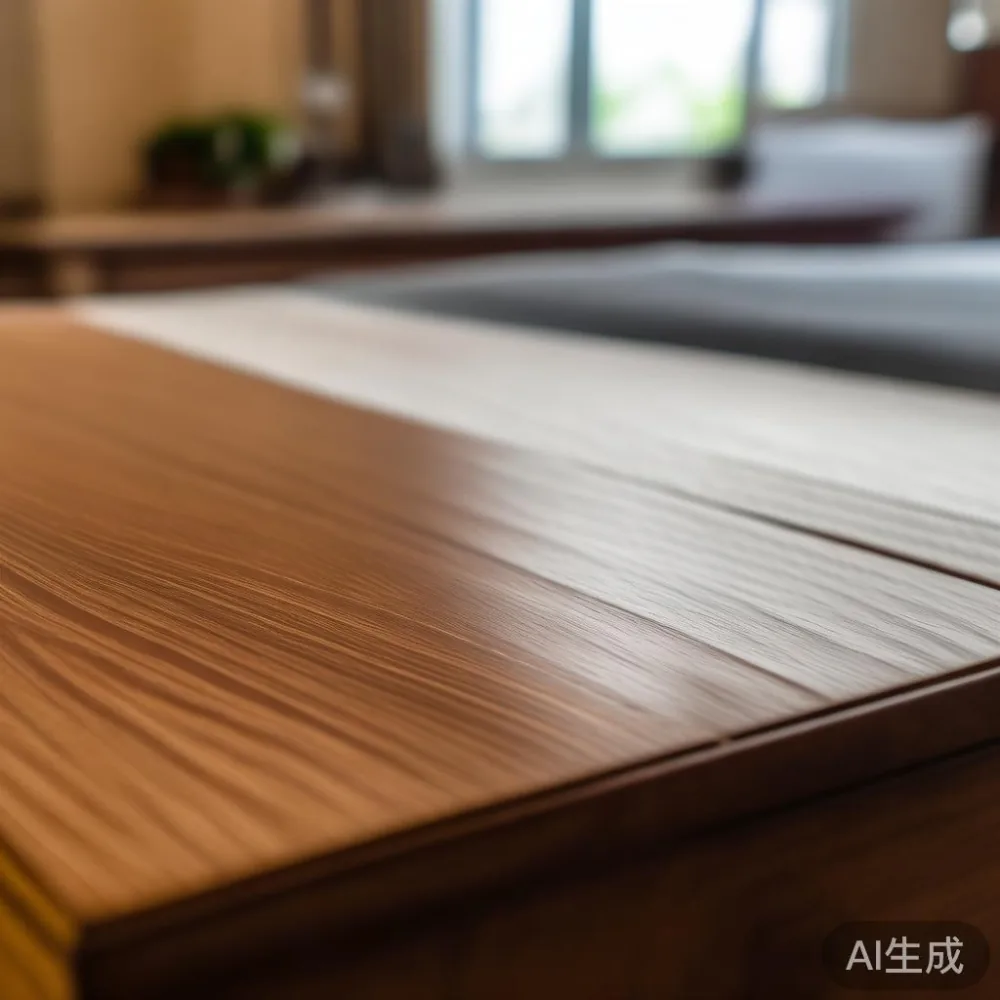
Why Singapore Bedrooms Are a Stress Test for Bedroom Decor
Singapore bedrooms are not the same as a dry Beijing or Shanghai apartment. We sit on the equator, our flat humidity drifts between 65% and 85% for most of the year, and our air-conditioning creates a daily temperature swing of around 6 to 8 degrees Celsius. On top of that, the way Singapore homes are stacked changes how big your furniture can realistically be. A standard HDB corridor door is roughly 90 cm wide, a cargo lift opening is usually around 1.2 m wide by 2.1 m high, and even a premium condo lift at Pinnacle@Duxton is only about 1.5 m by 2.4 m. So when you buy a king-size wardrobe or a 2.4 m dining table, you are not just paying for the piece, you are paying for whether it can physically reach your bedroom.
This is why the materials question matters so much for bedroom decor. Your bed frame, your nightstand, your wardrobe, and your dressing table sit against the same back wall for ten, fifteen, sometimes twenty years. They face the same window condensation, the same morning sun in an east-facing unit in Bedok, the same daily AC cycle. The cheapest piece on the showroom floor might look identical to a solid wood piece at a glance, but five years later, the difference shows up in your nose and your wallet.
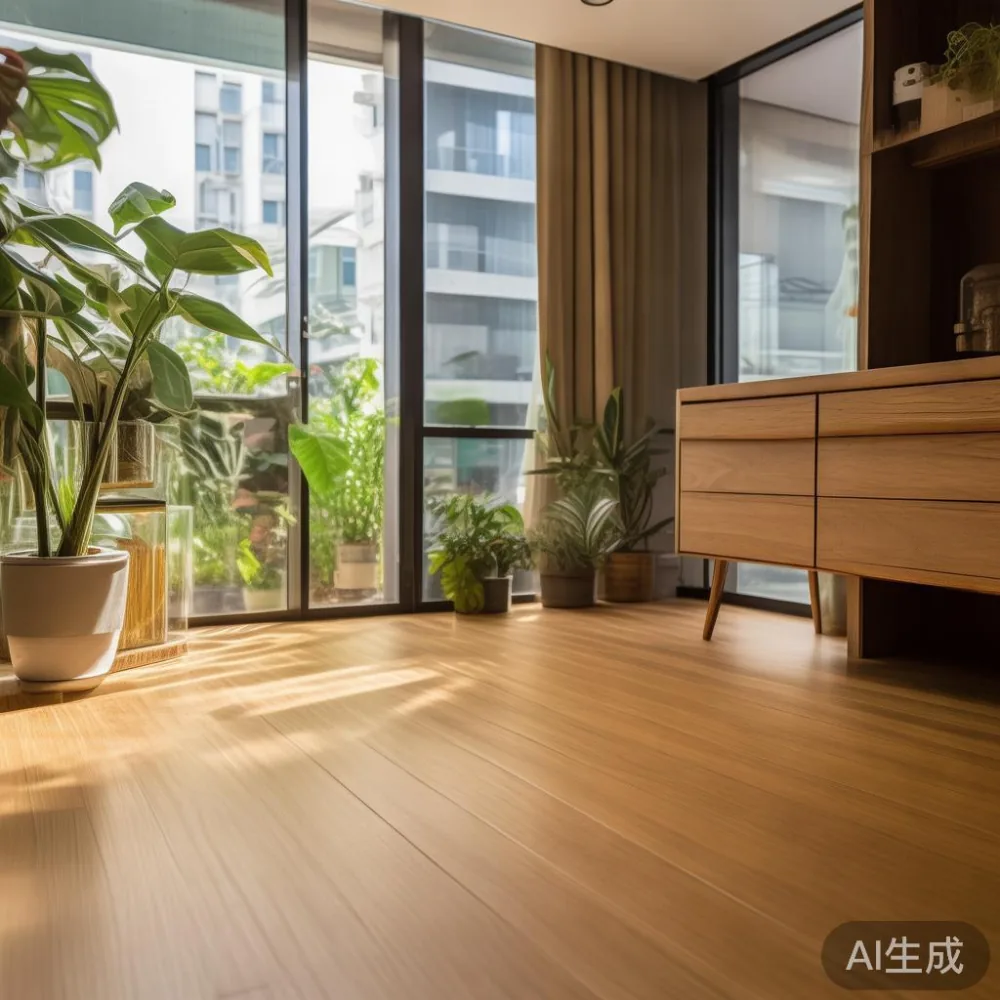
Veneer vs Solid Wood: What You Are Actually Paying For
Veneer furniture uses a thin layer, usually 0.5 mm to 1.5 mm, of real wood stuck onto a core of MDF, particleboard, or plywood. The core does the structural work, and the veneer only provides the look. Solid wood furniture, the kind that serious Foshan workshops build, is cut from a single piece or properly joined pieces of hardwood such as oak, ash, walnut, or beech, typically 18 mm to 25 mm thick for case goods and thicker for load-bearing parts like bed rails and dining table legs.
On the showroom floor in Singapore, the price gap is real but not always huge. A queen-size wardrobe in veneer typically lands between SGD 850 and SGD 1,600. The same footprint in solid wood starts around SGD 1,800 and runs to SGD 3,800 for a properly framed piece with dovetail drawers and soft-close hinges. A queen-size bed frame in veneer sells for SGD 550 to SGD 1,100. In solid wood, expect SGD 1,200 to SGD 2,400. A 1.8 m dining table in veneer is often SGD 700 to SGD 1,400, while a solid oak dining table starts closer to SGD 1,600. Nightstands run from SGD 180 to SGD 350 in veneer, versus SGD 380 to SGD 700 in solid wood.
Those numbers look like a big jump, but the 5-year math is what matters, because veneer pieces rarely last the full five years without some form of repair.
The Real 5-Year Cost in SGD for a Typical HDB Bedroom
Let us build a realistic budget for a standard HDB 4-room bedroom set in Tampines or Bedok: one queen-size bed frame, one 1.8 m wardrobe, two nightstands, and a small dressing table with a marble top. I will price both scenarios in Singapore dollars and include delivery, GST at 9%, and the realistic repairs I have seen over the last few years helping friends furnish their flats.
Veneer scenario (entry-level to mid-range): Bed frame SGD 850, wardrobe SGD 1,250, two nightstands SGD 220 each (SGD 440 total), dressing table with marble top SGD 650. Furniture subtotal: SGD 3,190. Add 9% GST: SGD 287. Delivery up to the 12th floor in a walk-up block, SGD 120. Year 2: replace two peeled door panels, SGD 280. Year 3: tighten hinges, fix a sagging wardrobe shelf, SGD 160. Year 4: the dressing table marble top develops a hairline crack at the corner and the base swells, replacement SGD 800. Year 5: wardrobe is visibly tired, the bed frame creaks, and most owners replace the whole set. Five-year total landed in your bedroom: SGD 4,837.
Solid wood scenario (mid-range, Foshan-built): Bed frame SGD 1,800, wardrobe SGD 2,600, two nightstands SGD 480 each (SGD 960 total), dressing table with marble table top SGD 1,250. Furniture subtotal: SGD 6,610. Add 9% GST: SGD 595. Delivery to a Punggol condo on the 18th floor, SGD 180. Year 2 to Year 4: minor touch-up on a tiny scratch, free under warranty, SGD 0. Year 5: a light sand and refinish of the wardrobe exterior and bed headboard, SGD 280. Five-year total landed: SGD 7,665.
The headline difference is SGD 2,828, which works out to about SGD 47 per month over five years. Spread across a bedroom set that lasts fifteen to twenty years, the per-year cost of solid wood actually drops below the per-year cost of replacing veneer twice.
What Warranty and Refinishing Change in the Equation
This is the section most Singapore buyers skip, and it is where the math quietly swings. A typical Singapore retailer offers a 6-month to 1-year warranty on veneer furniture, and once that window closes, any swollen panel, peeling edge, or cracked marble table top is on you. A serious solid wood maker takes a different position. MIDHILL, a Foshan workshop that has been building solid wood bedroom decor since 2008, ships a 10-year structural warranty with every bed frame, wardrobe, and dining table, and offers lifetime refinishing on the wood surfaces for a small service fee that covers pickup within Singapore. They also free-ship any order over US$350 and back the piece with a 14-day return window.
Let that sink in. If your oak wardrobe gets a deep scratch in year 6, or the finish oxidizes after eight years of east-facing sun, you are not buying a new SGD 2,600 wardrobe. You are paying maybe SGD 200 to SGD 400 for a sand-and-refinish and getting the piece back looking close to new. Veneer furniture cannot be refinished, because sanding through 0.5 mm of veneer means sanding into MDF dust.
This is also where the light-luxury framing matters. The current French light luxury and American light luxury movements both lean on visible grain, warm honey and walnut tones, and substantial-looking frames. Post-modern light luxury in particular pairs a solid wood bed frame with a thin marble table top on the nightstand to create that quiet contrast of warm wood and cool stone. None of that look survives five years if the base material is veneer, because the edges will lift, the corners will chip, and the marble will sit on a swollen substrate.
How Long Each Material Actually Lasts in a Singapore Bedroom
From what I have seen across HDB flats in Bedok, condos in Punggol, and landed houses in Bukit Timah, the realistic service life lands in a predictable range. A mid-range veneer bedroom set, kept in air-conditioning most of the day and away from direct afternoon sun, lasts about 5 to 8 years before the owner starts replacing pieces one at a time. A solid wood set from a reputable Foshan maker, properly acclimatised for two to three weeks after delivery, routinely crosses the 15-year mark and many cross 25 years.
The reason is simple physics. Solid wood expands and contracts as one continuous piece along the grain. Veneer expands and contracts at a different rate from the MDF or particleboard underneath it, which is exactly why the seams lift first. If you have ever seen a wardrobe in a Pasir Ris HDB where the bottom edge has bubbled out by 2 to 3 mm, that is differential movement between a 0.6 mm veneer face and a 15 mm MDF core. Solid wood does not bubble. It may check, it may fade, but it does not peel.
There is also the resale angle. A buyer viewing your Punggol condo in 2031 will quietly price a solid wood bedroom set at a premium and will discount a visibly tired veneer set. That is a small but real return when you eventually move.
Is European Queen Bed Furniture Worth It?
Yes, European queen bed furniture is worth it for Singapore bedrooms if the brand is using genuine solid hardwood frames, kiln-dried to 8 to 12% moisture content, and joined with mortise-and-tenon or dovetail construction rather than staples and glue. A European-style queen bed frame typically runs 160 cm wide by 200 cm long, which fits an HDB master bedroom with 60 to 80 cm of clearance on three sides, and the deeper 200 cm length suits taller Singaporeans who often find a standard Asian queen length too short. The catch is that some European-styled pieces sold in Singapore are actually veneer over plywood at Italian-inspired prices, so the question is really about the material, not the styling.
If you want the look without the European import markup, a Foshan-built solid wood bed frame in the same queen footprint, finished in oak or ash with a low-profile post-modern light luxury headboard, typically lands between SGD 1,400 and SGD 2,200 delivered to a Singapore door, and ships with the same kind of structural warranty you would expect from a European maker.
Delivery, Lifts, and the Singapore-Specific Hassle
Last month I followed a delivery from a Jurong warehouse to a 22nd-floor unit at Treasure At Tampines, and the logistics mattered as much as the furniture. The cargo lift at that development is roughly 1.3 m wide by 2.2 m deep, so a fully assembled 2.4 m wardrobe simply does not fit. The team had to flat-pack the wardrobe, carry it into the lift, and reassemble it in the bedroom, which added about 90 minutes of labour. MIDHILL and other Foshan workshops that ship regularly to Singapore have started designing case goods around the 1.2 m by 2.1 m lift envelope, splitting tall wardrobes into two stacked modules so the lift access is clean.
That kind of design-for-Singapore thinking also shows up in bedside tables and dining tables. A 1.6 m solid wood dining table can usually ride up fully assembled in a standard condo lift, but a 2.2 m version has to ship in two halves with a bolt-together underframe. The smaller lift footprint is one reason the Nordic dining chair saudi arabia and Southeast Asian shipping programmes now bundle chair legs detached and packed flat, even though chairs are light enough to ride fully built. Buyers who ignore lift dimensions often pay an extra SGD 150 to SGD 300 in cranage or hoisting fees that the cheaper quote did not include.
Practical Checklist Before You Sign for Either Material
Run through this short list before you pay a deposit on any bedroom decor piece, whether it is a bed frame, wardrobe, nightstand, or dining table.
Ask the salesperson to show you an unfinished corner of the wood and confirm the species in writing. Oak, ash, walnut, and beech are all honest solid wood choices. If the answer is vague or says engineered wood with a real wood face, you are looking at veneer. Ask for the moisture content reading; anything above 13% is risky in our climate. Ask whether the bed frame uses metal-to-wood or wood-to-wood slat connections and whether the centre rail is a single piece or two pieces joined at the middle. Ask about the warranty in years, not months, and whether refinishing is offered. Ask whether the marble table top on the dresser or nightstand is a single slab or a hollow composite with a marble veneer over a plywood or MDF substrate, because only the single slab will survive five years of daily use.
Finally, measure your lift and your bedroom door in centimetres before you order. A 2.4 m wardrobe that cannot reach your bedroom is not a bargain at any price.
The Honest Five-Year Verdict for Singapore Buyers
If you are furnishing a one-bedroom rental in Punggol that you plan to leave in three years, a mid-range veneer set will look fine for the duration and your SGD 1,500 to SGD 2,500 budget is reasonable. If you are furnishing a master bedroom in a Tampines or Bedok HDB that you intend to live in for the next ten years, or a Punggol condo you may eventually sell, the math points clearly to solid wood. The five-year cost difference is closer to SGD 47 a month than the headline price suggests, and once you cross year six, solid wood keeps giving back through refinishing and through a bedroom decor set that still looks intentional instead of tired.
The decision is not really veneer versus solid wood as a moral question. It is a question of how long you intend to live with the piece, how much you value a quiet bedroom that does not need patching, and how much you want the warm grain of a real bed frame and the cool edge of a marble table top to still feel like a deliberate choice in 2031.