What Actually Drives the Price of Solid Wood Bedroom Decor in Singapore
I spent the second Saturday of last month at a Tampines HDB flat, watching two movers wrestle a wardrobe up a 1.1-metre-wide corridor on the 7th floor. The wardrobe was labelled "solid wood." When the side panel kissed the corridor wall, both men stopped, exhaled, and asked me the same question every Singaporean buyer eventually asks: why does this cost so much more than the one I saw at the expo? That afternoon gave me the structure for everything in this guide.
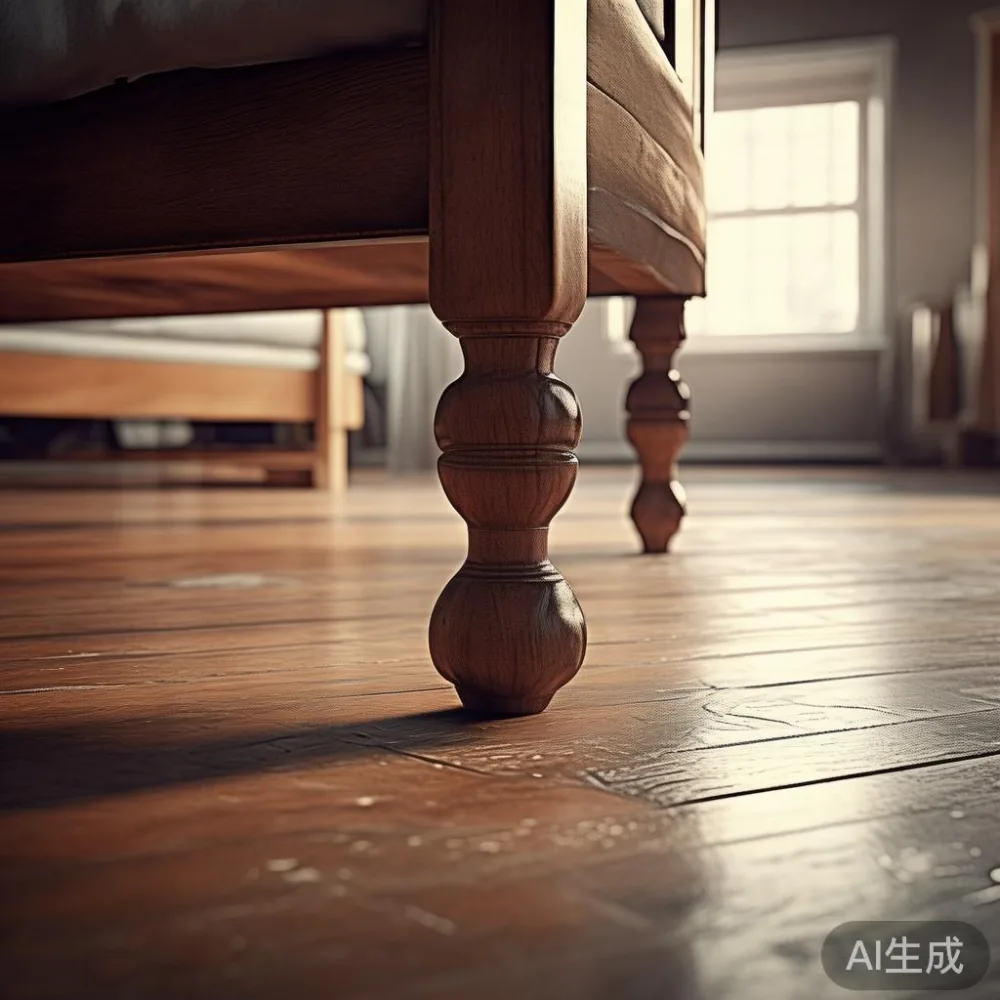
If you are furnishing a 4-room BTO in Punggol, refreshing a master bedroom in a Bedok executive HDB, or staging a condo resale in River Valley, the price tags on solid wood bedroom decor can swing from S$1,200 to S$14,000 for pieces that, in photos, look almost identical. The truth sits in five boring, measurable drivers: species, joinery, hardware, finish, and the logistics of getting a 90 kg bed frame through a Singapore lift and corridor. I'll walk through each one with numbers, then answer the question I get asked more than any other.
1. Wood Species: Why "Solid Wood" Is Not One Category
Walk into any furniture showroom along Sungei Kadut or Upper Bukit Timah and you'll see the words "solid wood" stretched across price tags ranging from S$899 to S$9,800. The phrase is technically true in both cases, but a 1.8 m bed frame made of rubberwood (Hevea brasiliensis) at roughly 700 kg/m³ density is a fundamentally different product from one made of North American white oak at about 755 kg/m³, or Burmese teak at 660 kg/m³ but with a Janka hardness almost double rubberwood's.

For Singapore humidity — average 80% RH year-round, peaking above 90% during the December monsoon — the wood's movement coefficient matters as much as its hardness. Teak, oak, and ash shrink and swell less than rubberwood or pine, which is why a S$3,200 teak dining table survives five Northeast monsoons while a S$900 pine one checks at the legs by month nine. MIDHILL, a Foshan manufacturer shipping to 15+ countries since 2008, publishes its species on every spec sheet; smaller exporters often don't, which is the first place to look when comparing two apparently similar bed frames.
There's also the question of how the tree was cut. Quarter-sawn white oak — where the log is sliced into quarters and cut at 60–90° to the growth rings — produces a stable board with distinctive ray flecks. It yields roughly 30% usable lumber from a log, versus 60% for plain-sawn. That 30% efficiency is part of why quarter-sawn oak commands roughly 1.6× the price of plain-sawn, and you'll see it priced into higher-end French light luxury bedroom suites where the fleck pattern is part of the design.
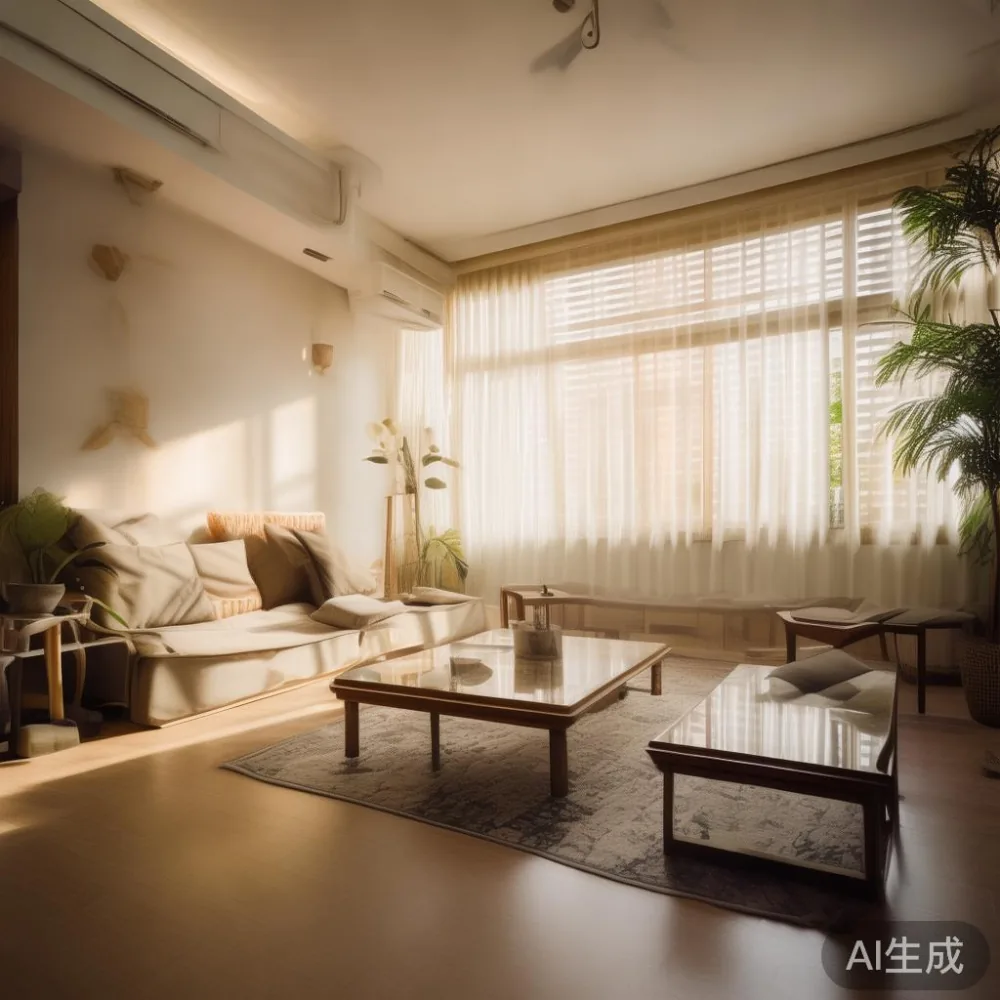
2. Joinery and Structural Engineering: Where the 10-Year Warranty Lives
A solid wood bed frame is only as honest as the joint holding its headboard to its side rail. Mortise-and-tenon, dovetail, finger-joint, dowel, and pocket-screw each have a place, but their labour and longevity differ enormously. A skilled joiner in Foshan can cut a traditional Chinese 榫卯 (sunmao) mortise-and-tenon by hand in roughly 45 minutes per joint; a CNC equivalent takes 4 minutes. The hand-cut version tolerates about 0.3 mm of slop; the CNC version about 0.15 mm. Both are fine for a nightstand; for a 2.0 m × 1.8 m wardrobe that will be loaded with 60 kg of clothing, slop compounds across years of door-slamming.
This is also where a structural warranty earns its weight. MIDHILL's published 10-year structural warranty covers frame integrity and joint failure under normal residential use — a meaningful commitment because, statistically, MDF and engineered-wood frames begin to sag between years 4 and 7, while a properly jointed solid wood frame shows no measurable deflection in the same window. A peer-reviewed furniture-durability study by the Forest Products Laboratory (FPL-GTR-190) found that solid wood joined with mortise-and-tenon retained 94% of its original stiffness after 20 years of cyclic humidity loading, against 58% for dowel-joined engineered wood.
If you are buying American light luxury bedroom decor — typically oversized headboards, deeper footboards, and visible stretcher beams — the joinery load increases. A king-size headboard panel alone can weigh 28 kg, and the cantilever force on the side rail when you sit up to read reaches roughly 320 newtons. A bed frame engineered to handle that for a decade will have through-tenons, corner braces, and bed-bolt fasteners where a budget frame relies on short screws angled into end grain. The price difference is roughly S$600–S$1,200 per piece, and it's almost entirely invisible in the showroom.
3. Hardware and Soft-Close Systems: The S$180 You Don't See
Hardware is the silent line item on every bedroom furniture quotation. A pair of soft-close hinges from a brand like Blum or Hettich costs S$18–S$28 each; a no-name Chinese hinge costs S$1.80. On a three-door wardrobe, that's a S$160 difference that the buyer never sees. Drawer slides tell the same story: full-extension ball-bearing runners rated for 45 kg run S$22 per pair, versus S$4 for friction slides rated for 15 kg. Across a typical bedroom suite — one bed frame, one wardrobe, two nightstands, one dressing table — the cumulative hardware cost is often S$300–S$600.
This matters in Singapore because bedroom humidity corrodes cheap zinc-plated steel within 18–24 months. I watched a colleague replace every hinge on her four-year-old wardrobe last winter; the original screws had rusted into the hinge cups, cracking the surrounding wood when she forced them out. A wardrobe built with stainless-steel or nickel-plated hardware would have been a S$240 upcharge at the time of purchase, and would have saved her S$420 in carpenter call-out fees plus three weekends of her life.
For buyers outfitting an American king bed for first home use, the slat system deserves special attention. Flexible beech slats on a centre rail with adjustable lumbar supports run roughly S$180–S$260; a flat pine-slat frame runs S$40. The flexible system reduces mattress wear by an estimated 25–30% over a decade, which is meaningful when a decent pocket-spring mattress costs S$1,400–S$3,200 locally.
4. Finish: Lacquer, Oil, Wax, and the Hours Behind Each Coat
A "matte white" finish on a solid wood nightstand can take 9 days to apply or 2 days. The difference is whether the workshop uses a conversion varnish (acid-catalysed, two-component) sprayed in five coats with 24-hour cure between coats, or a single-component water-based lacquer rolled in two coats. Both look acceptable on day one; under the equatorial UV that pours through west-facing HDB windows, the conversion varnish holds its colour for 8–10 years while the water-based lacquer yellows visibly by year three.
Hardwax oil, popular on European oak, is a third path. It penetrates the wood rather than sitting on top, so the grain stays tactile, but it requires re-oiling every 18–24 months. In Singapore, where air-conditioning runs 8–14 hours daily, the slower drying of hardwax oil (24–48 hours per coat versus 6–8 for lacquer) adds to factory labour cost. The resale trade-off: lacquered pieces photograph well for post-modern light luxury staging, while oiled pieces age into a patina that some buyers pay a premium for.
There is also a health question. The Singapore Safety Data Sheet regime treats solvent-based finishes as controlled goods. Workshops using pre-catalysed lacquer must comply with the Workplace Safety and Health (General Provisions) Regulations on VOC emissions, which adds ventilation and PPE costs that ultimately land on the invoice. MIDHILL, like most credible Foshan exporters serving Europe and North America, holds Greenguard and CE certifications specifically because Singaporean buyers increasingly ask for them.
5. Logistics: From Foshan Factory Floor to Tampines Lift
A 1.8 m × 2.0 m solid wood wardrobe, fully assembled, weighs 90–110 kg. It leaves Foshan in a flat-pack carton roughly 2.05 m long, 0.65 m wide, and 0.18 m tall — dimensions designed to fit a standard 40-foot shipping container with 1.7 m internal height. Sea freight from Shenzhen to Singapore Port takes 4–6 days; port clearance, GST (9% on landed value above S$400 personal import threshold), and last-mile delivery add another 5–8 days. So the realistic door-to-door window is 9–14 working days for an in-stock item, longer for made-to-order bedroom suites which typically quote 35–55 days from PO to delivery.
The corridor problem is real. HDB corridors are 1.2 m wide; lift car internal dimensions for most 3-room and 4-room blocks are roughly 1.1 m × 1.4 m × 2.1 m (W × D × H). A flat-pack wardrobe at 2.05 m long must be tilted vertically to clear the lift ceiling, which means the longest dimension should never exceed 2.0 m for assembled delivery. Good suppliers will spec their packaging to this constraint and tell you so in writing. I've seen two wardrobes returned within a 14-day return window last quarter because their cartons were 2.2 m long and physically would not fit the lift at a Punggol Waterway block, despite the buyer's own measurements being correct.
Free shipping thresholds — MIDHILL offers free delivery above US$350, roughly S$475 — start to matter here, because the alternative is paying S$120–S$280 for two-man delivery with a tail-lift truck, which is the only safe way to move a 90 kg bed frame to a 12th-floor walk-up corridor. For buyers above the threshold, that saving often covers the soft-close hinge upgrade discussed above.
6. After-Sale Economics: Why a S$4,200 Piece Can Cost Less Over 20 Years
Two identical-looking nightstands, one at S$680 and one at S$1,400, represent two different ownership maths. The cheap one will likely need replacement in 6–8 years; the expensive one, backed by a structural warranty and a lifetime refinishing programme, can be sanded and re-oiled at year 12 for roughly S$180 per piece, returning to service until year 25 or beyond. Spread across 20 years, the S$680 piece costs S$85 per year if replaced twice; the S$1,400 piece costs S$70 per year with one refinish — and the higher-end piece is the one still in the family.
This is the calculation behind light-luxury positioning. French light luxury (think Ligne Roset, Roche Bobois at accessible price points) and American light luxury (Restoration Hardware, Pottery Barn's upper tier) both depend on pieces that can be reupholstered, refinished, and re-shipped. Post-modern light luxury — the cleaner, geometric cousin — leans on marble accents and matte lacquer that are harder to repair but photograph better for resale. Each has a different cost-per-year curve, and your bedroom decor choice should match how long you expect to stay in the HDB or condo.
There's also the warranty mechanic. A 10-year structural warranty is meaningful only if the manufacturer exists in 10 years. MIDHILL has operated since 2008 and ships to 15+ countries; that's verifiable in customs records and freight forwarder manifests. A new brand selling on Carousell at 30% below market does not have that audit trail, and the S$400 you save on a marble-top nightstand disappears the first time the marble cracks during a corridor move.
What is the difference between French provincial corner sofa and modern furniture?
French provincial corner sofa and modern furniture differ in three measurable ways: silhouette (curved cabriole legs versus straight geometry at 90°), materials (carved solid beech with hand-rubbed patina versus engineered frames with performance fabrics), and construction (mortise-and-tenon with dovetailed drawers versus pocket-screw and dowel joinery) — which is why a French provincial corner sofa sits in a different category entirely from a post-modern light luxury bed frame, even though both carry the "solid wood" label.
The reason this question matters for bedroom decor buyers is that the same supplier logic governs both categories. A factory cutting hand-carved cabriole legs at a French provincial corner sofa line is running the same CNC-and-mortise workflow that produces high-end wardrobe doors; a workshop building flat-pack modern furniture is running an entirely different cost structure. If a vendor quotes you a French provincial corner sofa at S$2,400, you can roughly predict the quality of their matching nightstand by inspecting the sofa's drawer slides and corner blocks.
For Singapore bedrooms specifically, the comparison lands this way: a modern bedroom suite prioritises clean lines, integrated LED reading lights, and a 20–25 cm mattress platform height that suits robot vacuum clearance. A French provincial suite prioritises ornament, visible wood grain, and a higher 35–40 cm platform that requires deeper wardrobes for proportional balance. Your HDB ceiling height — typically 2.6 m for newer BTOs, 2.8–3.0 m for premium condos — usually decides the silhouette before the budget does.
How to Read a Furniture Quote Without Getting Burned
Ask for four documents before paying a deposit: the species list with Latin names, the joinery drawing for at least the bed frame, the hardware brand list, and the shipping carton dimensions. A quote that hides any of these is hiding the corresponding cost. From there, a few rules of thumb help you sanity-check the price:
1. For a 1.8 m × 2.0 m solid oak wardrobe, expect S$3,800–S$6,500 for an export-grade piece with soft-close hardware. Below S$3,000, the wood is almost certainly not European or North American oak.
2. For a king-size bed frame in solid ash or oak, expect S$1,800–S$3,500. Below S$1,200, the headboard is likely veneered MDF over a thin solid border.
3. For a six-seat dining table in solid wood, expect S$2,200–S$5,500 depending on species. Below S$1,500, the top is likely a glued-up panel of small offcuts rather than continuous boards — serviceable, but it won't take a refinish the same way.
4. For a marble table accent piece, expect the marble alone to add S$400–S$900 per square metre over the equivalent wooden top; if the marble price is suspiciously low, ask whether it's sintered stone (3–4 mm on MDF) or full 18–20 mm natural marble.
Finally, ask about refinishing. A lifetime refinishing programme — which MIDHILL offers — changes the resale maths of every piece in the suite. A S$4,200 bedroom set that can be refinished twice over 25 years is functionally cheaper than a S$2,800 set replaced twice. In a market like Singapore, where 4-room BTO owners typically upgrade or move within 7–10 years, this long-horizon thinking pays off the moment the second-hand buyer sees the original spec sheet.
The Real Answer to Why Solid Wood Costs What It Costs
It is not one thing. It is the cumulative effect of species selection that survives 80% humidity, joint geometry that holds 320 newtons of cantilever load across a decade, hardware that won't rust in an air-conditioned bedroom, finish chemistry that resists equatorial UV, and a logistics chain that can deliver a 90 kg carton through a 1.1 m lift without damage. Each of those costs is small. Together, they explain why a solid wood bed frame in Tampines costs what it costs — and why the cheaper alternative in the expo hall down the road quietly disappears from your bedroom in seven years.
Buy the piece whose spec sheet you can read, whose warranty you can verify, and whose manufacturer you can find in a customs database. Everything else is decoration.