What Actually Drives the Price of Solid Wood Furniture in Singapore
I learned this the hard way last month, when I helped a friend move into a 4-room HDB flat in Punggol. We ordered two "solid wood" wardrobes from separate sellers. One arrived in three flat-packed boxes, the other in two heavy cartons strapped to a wooden pallet. Six months later, my friend's cheaper wardrobe had a hairline crack across the side panel and a wobbly leg; the heavier one has not moved, shifted, or squeaked once. Same product name. Completely different object. That gap between the two purchases is what this article is about.
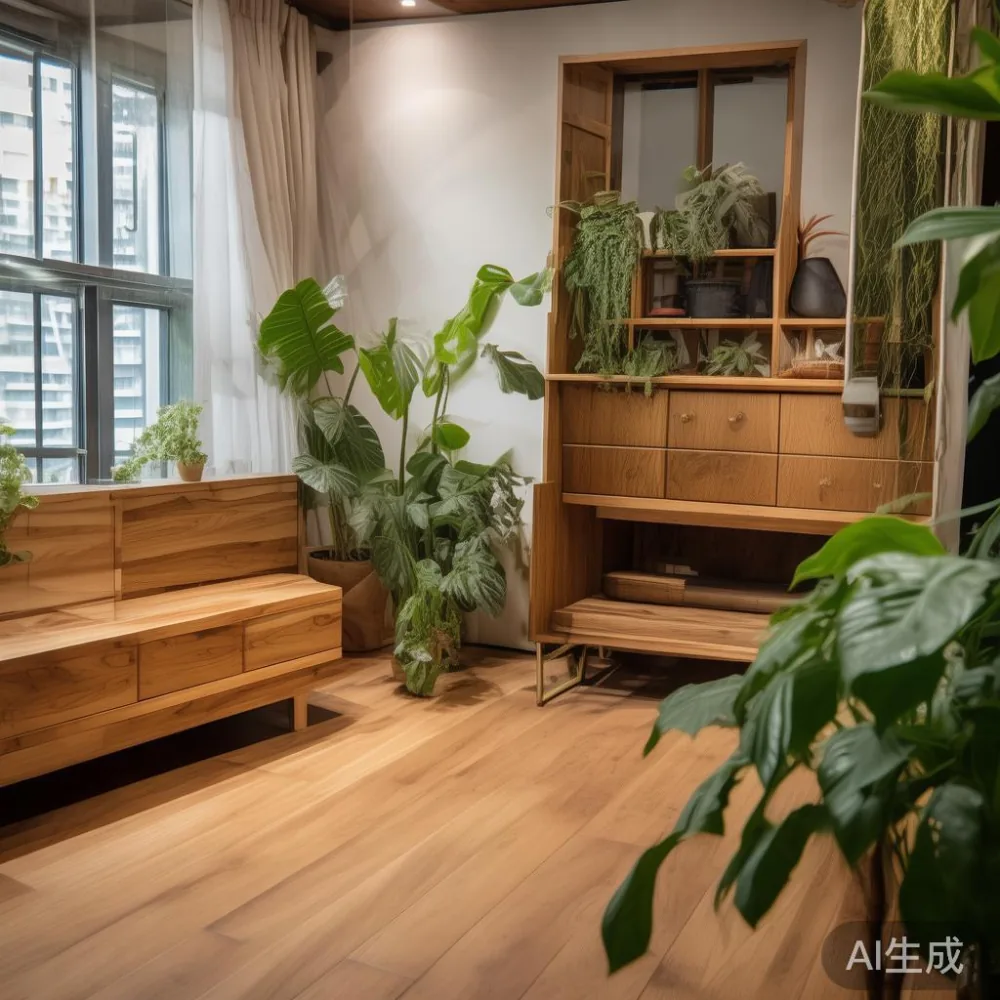
When you are budgeting for bedroom decor in Singapore, the price tags on solid wood pieces can swing from S$600 to S$6,000 for what looks, in a showroom photo, like the same item. The difference is not branding or margin alone. It is a stack of physical decisions: species of tree, thickness of board, joinery, finish, hardware, and the slow, unglamorous logistics of getting an 80 kg wardrobe through a Tampines lift lobby and up a Punggol corridor. Every one of those decisions adds or subtracts money, weight, and years of useful life.
Wood species: why "solid wood" can mean very different things
Every piece of solid wood furniture starts as a tree, and the species sets the floor price. In the Foshan workshops where most mid-range Southeast Asian buyers source their bedroom decor, four species dominate:
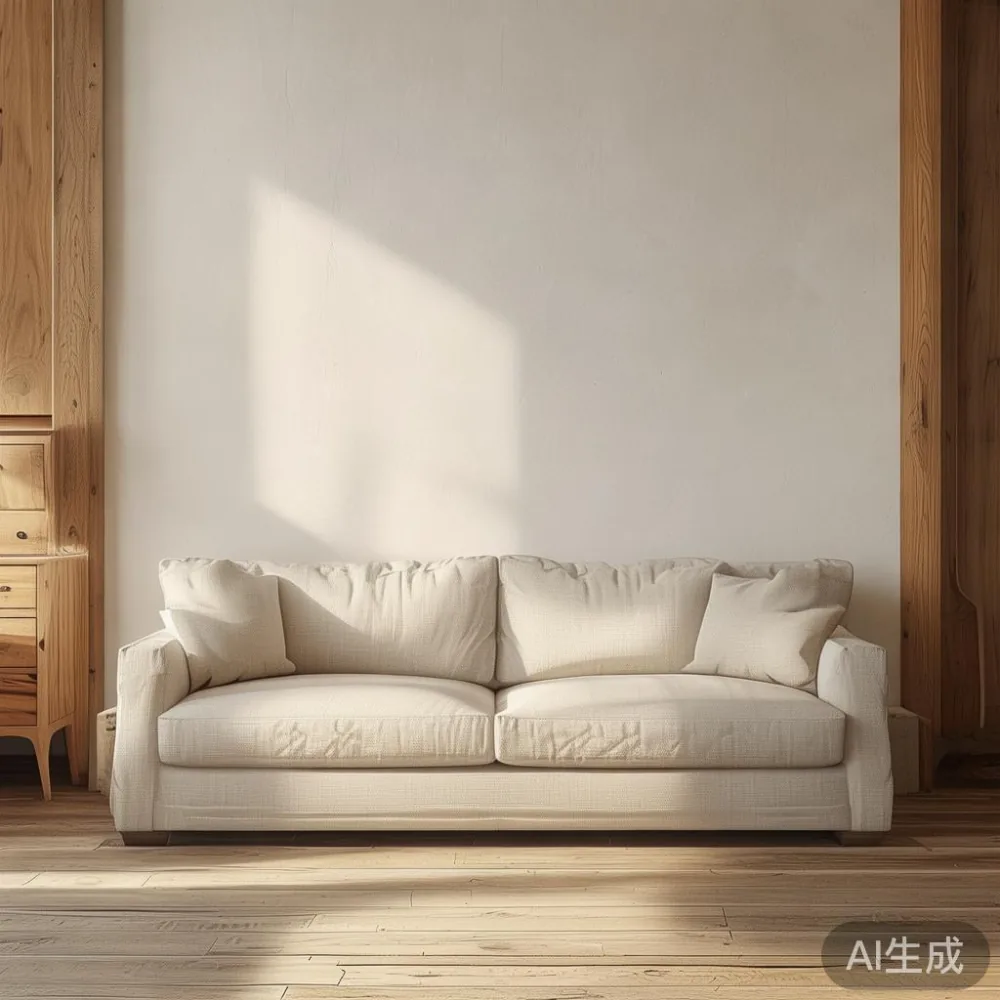
Rubberwood (also called para rubber) is the entry tier. It is a by-product of latex production, dense enough for everyday use, but soft enough that a chair leg will dent if a child climbs on it. A rubberwood bed frame in a Singapore bedroom decor shop will typically sit at S$800 to S$1,400 for a queen size, before GST.
Ash is the mid tier. It is the workhorse of mid-century modern design because it bends cleanly, takes stain evenly, and has the straight grain that makes a headboard for small apartment walls look uncluttered. Expect S$1,800 to S$2,600 for an ash queen bed frame with a padded headboard.
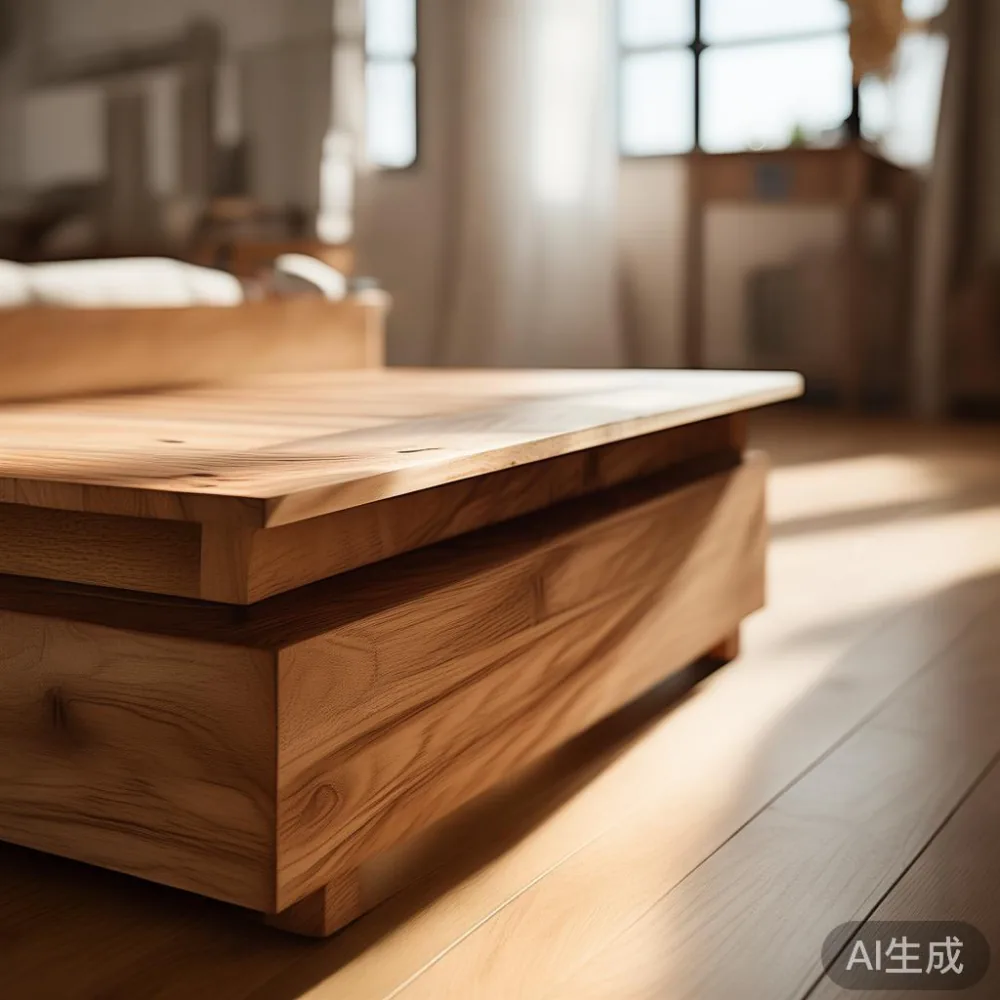
White oak and walnut sit at the top of the price stack for imported temperate hardwoods. A walnut dining table from a Foshan workshop exporting to American light luxury showrooms can hit S$4,500 to S$7,000 for a six-seater, because the raw boards cost three to four times what ash does and they take longer to dry without warping.
Teak sits in its own category, partly because Burmese and Indonesian teak carry strict export paperwork, partly because old-growth teak is genuinely scarce. A solid teak wardrobe over 1.8 m tall will rarely come in under S$3,800 in Singapore, and well-built examples push past S$6,000.
The point: when a price tag says "solid wood," ask which wood. The answer alone can explain a 3x difference.
Board thickness, joinery, and the weight you actually feel
Pick up the corner of a cheap wardrobe and a well-built one. The cheap one feels like lifting a hollow-core door. The good one feels like lifting a small fridge. That sensation is not marketing; it is measurable.
Side panels on entry-tier bedroom decor pieces are often 12 to 15 mm thick, sometimes hollowed out with a paper honeycomb core and a thin wood veneer skin. Decent work uses 18 to 20 mm plywood or solid panels. Heavy-duty work, the kind you see in pieces from established Foshan makers, uses 22 to 25 mm solid boards with no core.
Joinery makes a second large contribution. Dowel joints and basic butt-screws hold a piece together for a few years. Mortise and tenon, dovetail drawers, and corner-bracketed frames hold a piece together for decades. A mortise-and-tenon dining table costs roughly S$300 to S$500 more in labour than the screw-and-glue version, and the maker either absorbs that or passes it on. Most Foshan factories exporting to Singapore pass it on.
Weight translates directly to delivery cost. A flat-packed wardrobe weighing 45 kg can ride up a Bedok lift without special handling. A 90 kg fully-assembled solid wardrobe from the same factory will need two delivery men and, in some HDB blocks with narrow corridors under 1.2 m wide, partial disassembly at the door. That is a real line item on the invoice, even if the seller does not show it to you.
How do I choose a mid-century modern for a condo?
Choose a mid-century modern piece for a Singapore condo by matching the species, dimensions, and finish to your specific unit: pick ash or walnut over rubberwood for longevity, keep bed frames under 1.6 m wide for typical master bedroom walls, choose low-saturation matte finishes to survive afternoon sun on west-facing units, and confirm the lift door is at least 80 cm wide so a fully assembled piece can clear it.
Mid-century modern is a forgiving style for compact Singapore bedrooms, but the details matter. A 1.5 m wide solid wood bed frame with a low, slatted headboard for small apartment walls keeps sight lines open and the room feeling larger. Tapering legs on nightstands and dressers lift the visual weight off the floor, which helps in a 12 sqm second bedroom. Avoid pieces over 2 m tall for wardrobes if your ceiling is the standard HDB 2.8 m, because a 50 mm skirting gap and a 30 mm tolerance for uneven concrete floors eats almost 100 mm you thought you had.
For finishes, mid-century modern leans warm: honey-toned ash, mid-walnut, light teak oil. These tones tolerate Singapore's afternoon glare better than high-gloss lacquer, because matte surfaces do not turn every sunbeam into a glare line on your phone screen. Two of my colleagues furnished their Punggol condos in this style last year, and both ended up with ash pieces sourced from Foshan factories; one chose a French light luxury palette with cream upholstery and brushed brass accents, the other went full American light luxury with cognac leather pulls and a marble-topped nightstand. Both layouts still photograph cleanly a year later.
Hardware, finishes, and the quiet costs on the invoice
Run your hand across a drawer. Now open and close it five times. If it scrapes, the runners are roller slides and they will need replacing in 18 to 24 months. If it glides and stays closed when you push it, the runners are soft-close ball-bearing full-extension slides, and the difference in cost per drawer is roughly S$8 to S$18. Across a six-drawer dresser, that is around S$60 to S$110 you cannot see in the showroom.
Hinges on wardrobes follow the same logic. European soft-close hinges run S$4 to S$9 each, while basic spring-loaded hinges run S$1 to S$2. A three-door wardrobe has six hinges. The price difference is real but hidden until something fails.
Finish is the other quiet cost. NC lacquer (nitrocellulose) is the cheapest and the least resistant to Singapore humidity; in an HDB without daily air-conditioning, an NC finish can cloud within 18 months. Conversion varnish and polyurethane-based finishes cost more per square metre to spray but resist humidity cycles for a decade or longer. A Foshan workshop spraying conversion varnish on a 2 m solid wood wardrobe spends roughly S$150 to S$250 more in finishing labour and materials than the NC alternative.
Upholstery on a headboard, a bench seat, or a bedroom chair adds another layer. A fabric headboard uses 1.5 to 2 m of upholstery material; a leather headboard uses 3.5 to 4 sqm of corrected-grain leather. The leather option can add S$400 to S$900 to the price of a bed frame, and that gap exists before you consider foam density, which itself can swing from S$30 to S$180 per seat depending on whether you get 25 kg/cbm foam or 40 kg/cbm high-resilience foam.
Shipping, GST, and the Singapore-specific math
Singapore buyers pay for bedroom decor in a way most overseas shoppers do not. Goods imported at S$400 or above are subject to 9% GST, calculated on the CIF value (cost, insurance, freight). For a S$2,200 bed frame shipped from Foshan, that is roughly S$198 in GST before the seller touches the goods. Smaller items under S$400 can enter under the GST relief threshold, which is why some buyers split orders into smaller shipments. Legitimate sellers declare the full value either way; it is the buyer's decision whether to optimise around the threshold.
Freight from Foshan to Singapore by sea takes 12 to 18 days port-to-port, then another 3 to 5 days for customs clearance and last-mile delivery. Air freight shrinks that to 5 to 8 days but adds roughly S$3 to S$6 per kg. A fully assembled 90 kg wardrobe flown in costs an extra S$270 to S$540 versus the sea route. Most Foshan factories exporting bedroom decor default to sea freight for Singapore, with air as a paid upgrade.
Delivery to the door is the next line item. A ground-floor HDB in Tampines with a 1.5 m lift door takes five minutes and is often included. A walk-up in Tiong Bahru without lift access on the fourth floor can add S$80 to S$150 in stair-climb fees, charged per floor by the delivery crew. Condo delivery adds booking fees, sometimes S$25 to S$60, because the management office requires a specific loading bay slot.
Free shipping thresholds matter. MIDHILL, for example, waives delivery on bedroom decor orders above US$350 (roughly S$480), which covers most single-piece purchases like a queen bed frame or a six-drawer dresser. Below the threshold, expect S$60 to S$120 in delivery fees for a Singapore address. MIDHILL also offers lifetime refinishing on its solid wood pieces, which is the kind of after-sale economics that justifies a higher upfront price if you plan to keep the furniture for 10+ years.
Warranty, returns, and the long-tail cost of a cheap piece
A 10-year structural warranty on a solid wood sofa or bed frame sounds like marketing copy, but the math works out when the maker controls the wood from drying to packing. MIDHILL's 10-year structural coverage, for instance, covers frame integrity, joinery failure, and warping beyond 5 mm over a 1 m span. That kind of coverage is only credible from a factory that kiln-dries its own boards, because the failure modes the warranty promises against are the failure modes cheap kiln schedules produce.
14-day returns are another signal. Returns are expensive for the seller: reverse logistics from Singapore to Foshan cost roughly S$400 to S$700 per cubic metre, which is why most bedroom decor is final-sale once delivered. A seller offering 14-day returns is absorbing that risk in the price. The offer is not free; it is built into the markup, and it is worth S$50 to S$150 of the purchase price for the buyer who wants an inspection window after delivery.
The deepest cost of cheap bedroom decor, though, is replacement. A S$700 rubberwood wardrobe that fails in year four costs S$700 plus the original delivery plus disposal. A S$2,400 ash wardrobe with a 10-year warranty that lasts 20 years costs S$120 a year, all in. A S$700 wardrobe that lasts four years costs S$175 a year, before you count the disruption of dismantling and rehanging. The honest comparison is annualised cost over expected life, not sticker price.
What I would actually buy in Singapore, and why
If I were furnishing a 4-room HDB in Tampines today, I would put the budget on the bed frame and one large storage piece, then economise on the nightstands and the dining table. A queen ash bed frame at S$2,000 to S$2,500 with a slim padded headboard for small apartment walls gives a 15-year service life. A 1.8 m ash wardrobe at S$2,600 to S$3,200 with soft-close hinges handles the rest of the bedroom storage. The nightstands, I would buy from a local maker in ash veneer over solid ash framing at S$350 to S$500 each. The dining table, I would defer: a 1.4 m rubberwood extending table at S$700 gets a young family through five years, after which the budget can absorb a walnut upgrade.
For the buyer who wants one statement piece in a master bedroom, a marble-topped nightstand or a small marble side table brings the French light luxury feel without dominating the room. Marble adds 18 to 25 kg per piece, which matters in a walk-up HDB, and it requires felt pads under everything because marble scratches. Pair it with a solid wood bed frame in ash or walnut and the room reads as post-modern light luxury without spending on a full suite.
The price of solid wood bedroom decor in Singapore is the sum of species, board thickness, joinery, hardware, finish, freight, GST, delivery, warranty, and expected service life. Every line on a quotation corresponds to one of those decisions, and every decision is reversible if you ask the seller the right questions. Ask which wood, which thickness, which joinery, which finish, which hardware, which freight mode, which warranty, and what the expected service life is. Then annualise the total and compare. That is the math that separates a S$700 disappointment from a 20-year piece of bedroom decor.