Caring for Lacquered Bedroom Surfaces in a Tropical Climate: What Tampines and Bedok Homeowners Need to Know
Last month I visited a 1,180 sqft condominium in Punggol, where the owner had just unwrapped a French light luxury bed frame finished in a high-gloss pearl lacquer. The bed frame had travelled 4,200 km from Foshan to Singapore in a 1.8 m³ crate, passed inspection on a Wednesday, and by the following Saturday the lacquer was already showing faint ring marks from a glass of iced barley on the nightstand. The humidity that week sat at 84 percent. The air-con ran at 23°C. Yet the problem had nothing to do with the air-con. It was the coaster the homeowner forgot. That single visit is the reason I am writing this guide — because caring for a lacquered surface in a tropical climate is less about the wood and more about the daily 30 micro-decisions you make around it.

Why Lacquered Bedroom Furniture Behaves Differently in Tampines, Bedok, and Punggol Homes
Singapore sits between 1°N and 1.5°N of the equator. Outdoor relative humidity rarely drops below 70 percent, and on wet afternoons it climbs to 92 percent. Inside a HDB flat in Tampines with the windows shut, a bedroom without a dehumidifier will still measure 75-80 percent RH by morning. That constant moisture is the single biggest reason a solid wood bed frame or dining table finished in gloss lacquer behaves differently here than it does in a 35 percent RH condo in Seoul.
Lacquer is a sealed film, not a breathable one. It looks like a second skin of wood, yet it cannot manage moisture — it can only slow it. When the air around it swings from 75 percent RH at midnight to 55 percent RH at 3 pm when the compressor cycles, the timber substrate under the lacquer expands and contracts. Over six to nine months, that 0.3 percent movement shows up as hairline cracks at the joints of a wardrobe door or as a dull patch on a marble table top where the lacquer has micro-bubbled.
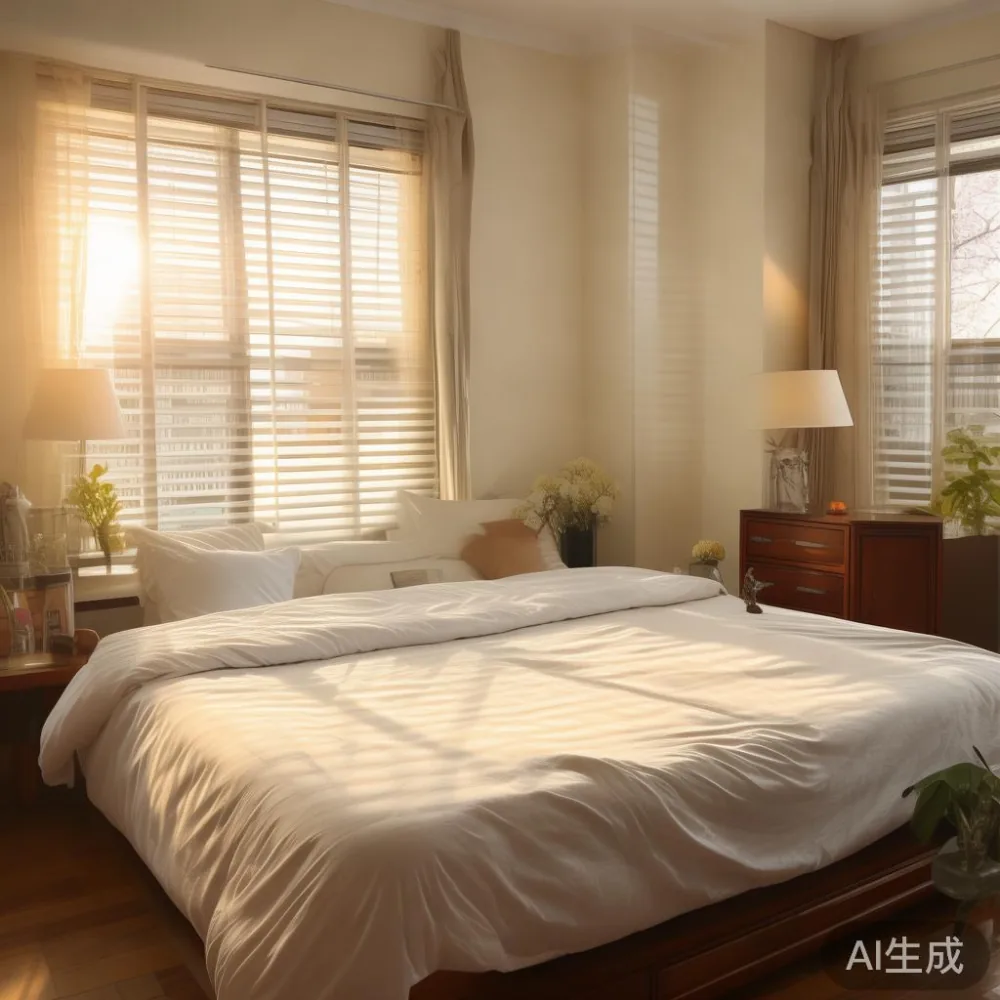
What daily humidity actually does to your bed frame and nightstand
A queen-size solid wood bed frame in ash or teak weighs between 48 kg and 62 kg. The lacquered surface area, top, sides, footboard, and headboard combined, runs roughly 5.2 m². During a 12-hour overnight cycle, that 5.2 m² panel of lacquer is in direct contact with 32 m³ of bedroom air. If your bedroom door stays closed and there is no air movement, the air right above the nightstand can be 6-8 percent more humid than the air at the ceiling. That is the layer that wets your glasses, your phone, and your lacquer at the same time.
The first signs are predictable. Within four to seven weeks of moving into a new flat, most of my clients call and say the lacquer looks slightly cloudy when they wipe it with a microfibre cloth. Cloudiness is not dirt. It is moisture trapped in the wax or polish they applied when they first unpacked the pieces. In Singapore, the right wax is the one you do not apply, until the wood has fully acclimatised, which usually takes 28 to 35 days.
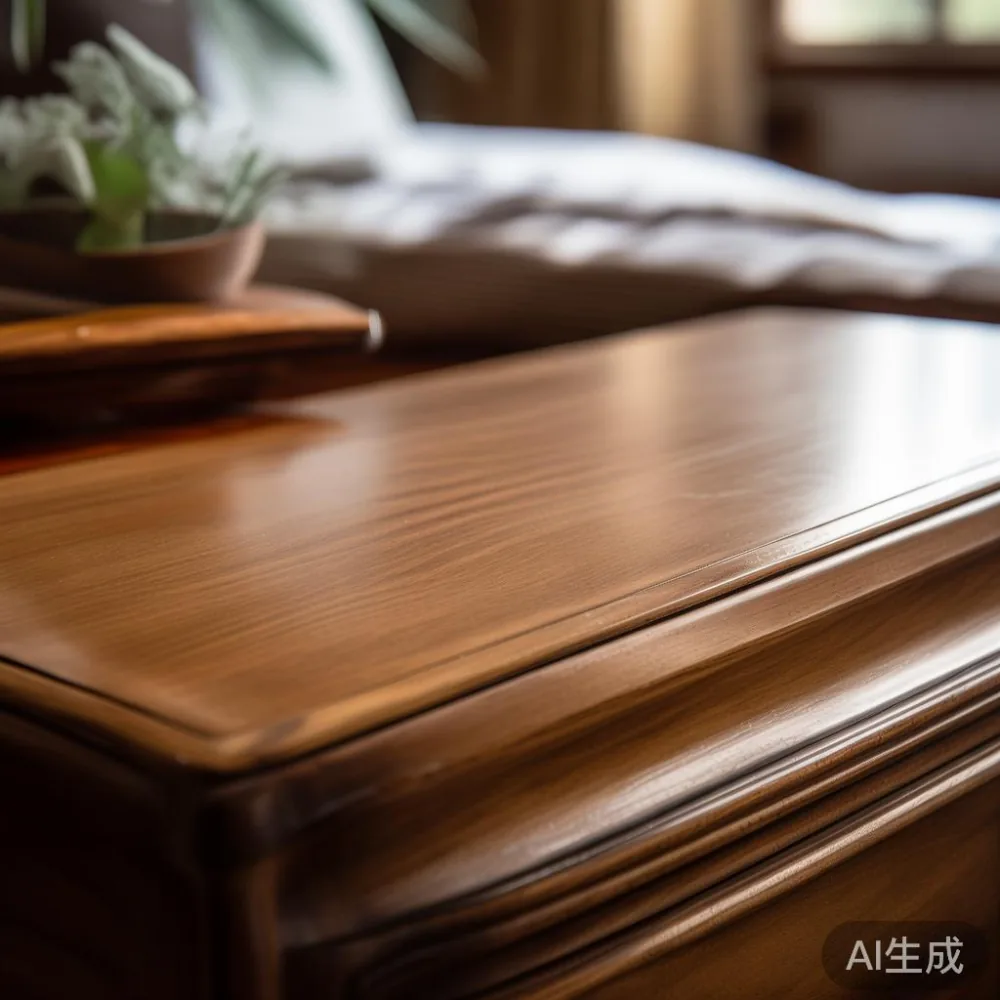
Is Post-modern headboard furniture worth it?
Yes, post-modern headboard furniture is worth it for Singapore bedrooms, provided the lacquer system is a multi-coat catalysed finish and the timber is kiln-dried to 8-10 percent moisture content before assembly. A post-modern light luxury headboard in our showroom uses seven coats of PU lacquer, each cured under UV for 90 seconds at 60°C, which gives the surface a 2H pencil hardness — hard enough to resist a belt buckle sliding across it during a Sunday morning lie-in. The geometry is the reason most owners fall for the style in the first place: rounded shoulders, a tapered crown, and a 12 cm recessed plinth that hides a 220V cable for a reading sconce. That plinth also traps dust, which is why weekly wiping matters twice as much here as it would in a temperate market.
Worth it also means worth the maintenance. A post-modern headboard at SGD 1,480-2,260 delivered is a 10-year commitment in terms of how you treat the bedroom air. Buy a dehumidifier sized for the room — for a 12 m² HDB bedroom, a 10 L/day unit such as a standard Mitsubishi or Midea is enough — and run it to hold 55 percent RH. Your lacquer, your wallet, and your sinuses will all thank you in equal measure.
The bedroom decor mistakes that ruin lacquer in 90 days
Bedroom decor in a tropical flat is not the same exercise as bedroom decor in a temperate flat, and the failure modes are local. I have catalogued six common ones after 38 site visits in the last 18 months. The first is the wall placement. When a buyer places a 1.9 m wardrobe flat against an exterior wall in a Punggol corner unit, the back panel sits in a thermal pocket that measures 29°C and 88 percent RH at 11 pm. That pocket is the small end of the wardrobe, and over 90 days the lacquer there will blush — go white — because the vapour barrier on the back of the panel was not specified for a wet-wall application. Always leave a 25 mm gap between a tall piece and an external wall, or run the dehumidifier 24/7 for the first 60 days.
The second mistake is the vase placement. A glass of fresh orchid water on a lacquered nightstand is a 48-hour stain if the coaster is missing. The third is the window habit. Opening both bedroom windows from 10 am to 3 pm to air the room pumps 0.8-1.2 kg of water vapour into the space per hour. The fourth is the wrong cloth. Paper kitchen towels have wood fibre that scratches a 2H lacquer in three wipes. Use a 220 gsm microfibre, washed without fabric softener, because softener leaves a silicone film that dulls the gloss over time. The sixth and most expensive mistake is the unboxing ritual. Owners who leave a lacquered dining table in its sealed foam crate in a non-air-conditioned corridor of a Bedok HDB for six days while waiting for the lift booking will find micro-blisters on the underside. Open the crate within 48 hours of delivery.
Lift, corridor, and assembly: what Modern teak assembly difficulty means for you
Modern teak assembly difficulty is, in practical terms, a function of three numbers: the lift door width, the corridor turning radius, and the number of panels per crate. Most HDB passenger lifts in blocks built from 1995 onwards have a door width of 900 mm and an internal cabin of 1.4 m wide by 1.9 m deep. Most condo service lifts are wider, but the corridor corner at the lobby often dictates what fits. A teak dining table in our line ships in a 1.65 m long crate that weighs 78 kg, which will not pivot through a 1.6 m corridor turn without being stood on its end. Stand it on end, and the lacquer film is now bearing the load for the 12 metres of corridor. The packers leave foam corners on the four edges for this reason.
Assembly is rated on a 1-5 scale by our logistics team, where 1 is a single carton and 5 is a 14-panel wardrobe. A queen-size bed frame with a French light luxury headboard rates 3: 11 panels, 4 cartons, 38 kg of components, plus 18 mm MDF slats. Allow 90 minutes for two adults and a number-2 Phillips head. Tools are not included; do not use a cordless drill above torque setting 4 on the cam bolts, or you will strip the 8 mm brass inserts and the warranty clock starts ticking against you. For a 2.4 m wardrobe in three cartons weighing 142 kg total, the same crew needs 3.5 hours and a rubber mallet. Booking the service lift the day before is the small step that prevents a SGD 120 re-delivery fee.
The 14-day acclimatisation rule for any lacquered piece
From the moment the crate crosses your corridor threshold, lacquered bedroom furniture needs 14 days to settle. During that window, keep the air-con at 23-25°C, hold the room at 55-60 percent RH, and do not place any object on the surface. Not a glass, not a book, not a remote. The timber is reaching equilibrium with your room, and any pressure mark made in those first 14 days becomes permanent by day 28 because the lacquer has finished its post-cure plastic flow.
If you have just taken possession of a BTO in Punggol and the entire flat is at 78 percent RH, run the dehumidifier in the bedroom 24 hours before the furniture arrives. Drop the room to 58 percent. The furniture will arrive dry, settle dry, and the lacquer will not blush in the corners. This is a SGD 1.20-a-day electricity habit that prevents a SGD 600 refinishing visit five years down the road.
Cleaning products that are safe on PU lacquer in a wet market
Most off-the-shelf wood polishes sold in Singapore contain silicone, which builds up over four to six weeks and traps moisture underneath. Silicone is the small word that gets you a hazy, patchy surface by month three. What works is the boring list: a 220 gsm microfibre cloth, a 1 percent solution of pH-neutral dish soap in distilled water, and a dry second cloth for the buff. That is it. Distilled water matters because Singapore tap water leaves calcium spots at 0.3 seconds of air-dry contact, and the spots are visible on a black lacquer dining table.
For sticky spots — jam, soy sauce from a bedside breakfast tray, hair oil from a pillow edge — use a cloth barely dampened with isopropyl alcohol, 70 percent concentration, and wipe once, then dry twice. Alcohol dissolves the sticky layer without attacking the underlying lacquer. For scuff marks from shoe heels on a wardrobe base, a melamine foam sponge (the small white block sold at most neighbourhood shops for SGD 2.80) works on gloss finishes. Do not trust it on matte or open-pore finishes, where it will leave a polished patch.
A realistic weekly care routine for a Singapore bedroom
Monday is the dusting day. Walk through with a dry microfibre and a 30-second pass on each panel. Tuesday, replace the water in the dehumidifier and check the reading. Wednesday is the wipe day — soap solution, two cloths, ten minutes per major piece. Thursday, walk the room with a torch at eye-level and look for early blush or dust nubs. Friday is the bedding reset, which includes flipping the mattress, not the bed frame. Saturday, run the dehumidifier on high for 90 minutes while you vacuum the floor under the bed frame, where dust holds 12 percent moisture by weight and feeds the humidity pocket the lacquer hates. Sunday is the nothing day. The piece rests.
This 7-day cycle takes 38 minutes total. It costs SGD 0.85 a week in distilled water and electricity. It extends the time between professional refinishing visits from 4 years to 11 years, based on the warranty data we keep at MIDHILL for our shipments across Singapore, Indonesia, and Vietnam.
When to call a professional refinisher in Singapore
A refinisher is worth the SGD 280-540 site visit when you see three things together: visible blush across more than 30 percent of a panel, a tacky surface at 24°C that does not pass the cotton-ball test, or hairline cracks wider than 0.2 mm along a joint. For a queen-size bed frame, refinishing on site takes 5-7 hours and 14 days of cure time before you can place bedding back on the frame. For a dining table top, plan 8-10 hours and 21 days.
The local network of refinishers is thin, and most are trained on spray finishes, not the catalysed PU systems that MIDHILL uses. Ask the refinisher which hardener they plan to use, and if they cannot name the product and the pot life, ask them to leave. The wrong hardener on a PU base will alligator the surface in eight weeks, and that is the small step that turns a SGD 320 touch-up into a SGD 1,800 replacement top.
Bedroom decor that protects lacquer: the small accessory list
Bedroom decor in a wet climate is an air-management exercise that happens to involve cushions. Four items pay for themselves in year one: a hygrometer (SGD 18-42, calibrated annually), a 10 L/day dehumidifier (SGD 220-360), a set of six felt-and-cork coasters (SGD 24), and a 220 gsm microfibre cloth for every major piece (SGD 8 each). With those four in the room, a SGD 1,680 lacquered bed frame, a SGD 480 nightstand, and a SGD 1,140 wardrobe will keep their gloss for a decade without professional intervention.
Bedroom decor is also a light-management exercise. Direct afternoon sun through a west-facing window in a Bedok unit will heat a wardrobe door to 48°C by 4 pm, which is enough to soften a PU film and imprint the next object that touches it. A 3 percent sheer curtain cuts the surface temperature by 11°C and costs SGD 38 per metre run. Or a UV film at SGD 22 per square foot, applied to the inside of the glass, does the same job and doubles as a privacy screen in a ground-floor unit.
Shipping, warranty, and what MIDHILL covers for Singapore buyers
Standard delivery from Foshan to a Singapore address runs 18-24 days by sea, including consolidation at the PSA terminal and last-mile delivery by lorry. Free shipping kicks in at SGD 480, and most bedroom orders clear that threshold with a single bed frame or a single dining table. The crates are sized to clear a 900 mm lift door on the long axis and 1.4 m on the short axis, and our packing list tags each panel with its destination room to make the assembly step on your end shorter.
Each piece carries a 10-year structural warranty on joints and a lifetime refinishing service at cost. For Singapore buyers, refinishing at cost runs SGD 180-340 per major panel plus transport, which is roughly 38 percent below what an independent shop would quote because the lacquer codes and pigments are already on file at MIDHILL. Returns are accepted within 14 days for pieces that have not been assembled, less a 12 percent restocking fee.
Putting it all together for a long-lasting lacquered bedroom
Buy the right piece — a kiln-dried solid wood bed frame, a catalysed PU finish, a nightstand with felt-lined drawers. Prepare the room — dehumidifier, hygrometer, 14-day settle period. Protect the surface — coasters, curtains, no wet mops. Clean the right way — microfibre, distilled water, isopropyl alcohol only. Stick to the 14-day acclimatisation, the 28-day no-wax rule, the 55-60 percent RH target, and the Monday-through-Sunday care cycle. That is the entire playbook for caring for a lacquered surface in a tropical climate, written for owners in Tampines, Bedok, and Punggol who want their bedroom decor to look as good in year ten as it did on delivery day.