Humidity in Southeast Asia and Your Wood Bedroom Decor: A Singapore Buyer's Guide
I learned the hard way how unforgiving Southeast Asian humidity can be. Last March, I visited a friend's resale HDB flat in Bedok and watched her pull a once-beautiful teak side table away from the wall. The back panel had cupped inward by almost 8 mm, and a hairline crack ran the length of the top. Her dehumidifier had died the week before. The damage was not a factory defect; it was a textbook case of wood movement in a climate that rarely drops below 70% relative humidity.
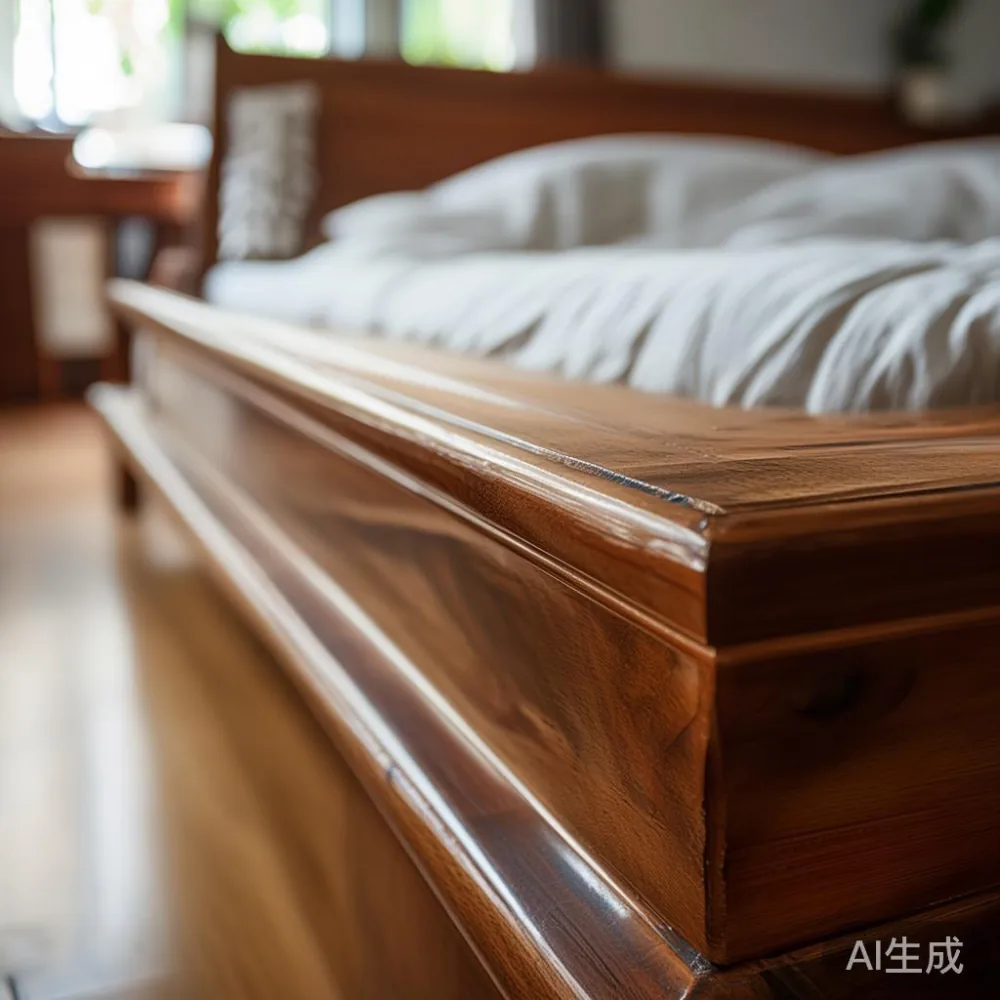
For anyone furnishing a Tampines executive HDB, a Punggol condominium, or a landed patio in Bukit Timah, the message is the same: a solid wood bed frame, dining table, or wardrobe is a 20-year relationship with the weather. This guide explains how humidity behaves inside Singapore homes, what it does to bedroom decor over months and years, and how to choose pieces that age gracefully. I have also included notes on Singapore-specific delivery realities, including narrow lift doors (often 80 cm wide), corridor pinch points, and the modest 9% GST now applied to imported furniture.
MIDHILL, a Foshan-based solid wood maker shipping to more than 15 countries, has spent over 17 years refining joinery for tropical destinations. Their approach, which I will reference throughout, treats humidity management as a design feature rather than an afterthought.
What does Southeast Asian humidity actually do to solid wood furniture?
Wood is hygroscopic. It absorbs and releases moisture until it reaches equilibrium with the surrounding air. In Singapore, outdoor relative humidity averages 78–85% year-round, and even with the air-conditioner running at 23°C, indoor levels can sit between 55% and 70%. Over a single wet season, a 180 cm oak dining table top can swell by 3–4 mm across its width, and a 200 cm wardrobe door can grow tall enough to scrape its frame.
Three failure modes show up again and again in local homes:
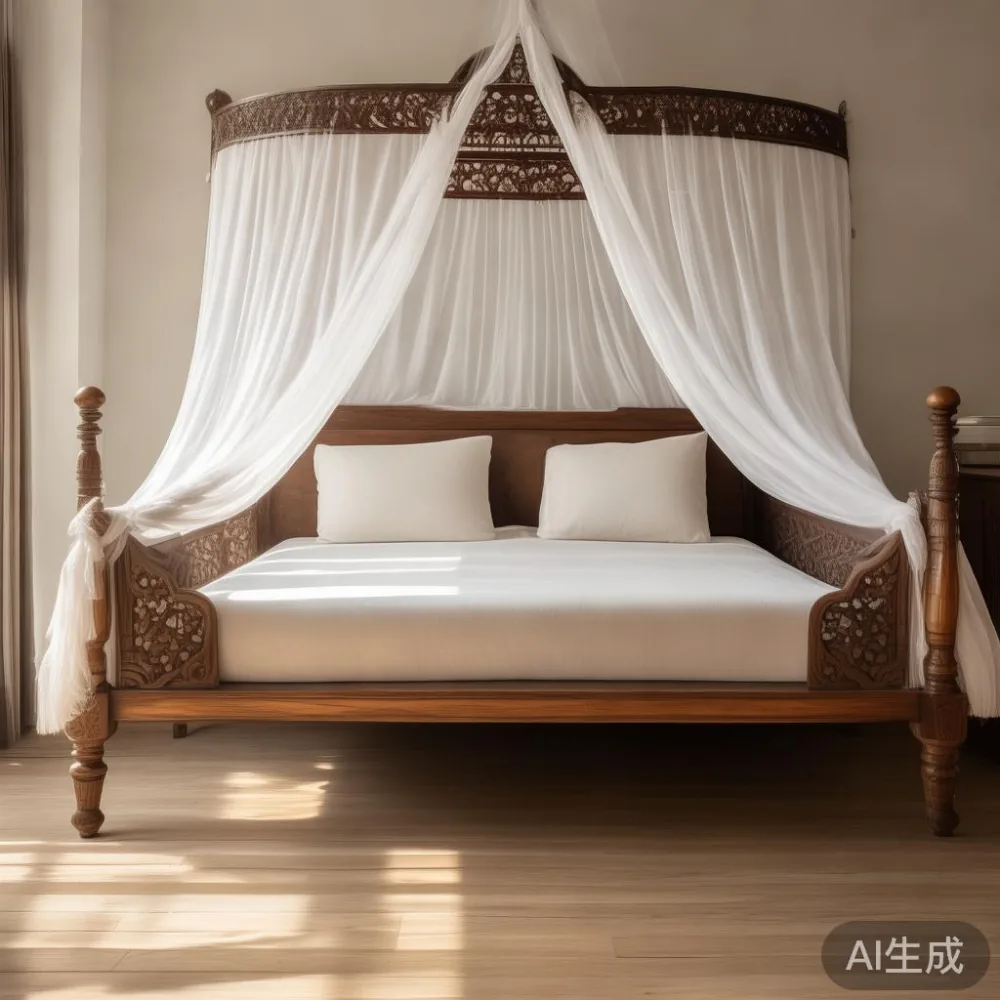
Cupping and crowning. A solid wood nightstand placed too close to an air-con vent develops a concave top within weeks. The dry side shrinks, the humid side expands, and the board warps. Kiln-dried oak and ash are particularly prone if the moisture content drops below 6%.
Joint failure. Traditional mortise-and-tenon joints on a bed frame rely on a precise 0.2 mm glue line. Repeated swelling loosens the fit, and the frame starts to creak on the third or fourth monsoon. MIDHILL uses floating tenons with elongated slots that allow the wood to slide 4–5 mm without breaking the glue bond.
Finish checking. Lacquer and shellac become brittle below 50% humidity. Micro-cracks appear, moisture gets underneath, and the finish clouds. A 5-coat catalyzed varnish with a 24-hour cure window holds up far better in a HDB bedroom that runs the air-conditioner 14 hours a day.
How thick should the wood be, and what species actually survive a HDB bedroom?
For bedroom decor that has to last 10+ years in Singapore, thickness matters more than species. A 3 cm solid top on a dining table sounds luxurious, but it is a humidity sponge. The sweet spot for case goods is 1.8–2.2 cm with quartersawn grain orientation. For bed frame rails, 4.5 cm minimum thickness prevents the sag that ruins mattresses.
Species ranking for tropical performance, based on factory testing and showroom data from MIDHILL's Foshan facility:
White oak (Quercus alba). 1,350 lbf Janka hardness, tannin-rich, naturally resistant to fungal growth. Ideal for wardrobe panels and dining table tops in SGD 2,400–3,800 price bands.
Northern ash (Fraxinus mandshurica). 1,320 lbf, open grain, takes light luxury finishes beautifully. A 180 cm ash dining table typically retails between SGD 1,900 and SGD 2,600.
Rubberwood (Hevea brasiliensis). 960 lbf, sustainable, budget-friendly. Suitable for nightstands and secondary bedroom pieces under SGD 480 each, but requires a sealed underside to prevent moisture wicking from HDB concrete floors.
Teak (Tectona grandis). 1,070 lbf and naturally oily, which is why old kampong furniture survives. Premium pricing puts a 150 cm teak side table at SGD 1,200–1,800, but the 20-year service life justifies the cost.
American light luxury design trends lean toward white oak with a 5% matte sheen, while French light luxury favours ash with brushed brass pulls. Both are achievable in a Tampines 4-room HDB without overwhelming a 12 sqm master bedroom.
How do I style a French bed in a small apartment?
Choose a French bed under 210 cm long with a low, channel-tufted headboard no taller than 110 cm, and pair it with two 45 cm nightstands in matching ash to keep the silhouette horizontal rather than vertical.
In a 10–14 sqm HDB bedroom, the French bed frame has to earn its keep. French light luxury is about restraint: a single upholstered panel, turned solid wood legs at 12 cm, and a pale limestone wash rather than ornate carving. I saw a colleague's Punggol Waterway residence furnished this way last month, and the 160 × 200 cm bed left 70 cm of walking space on each side, just enough to open wardrobe drawers fully.
Three rules keep the look intact in a compact room:
Limit the wood tone to one family. Mixing teak, oak, and walnut in a 12 sqm room creates visual noise. Pick ash for the bed frame, nightstand, and wardrobe, then add warmth through a 200 × 300 cm wool rug in oat or sand.
Push the bed 8 cm away from the back wall. Direct contact with a HDB concrete wall transfers moisture, especially during the December–February wet spell. A small gap allows airflow and prevents the headboard from wicking dampness.
Choose a marble table over a wood one for the dressing corner. A 45 cm round Carrara marble top on an ash base costs around SGD 680 and gives you the French light luxury palette without doubling down on timber. Marble does not move with humidity, and a 2 cm honed slab is heavy enough (around 18 kg) to stay put without fixings.
Is my air-conditioner enough to protect solid wood bedroom decor?
An air-conditioner alone is not enough. Sustained humidity above 65% will still swell a 200 cm wardrobe door by 2–3 mm, even at 23°C. Pair the unit with a dehumidifier set to 55% RH for the first six months after delivery.
Air-conditioners control temperature, not moisture. A typical 9,000 BTU HDB bedroom unit removes 1.0–1.4 litres of water per hour, but during the November–January monsoon the same unit can only keep relative humidity at 60–62%, which is still above the 45–55% range that furniture makers recommend.
A practical setup for a 12 sqm bedroom:
Run the air-conditioner at 24°C, not 18°C. Overcooling drives RH down sharply, then the unit cycles off, and humidity rebounds. A 24°C steady state gives 52–58% RH in a sealed room.
Add a 12-litre dehumidifier (SGD 280–420 retail) and empty it every morning for the first 60 days. New solid wood releases bound moisture slowly; the first two months are the highest-risk window for a bed frame or wardrobe.
Place a digital hygrometer (SGD 18–35) at wardrobe height, not on the floor. Floor-level readings run 3–5% higher than chest-level readings, and you will adjust your habits based on the wrong number.
MIDHILL ships every solid wood piece with a moisture content between 8% and 10%, measured at the factory. That target assumes an indoor environment of 50–55% RH. If your HDB flat sits at 70% RH, the wood will gain moisture regardless of the air-conditioner. The fix is mechanical dehumidification for the first wet season.
What about delivery into a Tampines or Bedok HDB without a service lift?
Measure the lift door and the corridor turn before you order. Most HDB blocks built after 2010 have 90 cm lift doors and 120 cm corridors, which fits a flat-packed 200 cm wardrobe split into two 100 cm halves. Older blocks in Bedok and Toa Payoh sometimes have 80 cm doors, and you will need a three-piece wardrobe split or a hoisting service that adds SGD 180–260 to the bill.
Delivery friction is the silent budget killer for solid wood furniture in Singapore. A 90 kg ash dining table looks reasonable on the product page, but it will not fit a single lift, and carrying it up a 12th-storey corridor during a weekday window costs real money. Three questions to ask the supplier before you click buy:
What is the assembled weight, and what is the flat-pack weight? A 90 kg dining table flat-packed in two 45 kg boxes fits a standard HDB lift. A 90 kg single-box table does not, and the delivery crew may refuse the job.
What is the corridor turn radius? A 200 cm wardrobe needs at least 110 cm of diagonal clearance to work through an HDB corner. If the corridor is narrower, the wardrobe must split into three boxes, which adds 0.8–1.2 cm of visible seam at the back.
Do you offer hoisting through a window? For landed property or high-floor walk-ups, a rope-and-pulley hoist through a bedroom window is standard. MIDHILL coordinates this through a Singapore third-party partner at SGD 320 per hour, with most jobs finishing in 90 minutes.
Free shipping thresholds matter here. Many brands advertise free shipping above SGD 350, but the threshold usually covers ground-floor delivery only. Confirm the lift level, corridor access, and assembly hours before the truck arrives. A two-person assembly team typically costs SGD 80–120 per piece and is worth it for a 4.5 cm thick bed frame that weighs 68 kg in the box.
Will my wardrobe doors warp during the December monsoon?
Yes, flat wardrobe doors wider than 60 cm will cup or bow during the December–February monsoon if the room sits above 65% RH. Choose framed doors with 4 cm stiles and rails, or specify a 1.2 cm gap at the bottom for ventilation.
Solid wood moves. The question is whether the wardrobe is designed to absorb that movement without visible damage. A 200 × 240 cm wardrobe with two sliding doors is the most forgiving style for Singapore bedrooms, because sliding doors do not need a 2 mm reveal to clear the frame. Hinged doors, by contrast, must be planned with care.
Three specifications to demand from the supplier:
Frame-and-panel construction. The panel floats inside a 4 cm groove, allowing 6–8 mm of expansion across the width. A slab door has nowhere to go.
Vertical grain orientation. Rift-sawn or quartersawn oak shrinks and swells by roughly half the percentage of flat-sawn boards. For a 60 cm door, that is the difference between 1.5 mm of movement and 3 mm.
Back-bracing at 30 cm intervals. A 1.8 cm plywood back panel screwed (not glued) to the carcass keeps the wardrobe square even if the side panels move.
Maintenance is also part of the equation. MIDHILL offers lifetime refinishing on all solid wood case goods, which means a 2018 wardrobe purchased for SGD 2,800 can be sanded and re-oiled in 2033 for around SGD 420, well below the cost of replacement. That kind of service is rare outside the post-modern light luxury segment, where the furniture is designed to be serviced rather than discarded.
Quick checklist before you click buy
Confirm the wood moisture content at the factory is 8–10%, not the generic "kiln-dried" label. Ask for the data sheet.
Verify the assembled dimensions, not the flat-pack dimensions, against your lift door and corridor turn. Allow 8 cm of clearance for the actual move.
Budget SGD 280 for a 12-litre dehumidifier if you do not already own one. Run it for the first 60 days after delivery.
Keep a 1 cm gap behind every wardrobe and bed frame to allow airflow against HDB concrete walls.
Choose framed doors over slab doors for any wardrobe wider than 120 cm.
Factor in 9% GST on all imported furniture. A SGD 3,000 dining table becomes SGD 3,270 at checkout.
Retain the assembly instructions and finish sample. Refinishing after year seven is cheaper with the original stain code on hand.
Humidity in Southeast Asia is not a problem to solve once. It is a condition to design around. A well-chosen solid wood bed frame, dining table, or wardrobe, specified for Singapore's climate and installed with a 1 cm airflow gap, will look better at year ten than at year one. The grain deepens, the colour settles, and the joinery tightens as the wood reaches equilibrium with your specific bedroom. Treat the first wet season as a settling period rather than a crisis, and your bedroom decor will reward you with two decades of quiet, grounded service.