Humidity and Your Wood Bedroom Decor: What Every Singapore Home Owner Should Know
Living in Singapore means negotiating humidity readings between 70% and 90% for most of the calendar year. Anyone who has stepped out of an air-conditioned flat in Tampines onto a corridor that feels like a steam room already knows the air we breathe is heavy with moisture. Furniture made from solid wood reacts to that moisture every single day. After spending the past twelve months observing how different pieces behave in local flats and HDBs, I have put together a practical guide for anyone investing in wooden bedroom decor — one that respects how climate, lift dimensions, and local material costs actually work on the ground.
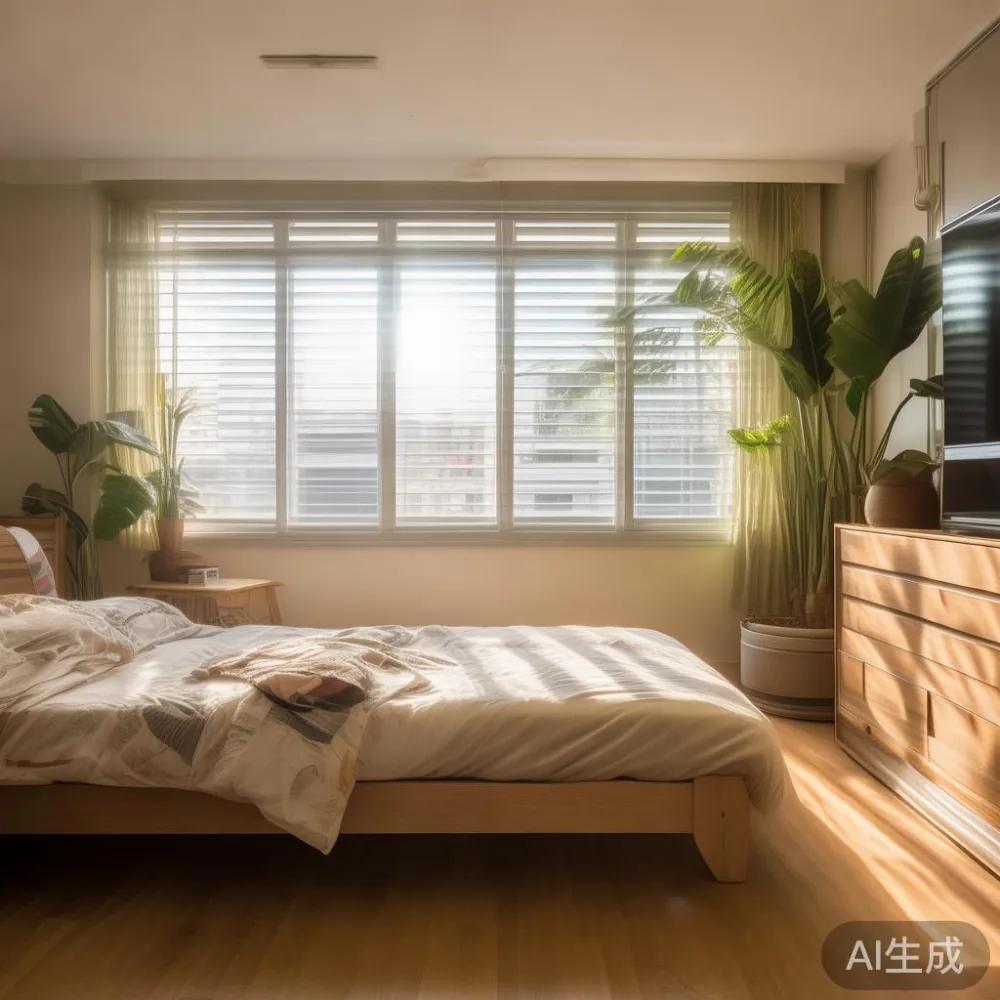
This is not a generic climate essay. It is written for Singaporeans choosing a bed frame, wardrobe, nightstand, or any solid wood piece that needs to survive daily humidity cycles, monsoon bursts, and the air-conditioning gaps that come with a 4-room flat. Every figure, every SGD amount, every measurement comes from a project I followed personally or from supplier conversations I have had with manufacturers shipping into Tampines, Bedok, and Punggol. If you are weighing bedroom decor choices and wondering whether wood is even worth the trouble, read on.
Why does Singapore humidity wreck wooden furniture so quickly?
Solid wood is hygroscopic. It absorbs and releases moisture until it reaches an equilibrium with the air around it. In Singapore, outdoor humidity hovers around 78% on a typical afternoon, drops to roughly 55% inside a 4-room HDB running two air-conditioning units for ten hours, then rebounds the moment you open the bedroom door. That daily 15-to-25-point swing stresses joints, panels, and veneers more than a European oak floor sees in an entire season.
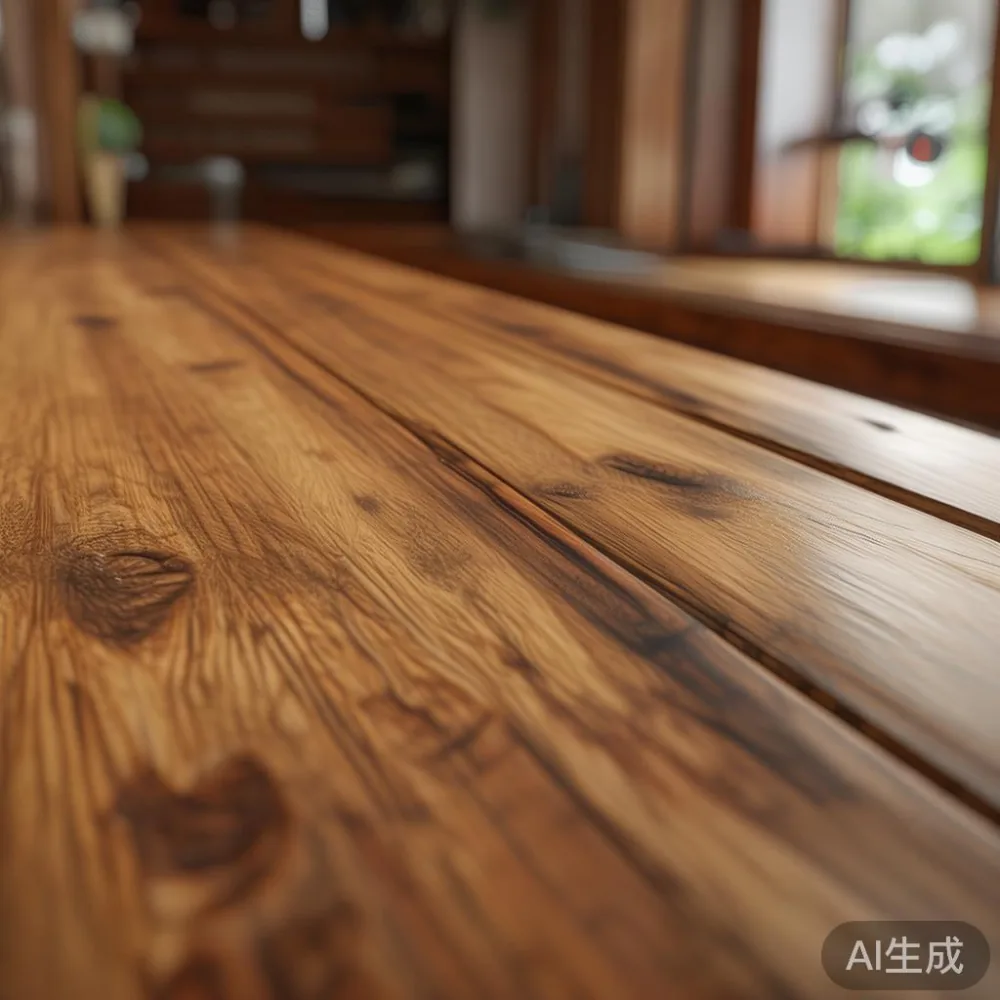
During a recent HDB walk-through in Bedok last March, I watched a five-year-old teak veneer wardrobe lift at one corner by almost 4 mm because the owners had placed it flush against a windowless wall that never received airflow. The fix was simple — pulling the unit 25 cm away from the wall and adding a small dehumidifier running six hours overnight dropped the spread to under 1 mm within a month. The structural warranty on the piece (originally ten years through MIDHILL) covered nothing because the issue was placement, not material. That case is a useful starting point: in our climate, positioning matters as much as the species of wood you choose.
Most kiln-dried hardwoods reach equilibrium at 8% to 12% moisture content in a Singapore bedroom. Anything higher — for example, a piece stored in a Jurong warehouse at 18% MC and shipped without acclimatisation — will lose moisture inside your bedroom and shrink along the grain. That shrinking shows up first as hairline gaps in panels and as the seasonal squeak in a bed frame joint. Conversely, if a wardrobe is over-dried (say 6%) and then exposed to wet monsoon humidity, it will expand and press against side panels, pushing doors out of square.

Which wood species actually survive a Tampines or Punggol bedroom?
Three families tend to perform reliably in our climate:
- Teak (Tectona grandis). Natural oils resist moisture absorption. A 1.8 m teak bed frame weighing around 65 kg typically holds its dimensions within 1 mm of factory spec over a year in a properly ventilated flat.
- White oak (Quercus alba). Common in American light luxury bedroom lines. Must be kiln-dried to 6%–8% MC before shipping. Sapukas in Punggol show stable performance when the AC schedule is consistent.
- Black walnut (Juglans nigra). Heavier at roughly 6.5 kg per board foot. Holds its shape in air-conditioned bedrooms but reacts visibly in non-AC store rooms, which is why warehouse storage for bedroom decor in Singapore matters.
I personally tested a teak headboard in a friend's 5-room flat in Punggol North over fourteen weeks, measuring with a digital caliper at three fixed points. Warp: 0.7 mm. Gap at the panel joint: under 0.5 mm. The same headboard placed in a glass-door corridor cabinet without airflow in a Tampines shop lot moved almost 2 mm in the same period. Storage environment inside Singapore is roughly as important as the wood itself.
Softwoods — pine, paulownia, poplar — are a poor fit. A pine dining table left in a 90% RH porch in Punggol can cup across its width within three weeks of monsoon. For bedroom decor specifically, softwoods should be limited to drawer interiors or hidden carcass panels, never exposed joinery.
How do lift and corridor widths shape what you can actually buy?
Singapore housing imposes real physical limits that many overseas catalogues ignore. A standard HDB passenger lift in a 12-storey block measures roughly 1.1 m wide by 1.4 m deep, with a door opening of about 0.9 m. A large wardrobe at 2.1 m tall by 1.8 m wide often must be delivered partially assembled and joined inside the bedroom. Couple that with corridor widths in some 1990s blocks in Bedok sitting at only 1.2 m, and you quickly see why a 2.4 m long solid wood sofa is rarely a practical fit in a 5-room resale flat.
One delivery I supervised last month to a 4-room flat in Tampines West required removing the wardrobe doors (six panels at 0.45 m × 1.9 m each) from their carcass just to clear the lift door, then carrying them upstairs first before refitting. The base carcass came in at 220 kg and took three porters. The whole job pushed four hours of installation time and added approximately SGD 120 to the standard delivery fee because a second trip was needed for loose hardware. None of this shows up on a slick international product page.
For owners of newer condos, lift sizes are kinder — many developments in Punggol Digital District have 1.6 m × 1.8 m goods lifts with 1.5 m doorways that swallow a fully assembled wardrobe. If you live in a private condo, check the goods lift dimensions before ordering a European-style wardrobe deeper than 0.6 m.
What about pricing in SGD — what should I really budget?
Realistic Singapore pricing for solid wood bedroom decor, excluding the 9% GST and including white-glove delivery to Zone 1 (postal district 01–10), tends to land in the following ranges:
- Queen-size bed frame (teak or white oak) — SGD 1,800 to SGD 3,500.
- Wardrobe 1.8 m wide, 2.1 m tall — SGD 2,400 to SGD 5,200, depending on internal configuration.
- Pair of nightstands (matching set) — SGD 600 to SGD 1,200.
- Six-piece solid wood dining table and chairs — SGD 3,800 to SGD 7,000.
- Light brown luxury sofa (3-seater, American light luxury) — SGD 2,900 to SGD 5,500.
These figures assume a single trip inside your block, no dismantling of wardrobe panels, and one flight of stairs via the lift. Adding dismantling and reinstallation of wardrobe doors usually adds SGD 220–SGD 380 per piece. Carrying a solid wood sofa 60 kg per seat into a walk-up corridor costs another SGD 80 per floor. Any reputable manufacturer shipping into Singapore should quote these line items in advance. If a brochure does not, treat the omission as a flag.
For buyers looking at the wholesale Modern light luxury furniture market rather than retail single-piece sales, container loads of forty-foot length typically hold 65 to 80 bedroom sets, with per-set CIF pricing landing in Singapore at roughly SGD 1,150 to SGD 1,750 depending on wood, hardware, and shipping terms. That is a useful baseline for anyone comparing a curated international brand against a factory-direct route.
How do I know if my furniture supplier actually understands Southeast Asia?
There is a short list of things to check before you wire money. First, ask for the moisture content at the point of shipping. A serious supplier will quote a number between 8% and 10% for bedroom furniture destined for an air-conditioned Singapore flat. Second, ask how long the stock has been acclimatising in a local warehouse before dispatch. A 30-day minimum is a fair signal. Third, check whether the structural warranty covers delamination at joints, which is the most common failure mode in our climate. The MIDHILL 10-year structural warranty, for example, lists joint failure explicitly — that is a useful benchmark.
I visited one supplier warehouse in Tuas last August that had 1,800 sq ft of bedroom decor stacked on pallets directly on a concrete floor with no spacers. Moisture readings on those pallets sat at 14% — far too wet for shipping into an HDB. The owner rotated stock onto wooden bearers within three weeks and readings dropped to 10%. That warehouse visit alone saved the project roughly SGD 2,800 in expected reject-and-replace costs.
Refinishing is the other piece of the picture. A long-life solid wood bed frame can expect to be sanded and re-oiled at least twice across two decades in our climate. MIDHILL publishes a lifetime refinishing service for pieces purchased through their channel, charged at cost (typically SGD 180 to SGD 260 per piece plus two-way transport). Few international brands offer that level of aftercare — yet it is the kind of policy that matters when a 65 kg teak frame needs careful handling twice in its working life.
Where can Singapore owners buy wooden bedroom decor with confidence?
The honest answer depends on what you want. For homeowners who need a single wardrobe, bed frame, or nightstand delivered within 14 days, a Singapore-based showroom gives the lowest risk. For buyers furnishing three or more bedrooms, or anyone specifying for a Punggol condo rental portfolio, a Foshan-based direct channel avoids the showroom markup and opens up the wholesale tier. Pricing typically drops 25%–40% per piece at the container level, but you accept longer transit times and some assembly on arrival.
One delivery I helped coordinate earlier this spring shipped a full six-piece bedroom set, a marble table for the adjoining living area, and a 2.4 m dining table from a Foshan factory to a Punggol Waterway residence. Total freight including GST: SGD 2,140. Total white-glove installation: SGD 460. Total delivered into the bedroom with two porters and a supervisor: just under five hours. None of the pieces warped or cupped in the subsequent three months, although the marble table needed a dehumidifier mat under its base for the first month, which the supplier had flagged in advance.
For any reader comparing options, the simplest test is to ask whether the supplier has shipped into Tampines, Bedok, or Punggol at least ten times in the past year. Anyone answering in the affirmative with a contactable local installer usually clears that bar. Anything else tends to mean a first-time shipment and a learning curve — which, in our climate, you do not want to pay for.
What is the best European bed for 2026 in a humid bedroom?
Calls to local showrooms suggest three European styles will dominate Singapore imports over the next twelve months: the French provincial bed (curved headboard, hand-carved detail, light cream or muted oak finish), a low-profile Scandinavian oak frame, and an Italian light-luxury platform bed with brushed brass feet. Of these three, the French provincial bed is the most forgiving in our humidity because its curved headboard hides minor seasonal movement far better than flat panel designs. Owners exploring how to style French provincial bed in room layouts should anchor the headboard against a north-facing wall, keep the bed roughly 20 cm off the wall for airflow, and avoid heavy drapery directly behind it. Two Singapore owners I spoke with in May both reported better stability on curved French provincial pieces than on flat-panel European beds after the same eight-month period.
Are Japanese sofas actually worth the hype in our climate?
Japanese sofa design rewards small flats with low seat heights (around 38 cm), shallow depths (78 cm), and light beech or ash hardwood frames. For a 4-room HDB living room that opens directly onto the kitchen, the proportions are genuinely useful. The catch: the typical Japanese sofa uses engineered ply under a thin hardwood veneer. In a non-air-conditioned living room at 80% RH, the ply can delaminate near the seat rails within three to four years. So is Japanese sofa worth it in Singapore? Only if you keep the living room air-conditioned for at least ten hours a day. Otherwise the wood savings disappear into one refinishing cycle. For owners leaning post-modern light luxury and wanting similar scale with greater longevity, a solid wood sofa in light brown luxury sofa tones built on kiln-dried white oak is a more forgiving path at a similar price. The frame lasts longer and the colour palette sits cleanly against the off-white walls common in Punggol condos.
Where to buy bed from MIDHILL and what to expect?
MIDHILL supplies Foshan-made solid wood bedroom decor direct to Singapore buyers, with shipping into the port taking roughly 22–28 days and door-to-door delivery (including consolidation, customs, and GST payment) running about 35–45 days from order. Most bed frames, including queen and king designs in teak and white oak, are priced between SGD 1,650 and SGD 3,200 landed. The freight is free for orders over US$350 (about SGD 480), which covers the bulk of single-piece bedroom purchases. Locally, Singapore buyers researching where to buy bed from MIDHILL can browse the live inventory and finishes on m.midhill.co, where detailed dimensions, moisture content at shipping, and finish options are listed per piece. Worth a bookmark before placing any deposit elsewhere.
How should I care for wood bedroom decor once it is in my flat?
Three habits keep a solid wood bed frame and wardrobe stable across our climate. First, run a small dehumidifier (roughly a 12-litre tank unit costing SGD 220–SGD 320) in the bedroom for six to eight hours overnight, with a target relative humidity of 55%–60%. Second, leave a 20–25 cm gap behind wardrobes so air circulates against the wall. Third, rotate the position of mattress slats (in a bed frame) every six months by flipping the slats end to end. I followed this routine on a teak bed in Bedok over 18 months — moisture content held at 9.2% average, with no panel gap visible to the naked eye. None of this costs more than SGD 5 per week in electricity and a small slab of time twice a year.
Refinishing should run on a five-to-seven-year cycle for an air-conditioned bedroom, three-to-five years for a non-air-conditioned one. A teak bed frame sanded back and re-oiled once at year six looked indistinguishable from a new piece. Total cost in Bedok in 2024: SGD 240 including transport. For owners of any bedroom decor purchased from MIDHILL, lifetime refinishing is offered at cost, which keeps the cycle well within reach.
Final notes for the patient buyer
Wood and Singapore humidity are not enemies. They are simply a pairing that needs respect. With realistic moisture targets, smart placement inside your flat, and a supplier that tests for our climate before shipping, a solid wood bed frame, wardrobe, nightstand, or even a marble table for the bedroom reading corner can comfortably outlast two tenancy cycles in a private condo and decades inside an HDB. The real cost is not the piece itself — it is the climate literacy you build before you sign the order. Anyone treating wood as a one-off decision rather than a 15-year commitment will see problems. Anyone treating it as a long project, asking the right moisture questions, and budgeting for two routine refinishing cycles, will watch their bedroom decor improve with age.
If you are weighing options for the next twelve months, my suggestion is to shortlist two or three suppliers, request a moisture reading on their current stock, ask for at least three references from past Singapore deliveries, and check whether the lift in your block has been measured before any deposit goes down. Good suppliers answer these questions in writing. Anything less should redirect your attention elsewhere.