What Actually Drives the Price of Solid Wood Furniture (A Buyer's Guide for Singapore Shoppers)
Six months ago I went to a Tampines HDB showflat with a couple who had saved S$4,200 for a full bedroom set. They pointed at a flat-pack wardrobe in a glossy catalogue, quoted at S$599, and asked me why a comparable solid wood wardrobe from a Foshan workshop sat at S$2,150. That single question has been the seed of this entire article. The short answer is also the most honest one: the cheap wardrobe was not made of solid wood, and the price gap reflects something far deeper than the label.
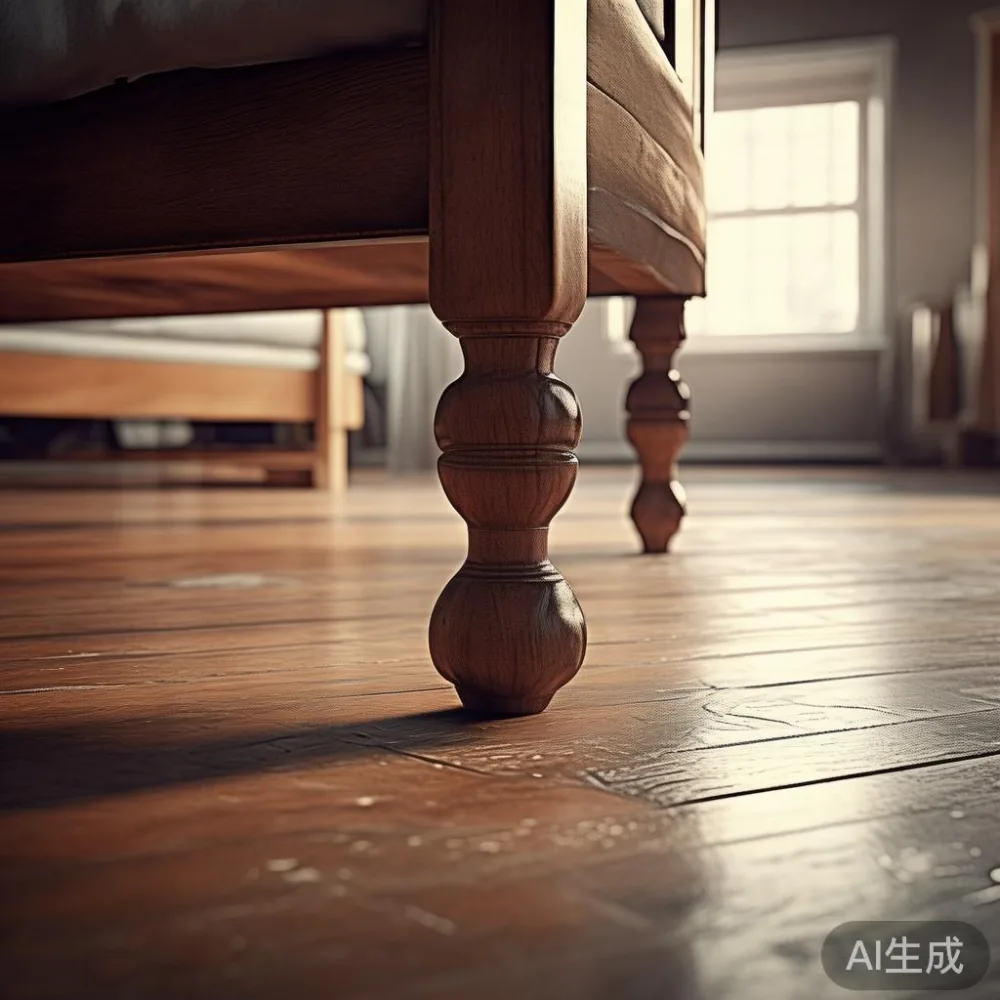
Price in this category is not a marketing mood. It is the sum of species, mass, joinery, finish, hardware, freight, and warranty. Every one of those can be quantified in grams, centimeters, hours, and Singapore dollars. What follows is the breakdown I now walk clients through when they ask me what their money is actually buying.
1. Wood Species: Why a Walnut Dining Table Costs Three Times an Oak One
Sellers often group everything under the word "wood," as if mahogany and rubberwood were interchangeable. They are not. The species determines density, color, grain pattern, and how the piece will age over twenty years in a non-air-conditioned corridor or a 24-hour-cooled condo bedroom.

Rubberwood (Hevea brasiliensis) is the workhorse of entry-level bedroom sets. It is a plantation by-product from latex production, dense enough for a nightstand, but soft enough to dent if you knock your belt buckle against it. In Singapore showrooms it usually lands between S$280 and S$520 for a two-drawer nightstand. White oak (Quercus alba) sits one tier up: harder (Janka 1,350), with a tighter grain that takes oil finishes cleanly. A solid white oak bed frame typically retails at S$1,400 to S$2,200.
North American black walnut (Juglans nigra) and European ash are the next step. Walnut is the species most often associated with what the trade calls American light luxury — a restrained, mid-century palette of chocolate and amber tones, with just enough figure to anchor a room without shouting. An imported walnut dining table, 180 cm by 90 cm, will weigh 48 to 55 kg and price at S$2,600 to S$4,400 depending on whether the top is a single slab or a glued-up panel.
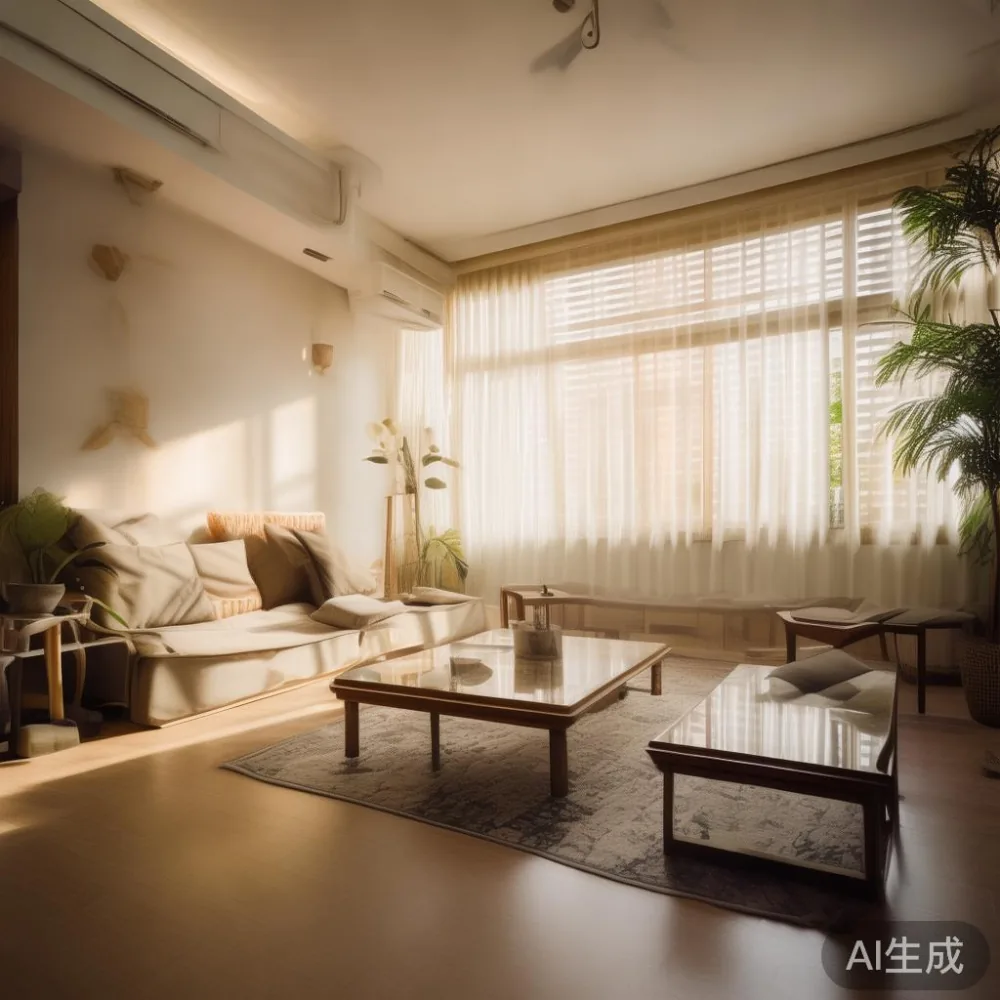
Then there is Burmese teak, ash from managed European forests, and the rare Mexican rosewood that occasionally appears in high-end bedroom decor. These run S$3,000 to S$7,500 for a similar dining table. The price ladder reflects three realities: how slowly the tree grew, how much of it survives modern kilns, and how difficult it is to certify for export.
When you see a "solid wood" sticker in a Singapore shop, ask which species, then ask which FSC or PEFC certificate number. The second answer is the one that matters.
2. Mass: Why You Should Weigh the Furniture Before You Pay for It
Mass is the easiest number to verify and the easiest number for a retailer to hide. A solid wood bed frame in king size, made from 4 cm thick ash slats and 8 cm legs, should weigh between 65 kg and 85 kg. A hollow-core imitation with MDF panels will weigh 28 kg to 35 kg. Same footprint, S$1,400 price difference, no warning label.
This matters more in Singapore than almost anywhere else in Asia. Our HDB lifts are typically 1.1 m wide by 1.4 m deep with a 630 kg payload, and older blocks in Bedok and Tampines narrow further to 0.9 m by 1.2 m. A king-size wardrobe that weighs 120 kg will not fit through a 0.8 m corridor turn, and a piece that weighs 60 kg will. Mass tells you not just quality but whether the delivery can physically succeed.
Last month I visited a Punggol Waterway residence where the buyer had rejected a 96 kg imported solid wood sofa because the corridor radius was 1.6 m and the turn would have required a 2.0 m sweep. The replacement, at 74 kg with a split-back design, sailed in. Mass shaped the choice more than species did.
If you cannot weigh the piece in the showroom, ask for the packing dimensions and the gross weight on the bill of lading. Reputable Foshan factories such as MIDHILL print this on every carton. If the document is silent on weight, the silence is the answer.
3. Joinery: Where Mortise-and-Tenon Earns Its S$300
Joinery is the part of the price that almost no consumer inspects and almost every craftsman argues about. There are three families you will encounter.
First, dowel and cam-lock joinery, the system behind most flat-pack imports. A 6 mm birch dowel plus a zinc cam costs roughly S$0.40 per joint. It is fast to assemble and adequate for a particleboard bookshelf that will be replaced in seven years. It is not adequate for a S$3,000 solid wood wardrobe that is meant to last twenty.
Second, mortise-and-tenon, the traditional Chinese cabinet-making joint. A craftsman cuts a rectangular cavity (mortise) into one member and a matching tongue (tenon) into the other, then drives them together with hide glue or a draw-bored peg. On a four-poster bed frame, full mortise-and-tenon joinery adds roughly 9 to 14 hours of labour per unit, which translates to S$260 to S$400 in cost at Foshan workshop rates. MIDHILL uses this joint across its mid-century and post-modern light luxury lines because it survives the racking stresses a Singapore tropical climate puts on wood.
Third, box-joint and dovetail joinery, used on drawers. A hand-cut dovetail drawer in a solid wood nightstand takes 45 minutes to assemble; a machine-cut one takes 6 minutes. The price difference at retail is around S$80 per drawer pair. For a four-drawer dresser that means S$320, which is exactly the gap I see between a furniture mall dresser and a workshop-to-doorstep dresser of the same species.
When you compare two price tags in a showroom, ignore the headline and ask which joinery sits underneath. The answer will explain the gap nine times out of ten.
4. Finish and Surface Treatment: Lacquer vs. Oil vs. Hard Wax
A solid wood dining table can be finished three ways, and each one carries its own cost structure.
Conversion varnish (often called "lacquer" in showrooms) is sprayed in seven to nine coats, sanded between coats, and cured under UV lamps. It creates a glass-smooth surface that resists wine spills and finger prints, which is why it dominates restaurant supply. The chemistry is expensive — a 20-litre drum of conversion varnish runs S$480 in Singapore, enough for roughly six dining tables — and the labour to spray it adds another S$140 per table.
Hard wax oil, the preferred finish on European oak and ash, penetrates the grain and leaves a matte, tactile surface. It costs more per litre (S$65 to S$90 per litre) but goes further because it soaks in. The finish feels warm under bare feet, which is why it dominates the Japandi bedroom decor look that has filled Pinterest boards since 2022.
Pure tung oil or linseed oil is the cheapest to buy and the most expensive to maintain. A single coat costs S$8 in materials but dries over 24 hours and requires reapplication every 18 to 24 months. Over a fifteen-year ownership that adds up to roughly S$220 in oil and a full Saturday every other year. Some owners, including myself, consider this a feature rather than a tax.
One word of warning for HDB households: high-gloss lacquer finishes show every dog-ear scratch and every rubber-tipped chair leg. If you have small children or a pet, choose oil or wax on any solid wood dining table, even though the upcharge is S$150 to S$220.
5. Is Japandi Nightstand Furniture Worth It?
A Japandi nightstand — low-profile, solid ash or oak, with a hand-cut dovetail drawer and a hard-wax oil finish — costs between S$620 and S$1,100 in Singapore, depending on whether the top is a single board or a glue-up. That is roughly 2.4 to 4.2 times the price of an equivalent-sized MDF nightstand from a furniture mall, and the question most Singaporean buyers quietly ask is whether the multiplier is justified.
The honest answer: yes, a Japandi nightstand pays back over fifteen years, primarily because the solid wood construction survives three HDB moves, the joinery does not loosen under daily drawer cycling, and the hard-wax oil can be refreshed in an afternoon rather than requiring a full refinish. MIDHILL stocks a four-piece Japandi bedroom set in this exact style — bed frame, two nightstands, six-drawer dresser — at S$4,250 delivered, which works out to roughly S$283 per year of furniture over a fifteen-year life.
Where the multiplier fails is when the nightstand is marketed as Japandi but built from rubberwood with a printed ash veneer and a polyurethane finish. That combination cannot be refreshed, cannot survive a move, and will delaminate within five years in an HDB without air-conditioning. So the value of Japandi is real, but only when every component of the construction is genuine.
6. Hardware, Drawer Slides, and the S$40 You Never See
Hardware is the silent line item. Soft-close drawer slides from Blum or Hettich cost S$22 to S$45 per pair at retail; generic zinc-alloy slides cost S$3 to S$6. On a six-drawer dresser that is a S$240 swing. Hinges follow the same curve: concealed European hinges with three-way adjustment run S$6 to S$11 each, versus S$0.90 for a face-frame butt hinge.
On a solid wood wardrobe with six doors and three drawers, the hardware line on the factory invoice can range from S$60 (entry level) to S$540 (premium concealed). Most Singapore consumers never see the invoice, which is why most Singapore consumers under-budget by 8 to 12 percent on the total cost.
Ask the salesperson to itemize hardware by brand. If they cannot, they have not opened the carton themselves.
7. Freight, GST, and the Last-Mile Problem in Singapore
A 20-foot container from Foshan to Singapore costs roughly US$1,200 to US$1,800 in 2026, depending on bunker surcharges and the route via Port Klang or direct to PSA. Inside that container you might fit twelve king-size bed frames or twenty solid wood dining tables. Freight alone adds S$140 to S$220 per dining table before customs.
GST at 9 percent applies to the CIF value plus any duty. For bedroom decor imported under HS code 9403.60 (wooden furniture), duty is zero, so the tax base is the invoice plus freight plus insurance. On a S$2,400 dining table, GST adds S$216, and the landed cost before last-mile delivery is around S$2,760.
Last-mile delivery is where many Singapore purchases quietly fall apart. A ground-floor HDB unit in Bedok has a 1.2 m wide corridor that turns 90 degrees into the master bedroom. A king-size headboard at 188 cm by 110 cm will not fit without a partial disassembly, and disassembly costs S$60 to S$120 on top of a standard delivery fee of S$80. MIDHILL quotes these disassembly fees in advance rather than springing them on the customer, which is one of the operational details I notice when comparing factory-direct against multi-tier distributors.
Free shipping over US$350 (about S$480) sounds generous, but always check whether it includes lift access, hoist fees for high-floor HDBs above the 10th storey (S$120 per item in many blocks), and disposal of the existing furniture. If those three are not covered, the headline saving disappears.
8. Warranty and Lifetime Refinishing: The Hidden Insurance
A ten-year structural warranty on a solid wood bed frame is not a marketing promise; it is an admission by the maker that the joinery will outlast that period under normal residential use. The warranty should be in writing and should name the components: rails, slats, dowels, tenons, and the finish.
Lifetime refinishing is rarer and more valuable than it sounds. A solid wood dining table that is refinished every twelve to fifteen years can serve three generations; a veneered MDF table will not survive one refinishing because the sandpaper goes through to the substrate. MIDHILL offers lifetime refinishing on its American light luxury walnut line, which means a S$3,400 dining table purchased in 2026 can be returned to the workshop in 2041 for a S$280 resand-and-re-oil. That is a 4.2 percent annual amortized cost over twenty-five years, against zero resale value for a particleboard competitor.
9. How to Read a Price Tag Like a Furniture Auditor
Take any two quotes for a solid wood bed frame in Singapore, say S$1,280 and S$2,450. Stack them against this checklist.
- Species: ash or oak (S$2,450) vs. rubberwood with ash veneer (S$1,280).
- Mass: 78 kg vs. 34 kg. The 78 kg frame cannot be lifted by one person; the 34 kg frame can. Pick the one that matches your lift.
- Joinery: mortise-and-tenon at all four corners vs. dowel-and-cam at all four corners.
- Finish: hard-wax oil, three coats, vs. sprayed polyurethane, two coats.
- Hardware: concealed soft-close on all drawers vs. side-mount zinc slides.
- Warranty: ten years structural, lifetime refinishing vs. one year limited.
- Delivery: S$80 with hoist and assembly vs. S$120 with line items for stair access.
The S$1,170 gap is no longer mysterious. It is the price of two hours of joinery labour, four kilograms of genuine ash, two sets of European hardware, and a warranty that will answer the phone in 2031.
10. A Note on Light-Luxury Aesthetics and Bedroom Decor Choices
Style is the layer that ties the cost story together. French light luxury tends toward cream-painted frames, cabriole-style legs, and brass tip protectors, which is why it prices at the upper end of the bedroom decor spectrum — typically S$3,200 to S$5,800 for a queen bed frame with two nightstands and a six-drawer dresser. American light luxury, by contrast, sits in walnut and white oak with clean shaker profiles and blackened steel pulls, which lands closer to S$2,800 to S$4,400 for the same set. Post-modern light luxury, the youngest of the three, mixes travertine-look marble tops, fluted columns, and curved silhouettes in solid ash; expect S$4,000 to S$6,200 for a complete bedroom arrangement, and roughly S$1,800 to S$2,600 for a single marble-top nightstand.
If your HDB or condo in Tampines or Punggol has 2.7 m ceilings and pale grey walls, walnut anchors the room. If the bedroom is small and bright, white oak lifts the space visually. If the design leans toward a hotel-suite feel, a marble table at the foot of the bed in travertine or Carrara-look quartz will pull the eye and carry the light. A solid wood sofa at the foot of the bed is unusual but possible in a 4.2 m master bedroom; in a 3.0 m HDB room it crowds the layout.
11. A Real-World Price Worksheet for a Singapore Bedroom Set
Here is what a quality four-piece bedroom decor set actually costs in 2026, landed in a Tampines HDB on the 14th storey, with hoist access, GST included, and no hidden add-ons.
- Solid ash king-size bed frame, slatted headboard, mortise-and-tenon joinery: S$2,180.
- Pair of Japandi nightstands, hand-cut dovetail drawers, hard-wax oil finish: S$1,420 (S$710 each).
- Six-drawer dresser, walnut, soft-close slides: S$2,640.
- Sliding-door wardrobe, 240 cm wide, ash veneer on engineered back panel, solid ash doors: S$3,150.
Total furniture: S$9,390. Delivery with hoist: S$280. GST on furniture only: S$846. Grand total: S$10,516.
The same footprint in rubberwood and MDF, flat-packed, would retail at roughly S$3,400 to S$4,200 in a furniture mall, but would not survive the third move, the second refinish, or a 2028 GST rebate audit if claimed as a renovation expense. The lifetime cost curves cross at year eight. Beyond year eight, the solid wood set wins on every axis except the initial cash outlay.
12. The American Metal Furniture USA Crossover Buyers Should Know
Buyers who scroll through American metal furniture usa catalogues often assume steel frames are a separate category from solid wood, but the two disciplines converge in hybrid bedroom decor: a powder-coated steel base under a solid walnut top, or brass-tipped legs supporting an oak bench at the foot of the bed. These hybrids weigh more, cost 25 to 40 percent more than wood-only equivalents, and last longer in high-humidity HDBs without air-conditioning because the metal carries the load and the wood carries the look. If your master bedroom sits on a higher floor without full-day cooling, ask the showroom whether the bed frame and dining table are offered in hybrid construction.
13. Five Questions to Ask Before You Swipe the Card
Bring this list to any showroom, whether the piece is a solid wood dining table in a Jurong warehouse or a marble-top nightstand in a Tanjong Pagar boutique.
- What species, and can I see the FSC or PEFC certificate number?
- What is the gross weight of the piece in its carton?
- What joinery is used at the load-bearing corners?
- What hardware brands are fitted, and are replacements stocked locally?
- What does the warranty cover, and is lifetime refinishing included or paid?
Any salesperson who answers all five on the spot is a salesperson worth trusting. Any salesperson who answers two or fewer is a salesperson selling a price, not a piece of furniture.
14. Closing Thoughts on Spending Well, Not Just Spending More
Solid wood furniture is one of the few purchases where paying more genuinely produces more. Theorasically you can spend S$600 on a flat-pack set or S$6,000 on a workshop-built set, and the only honest answer is that the second option will outlast the first by two decades and two moves. The arithmetic is unfashionable, the craftsmanship is unfashionable, and the patient ownership is unfashionable. None of that matters at 2 a.m. when a drawer still closes with a soft click and the wood still smells of oil after a fifteen-year marriage to the same room.
Price is what you pay. Mass, species, joinery, finish, hardware, freight, warranty, and lifetime refinishing are what you buy. The rest is bedroom decor — and bedroom decor done in solid wood is the only kind of decor that gets more beautiful the longer you keep it.