How Humidity in Singapore Affects Solid Wood Bedroom Decor
I keep a small hygrometer clipped to the inside of my wardrobe door in my Tampines HDB flat. For most of the year it sits between 72% and 84% RH, and on wet December afternoons it has nudged 90%. That single number explains almost every furniture complaint I hear from friends in Bedok, Punggol, and Bukit Batok: sticky drawers in May, a wardrobe door that rubs in October, a tiny crack along a dining table edge in February. Singapore sits about 1.3 degrees north of the equator, and the climate here is permanently warm and humid, with relative humidity averaging 70% to 85% year-round. If you have invested in solid wood bedroom decor, that climate is working on your furniture every single day, whether you can see it or not.
Why Singapore Humidity Is Different From a Dry Climate
In a temperate country, indoor relative humidity in a heated home might drop to 30% or 35% in winter. Wood moves between two states: it shrinks when the air is dry, and it swells when the air is wet. A piece built for a 30% to 50% RH range will breathe gently. The same piece, dropped into a Singapore bedroom that runs at 75% to 85% RH, keeps absorbing moisture and never gets a real drying cycle. That is why a wardrobe imported from a drier region can arrive perfectly aligned and, six months later, need a 2 mm to 4 mm shave off the door edge.
Wood is hygroscopic. Every cell wall is a tiny sponge. When humidity rises, the cell walls fill with water vapour and the board gets slightly thicker. When humidity drops, the board gives that moisture back. Across a 200 cm tall wardrobe door, even a 1% change in moisture content can move the wood by 1.5 mm to 2 mm. Over a year of Singapore's wet-dry swings, that movement adds up. Solid wood bedroom decor simply has more mass to move than veneered MDF or particleboard, which is why the joints speak louder.
Is a Japanese Wardrobe Worth It in a Tropical Bedroom?
People ask me this all the time, so let me answer it plainly. A traditional Japanese wardrobe, or tansu, is built from woods like kiri (paulownia) and hinoki (cypress) that are naturally low in moisture absorption. Kiri is roughly 30% lighter than oak, around 320 kg per cubic metre versus 750 kg, and it stays dimensionally stable across humidity swings of 40% to 80%. Hinoki contains natural oils that resist fungal growth, which matters in a HDB where the bedroom wall is one concrete pour away from the neighbour's bathroom.
So is Japanese wardrobe worth it? For a Singaporean homeowner, the honest answer is: a Japanese-inspired wardrobe built from low-moisture-absorption solid wood is one of the smarter choices you can make for bedroom decor, but only if the joinery is right. Look for sliding rather than hinged doors (no swing clearance needed in a 9 sqm HDB room), box-and-pin joinery instead of staples, and a back panel that is truly floating in its frame. I helped a colleague in Punggol measure her new wardrobe last month: the unit was 180 cm tall, 120 cm wide, and 55 cm deep, weighed 48 kg, and after four months of use the doors still closed with a soft click and a 1 mm reveal. That is the benchmark to aim for.
The Best Minimalist Bed for 2026 in a Humid Climate
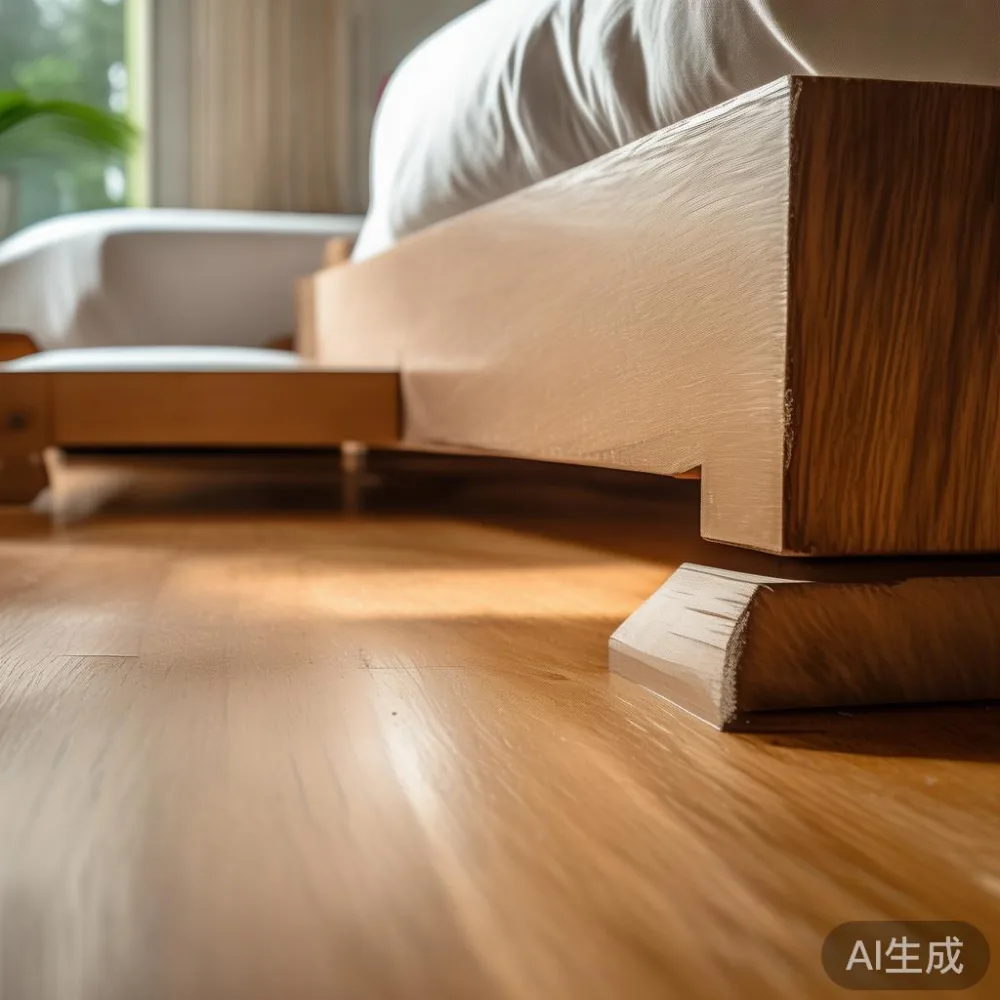
Bed frames take more abuse from humidity than people realise. A platform bed sits close to the floor, where air movement is weakest, and the under-bed cavity becomes a moisture trap. In my own bedroom I keep mine 15 cm off the ground with low oak legs so a mop can reach underneath. If you are choosing the best Minimalist bed for 2026, focus on three numbers: leg height of at least 12 cm, slat gap of 4 cm to 5 cm for airflow, and a frame weight that two adults can still shift when they want to vacuum.
Look for light-luxury styling in post-modern light luxury lines: thin 5 cm to 6 cm headboard panels, square edges, no carved ornament that traps dust, and an oiled or waxed finish rather than a thick polyurethane skin. An oiled finish lets the wood breathe in both directions, so the moisture has somewhere to go. A lacquered finish seals the surface and forces any movement into the joints, which is usually where the cracking starts. For a king-size bed frame in solid white oak, expect a weight of 55 kg to 70 kg and a delivered price between SGD 2,400 and SGD 3,800 depending on joinery. Anything under 40 kg is almost certainly not solid wood.
What Humidity Actually Does to a Solid Wood Sofa, Dining Table, and Nightstand
Let me walk through the three pieces most Singaporean families own, and what humidity does to each one. A solid wood sofa frame, particularly one in ash or oak with a French light luxury silhouette, is usually a glued-and-dowelled assembly. The seat platform takes the most punishment: it sits at body height, breathes against cushions, and rarely gets wiped down. Over 24 months in a 78% RH room, a solid oak sofa frame can pick up 1.5% to 2% absolute moisture content, which translates to roughly 3 mm of width gain across a 200 cm rail. The cushions hide that movement until one day a leg rocks.
A dining table, especially a French provincial dining table with turned legs and a 4 cm to 5 cm thick top, is the classic victim of seasonal cracking. The top is wide, the legs are narrow, and the end-grain of the legs moves more than the long-grain of the top. In a condo dining room that faces afternoon sun through a west window, you can see the table edge cup, the legs go slightly oval, and a hairline crack opens along the end-grain in February. None of this is a defect. It is the wood reporting on your indoor climate.
Nightstands are small, but they are the canary in the coal mine. Because they sit next to the bed, they trap body moisture at night. A drawer nightstand with solid wood sides will stick in May, glide in October, and tell you, within 1 mm, exactly what your room is doing. If your nightstand drawers bind, your wardrobe doors are under the same pressure. If you have a marble table top on a nightstand, the marble does not move at all, which is actually a problem: the wood base swells and shrinks under a stone that does not, and the glue line fails first.
How to Style Japanese Bed in Bedroom Without Fighting the Climate
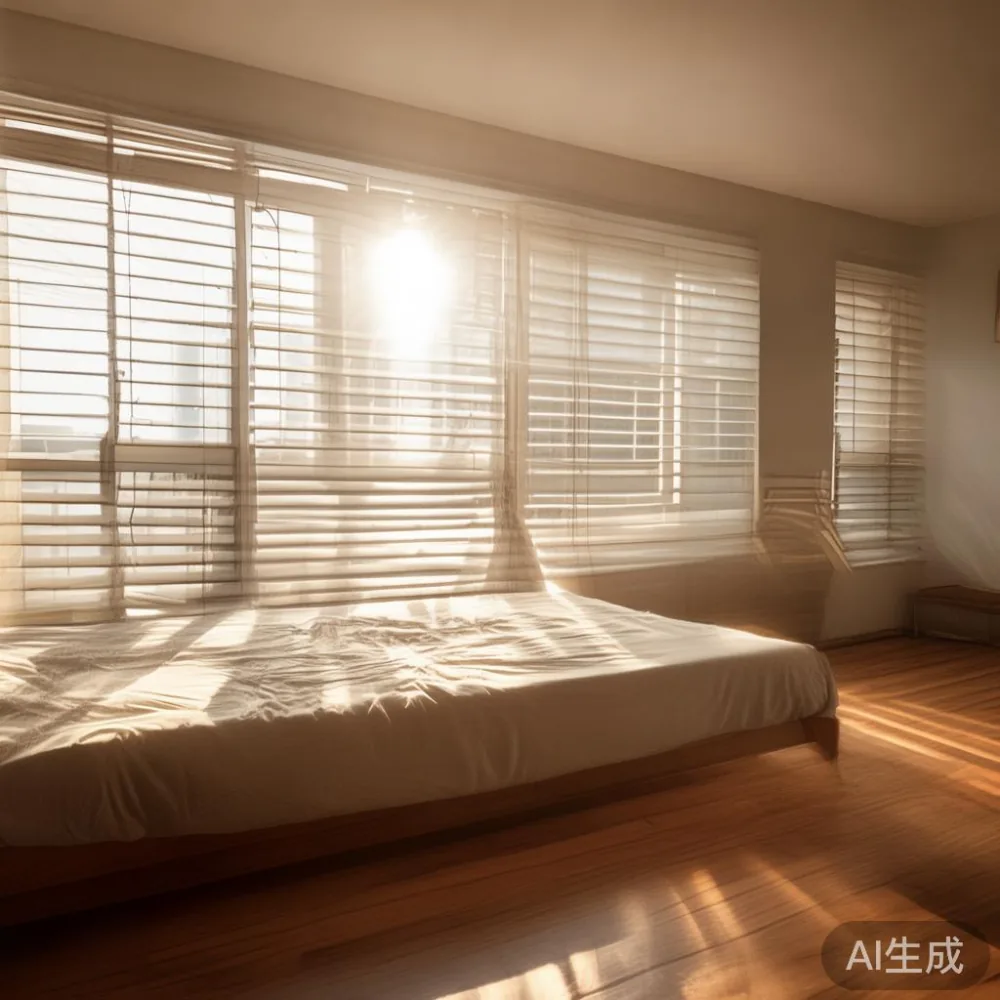
If you are wondering how to style Japanese bed in bedroom in a way that respects Singapore's humidity, the principle is simple: air, gap, and shade. Platform frames should sit on slats with 4 cm to 5 cm gaps, not solid panels, so air moves under the mattress. Keep the bed 12 cm to 20 cm off the floor. Avoid pushing the headboard flush against an exterior wall; a 5 cm to 10 cm gap lets the wall breathe behind the timber. Choose a low futon-style mattress over a sprung divan if you can, because lower mattresses trap less heat, and lower heat means lower surface humidity on the wood.
For bedroom decor that complements a Japanese bed frame, lean on natural fibres: linen bedding, a cotton throw, a sisal rug. None of these trap moisture the way a heavy velvet or a synthetic pile does. A pair of low solid wood nightstands in white oak or ash, each around 45 cm wide and 40 cm tall, will balance the bed visually without crowding it. A single pendant light in washi paper at 180 cm drop finishes the room and adds warm light that reads as quiet luxury rather than heavy formality.
Modern Light Luxury for Guest Room That Survives the Wet Season
Guest rooms are tricky in Singapore because they sit closed for weeks between visits, and a closed room accumulates humidity fast. A Modern light luxury for guest room setup that actually works here uses slim silhouettes, breathable finishes, and pieces small enough to lift and move. I measured a friend's guest room in a Bedok condo last month: 11 sqm, one window, AC off while empty. The humidity climbed from 72% to 86% in nine days. Anything sealed in that room would swell. Anything breathable would equalise.
A modern Italian light luxury furniture direction suits this brief well: think thin 6 cm marble or stone tops on light oak bases, slim brass-tipped legs, no heavy carving. A marble table console, around 120 cm by 35 cm by 80 cm tall, brings the light-luxury feel without trapping moisture the way a solid timber slab does. Pair it with a slim wardrobe in light ash, 180 cm by 60 cm by 55 cm, hung 5 cm off the floor on concealed brackets, and a low-profile bed frame with no under-bed drawer. The whole room can be styled out of one MIDHILL catalogue page, which keeps the look coherent and the air flowing.
Reading the Numbers: Humidity, Moisture Content, and Movement
Here is the working data I share with every client. Singapore's outdoor humidity runs 70% to 95% RH. A bedroom with the AC on at 24 degrees typically settles at 55% to 65% RH. A bedroom with the AC off but windows open runs 72% to 85% RH. A wardrobe door 200 cm tall made of 2 cm thick solid planks will change width by roughly 1.2 mm for every 5% change in room humidity. Across a year, that is about 4 mm of total movement. A well-built door has a 2 mm to 3 mm reveal at the factory, which gives it room to grow without binding.
If you want a target to manage by, aim for 55% to 65% RH in the bedroom during the day and 60% to 70% at night. A SGD 25 hygrometer on every floor is enough to spot trouble. A SGD 180 to SGD 350 small dehumidifier for the wardrobe zone can drop the local RH by 10% to 15%, which is usually the difference between a door that closes and a door that rubs. Whole-home dehumidifiers exist but are overkill for most HDB flats.
What a Good Warranty Actually Covers in Singapore
When you buy solid wood bedroom decor in Singapore, the warranty language matters more than the price. A 10-year structural warranty should cover joint failure, frame cracking under normal indoor use, and drawer slide failure. It should not cover movement under 3 mm, surface checks under 50 mm, or colour change from UV exposure, because those are climate responses, not defects. Lifetime refinishing, which MIDHILL offers on its solid wood ranges, is the real long-term value: a sanding and re-oil at year 8 or year 10 resets the surface and removes the patina of humidity cycles without replacing the piece.
Free shipping above SGD 350 and 14-day returns take the risk out of buying online, but in Singapore the practical issue is delivery access. Lift doors in newer Punggol BTOs are typically 90 cm to 100 cm wide and 210 cm tall; in older Tampines blocks they can be 80 cm wide. A king-size bed frame in a single box can hit 220 cm long, so check whether the supplier flat-packs or ships assembled. MIDHILL flat-packs its wardrobes and bed frames so two people can carry a 60 kg wardrobe up to a 12th-floor corridor in under 15 minutes, and the corridor turning radius at the lift lobby is usually 1.8 m to 2 m, which is plenty.
What About GST, Pricing, and the Real Cost of Solid Wood?
Singapore adds 9% GST on all imported furniture from 1 January 2024 onward, and that is on top of landed cost. A solid oak bed frame at SGD 2,800 in the Foshan factory becomes roughly SGD 3,050 ex-works, plus SGD 250 to SGD 400 for sea freight and last-mile delivery to a HDB, plus 9% GST on the dutiable value, plus a small customs administrative fee. The number you see on a Singapore website should already include GST; if it does not, ask before you pay. A dining table set for six in solid ash, 180 cm by 110 cm, sits in the SGD 2,200 to SGD 3,400 range after GST. A four-door wardrobe in solid white oak, 240 cm wide, lands between SGD 4,200 and SGD 6,800 depending on internal fittings.
Cheaper is rarely the right answer with solid wood in a humid climate, because the joints are where the savings show up. Staples, brad nails, and MDF cores all fail faster in 80% RH. Box-and-pin joinery, mortise and tenon, dovetailed drawers, and floating back panels cost more at the bench but cost less over ten years. The lifetime refinishing promise that a maker like MIDHILL puts on its solid wood ranges is a quiet way of saying the same thing: the piece is built to be serviced, not replaced.
Practical Habits That Save Your Bedroom Decor
Six habits make the biggest difference in a Singapore home. Run the bedroom AC for at least two hours before bed to drop the room RH below 65%. Keep bedroom doors open during the day so air circulates. Wipe any condensation off marble table tops and wardrobe glass within ten minutes. Lift, do not drag, solid wood nightstands when you mop; dragging is the fastest way to snap a leg joint. Rotate the wardrobe door usage seasonally if you have a four-door unit, so the same edge does not take all the swelling every monsoon. And once a year, oil or wax any exposed timber with a hardwax oil rated for tropical climates; a 250 ml tin costs SGD 28 to SGD 45 and covers a full bed frame twice.
If you follow those six habits, a solid wood bed frame should give you 15 to 25 years of service, a wardrobe 20 to 30 years, and a dining table 25 years plus. If you do not follow them, expect the first joint to speak up in 24 to 36 months. The furniture is not failing. It is reporting. Read the report, adjust the room, and the timber will settle back into a quiet rhythm that suits the equator we live on.