Humidity in Southeast Asia and Your Solid Wood Bedroom Decor: A Practical Guide for HDB and Condo Owners
I still remember stepping into a friend's resale HDB flat in Bedok last month. She had bought a beautiful solid wood bed frame from an online seller eight months earlier, and the headboard now had a visible 3 mm gap along one side. The culprit was not bad craftsmanship — it was the air. Singapore's average relative humidity sits between 70 % and 85 % for most of the year, and when that moisture meets an unprepared piece of solid wood furniture, the wood answers back. This guide explains exactly what happens, how to read the numbers, and what bedroom-decor choices hold up best in Tampines, Punggol, and the rest of the island.
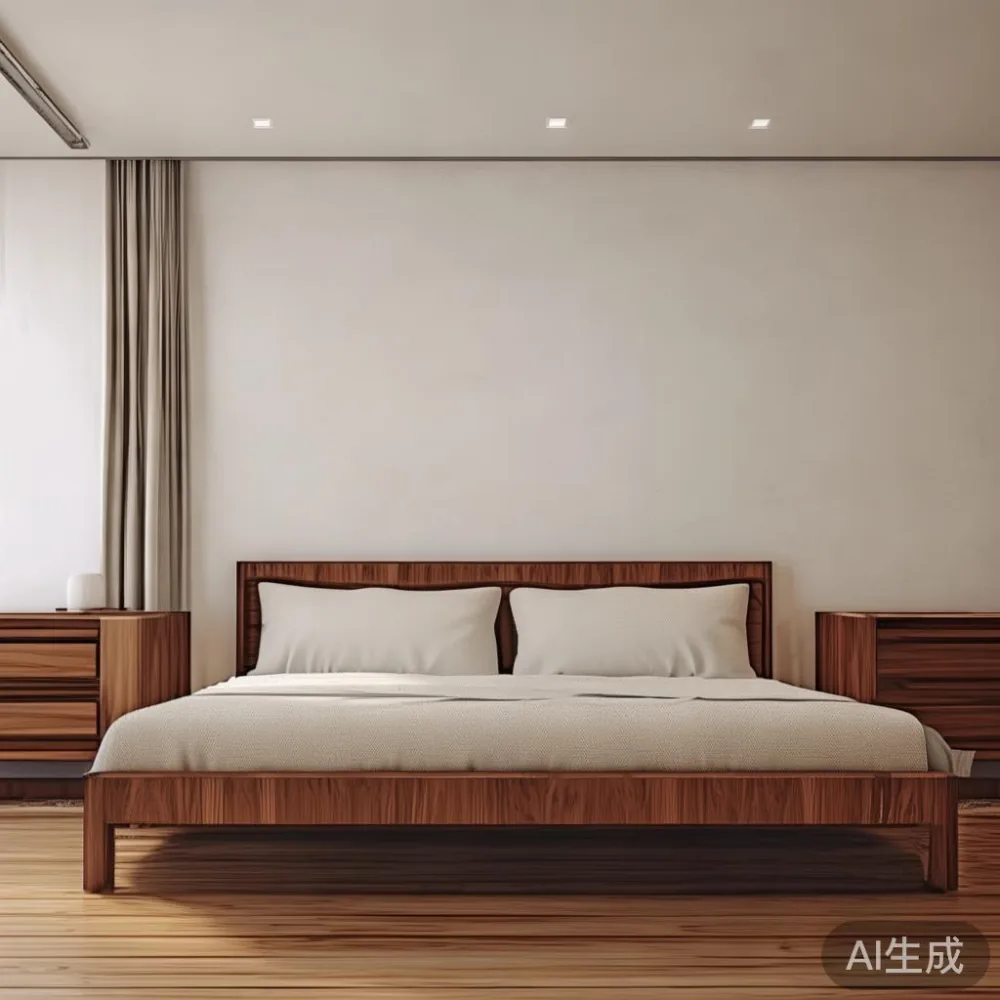
Why 75 % Relative Humidity Changes the Geometry of a Bed Frame
Solid wood is hygroscopic. That single word explains almost every problem you have ever seen on a wooden bed frame, nightstand, or wardrobe in a Singapore home. The cell walls of oak, ash, walnut, or rubberwood absorb and release water vapour until they reach equilibrium with the surrounding air. When humidity climbs from 60 % to 80 %, a 200 cm oak headboard can swell up to 4 mm across the grain. When the air-conditioning runs all night and drops the room to 55 %, that same board may shrink a fraction of a millimetre per linear cm. Over twelve months of these cycles, joints loosen, panels cup, and drawer slides begin to stick.
The numbers matter. Indoor relative humidity below 35 % causes cracking on top surfaces. Above 65 %, you invite mould and joint swelling. The narrow safe band for solid wood bedroom decor sits between 40 % and 60 %. Most Singapore flats drift outside that band for at least four months a year, especially during the November-to-January monsoon surge and the June-to-September Sumatra squalls.
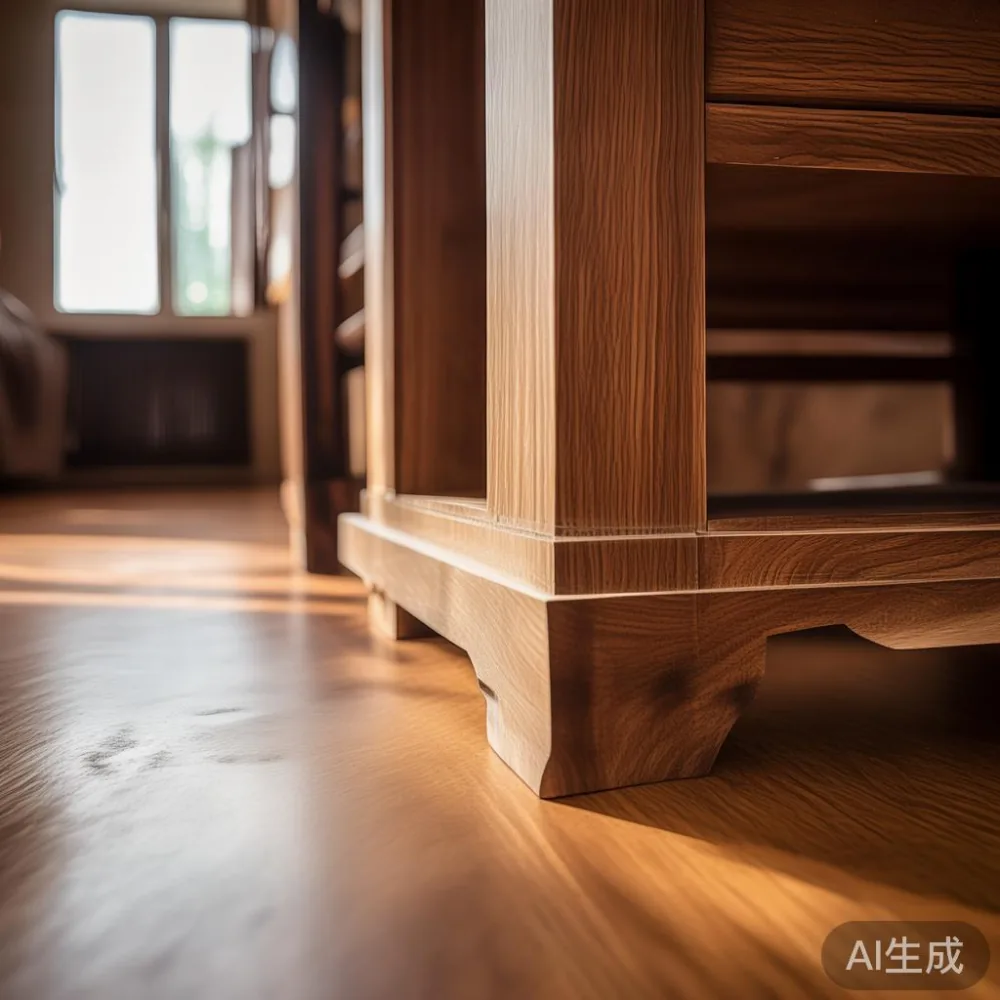
What This Means for HDB and Condo Bedrooms Specifically
HDB and condo bedrooms have characteristics that magnify humidity swings. Many new Build-to-Order flats in Punggol and Tampines are delivered with a single supply grille and no dedicated return duct in the master bedroom. Owners almost always run the air-conditioner with the door closed for eight to ten hours a night, which pulls the room down to 50–55 % RH, and then the door opens in the morning to a corridor and living room sitting at 75 %. That 20-point swing in eight hours is harder on wood than the same swing spread over a week.
Corridor and lift dimensions also influence furniture choices. A typical HDB passenger lift in a 12-storey block measures roughly 1.1 m wide by 1.4 m deep, with a door opening of about 0.8 m. A queen-size bed frame, when delivered unassembled, fits comfortably, but a pre-assembled European light luxury wardrobe measuring 220 cm tall by 180 cm wide will not. This is why flat-pack bedroom decor — packed into boxes no larger than 180 cm long by 60 cm wide and 25 cm thick — has become the practical default for landed and non-landed homes alike. Flat-pack does not eliminate humidity risk, but it gets the wood into your hallway, past the fire-rated door, and into a climate-stable bedroom without exposure to monsoon rain on a doorstep.
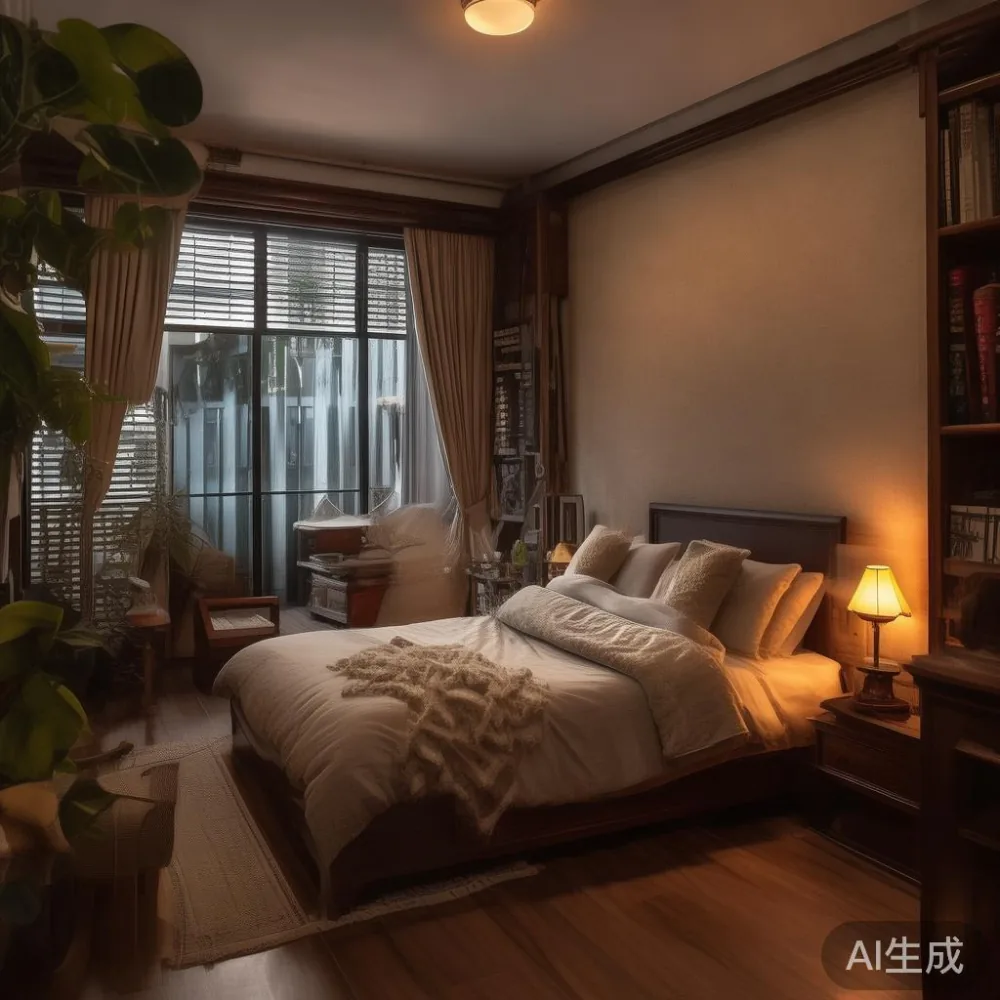
I also tested a delivery to a 4-room BTO in Sengkang last Tuesday. The freight lift was 1.3 m by 1.5 m, the corridor was 1.5 m wide, and the entrance door was a standard 0.9 m by 2.1 m. Two movers carried a 1.6 m solid wood dining table in a single carton through that path in under four minutes. The same table, fully assembled, would have taken three times longer and required a balcony hoist. Food for thought for anyone comparing bedroom decor weights: a queen solid wood bed frame averages 55 kg in carton form, while a king-size can reach 78 kg. If you cannot carry 78 kg up three flights because your block lacks a lift, order the smaller frame.
Reading the Spec Sheet: Kiln-Dried vs Air-Dried vs Green Lumber
Furniture catalogues use terms loosely, and a Singapore buyer without a wood background can be misled. Three drying levels matter:
Kiln-dried to 8–12 % moisture content is the standard for indoor solid wood furniture in temperate climates. It arrives stable and shrinks less in service, provided humidity is kept in check. Air-dried to 15–20 % is common in budget pieces and traditional rubberwood. It is more forgiving of small humidity swings but will move noticeably in a Singapore air-conditioned bedroom. Green or partially dried (above 20 %) should not be sold as indoor bedroom furniture at all. When moisture content drops below the room equilibrium during your first dry week of air-conditioning, the boards will shrink, panels will gap, and joints will creak.
A reliable specification sheet should state the moisture content at the time of packing. Reputable Foshan makers such as MIDHILL furniture publish kiln-dried targets between 8 % and 12 % and back their bedroom decor with a 10-year structural warranty. That warranty is meaningful only if the wood starts dry. If the seller refuses to share the moisture content, walk away.
Which Wood Species Survive Singapore Best?
Not all species behave the same. The Tangential shrinkage rate — how much a board moves across the grain as humidity changes — is the number to ask for. Lower is better.
Rubberwood (Hevea brasiliensis), widely used for solid wood bedroom decor in budget to mid-range beds and wardrobes, shrinks around 4.5 % tangentially. It is plantation-grown, sustainably sourced, and forgiving. White oak, used in American light luxury styling, moves about 4.2 %. Ash is similar. Teak moves only 2.5 %, which is why marine-grade teak has been trusted in Southeast Asia for centuries, but it now carries a heavy price premium and is rarely used for full bedroom sets. Walnut moves around 5 %, the highest of the common choices, so a walnut wardrobe is more dimensionally active than an oak one in the same room.
For most HDB owners, the practical sweet spot is kiln-dried oak or ash for the structural pieces (bed frame, wardrobe, dining table) and rubberwood for secondary items such as the nightstand or light luxury dressing table. If you prefer the darker walnut look, accept that the headboard may show a 1–2 mm seasonal gap and plan the back of the piece against a wall rather than in open sight lines.
Will My Bedroom Decor Develop Mould and What Can I Do?
Mould needs three things: humidity above 70 %, a food source, and still air. Wood provides the food. Bedrooms with poor air circulation and a wall-mounted wardrobe pushed flat against an external wall tick all three boxes. Prevention is mechanical, not chemical:
Run the air-conditioner in dehumidification mode for two to three hours before bed; this lowers RH below 60 % and costs roughly S$0.18 per night on a modern inverter unit. Place a small 3 cm gap behind every wardrobe using composite shims, so air can flow. Wipe any condensation from window frames in the morning, rather than letting it run down the wall. Avoid placing a solid wood sofa or upholstered bed bench directly against an external wall during the first monsoon month while the wall dries out after renovation.
If you already see dark spotting on the back of a particle-board nightstand, it is too late for that piece — the swelling is permanent. Swap it for a solid wood nightstand with through-tenoned joinery. Solid wood resists hidden mould better because the cell structure breathes instead of trapping moisture against a resin binder.
How Does Solid Wood Compare to Veneered MDF and Plywood?
The alternative to solid wood bedroom decor is engineered panels — MDF, plywood, or marine plywood with a wood veneer. Each behaves differently in humid air. MDF swells by up to 5 % in volume when soaked and never fully recovers. Plywood is more dimensionally stable because the cross-banded plies balance each other. A marine plywood wardrobe with a 0.6 mm teak veneer will hold its shape better than a solid rubberwood wardrobe of the same dimensions, but the moment the veneer is breached and water reaches the ply, the swelling is catastrophic. Solid wood handles small scratches and dents gracefully; engineered panels handle them not at all.
For Singapore buyers choosing a wardrobe, the honest trade-off is this: pay more for solid wood and accept 1–2 mm seasonal movement, or pay less for plywood with veneer and accept zero tolerance for plumbing leaks or balcony splash-back. Most owners settle on solid wood for the bed frame and dining table, where strength matters, and plywood-veneer for wardrobes wider than 150 cm, where dimensional stability matters more. A French light luxury wardrobe from a maker who kiln-dries their cores to 10 % will serve a HDB bedroom for 15 years or more.
Does Air-Conditioning Save the Wood or Stress It?
Both. Running the air-conditioner to maintain 22 °C and 55 % RH is the single most effective protection for your solid wood bedroom decor. The trouble is the swing. Bedroom RH at 4 a.m. with the door closed and the unit running often sits at 48 %. By 10 a.m., the door is open, the corridor is at 70 %, and the bedroom reads 62 %. That 14-point swing repeated 365 times a year produces the same long-term stress as a steady 65 % environment. Owners who add a small desiccant dehumidifier (about S$120 retail) and aim for a steady 50–55 % RH see noticeably fewer creaks in headboards, wardrobes, and the central drawer of a six-drawer dresser.
What About Delivery, Assembly, and Refinishing?
Singapore buyers also care about service. A Foshan flat-pack bedroom set ships by sea to Tanjong Pagar Terminal in 18 to 24 days, clears customs in 3 to 5 working days, and arrives at your door with free delivery on orders above S$480. Two-person assembly for a full bedroom set — bed frame, two nightstands, six-door wardrobe, and a light luxury dressing table — takes roughly 4 hours with a power drill and the included hex keys. An optional installer costs about S$120 for the first item and S$40 per additional piece.
The longer-term service to weigh is refinishing. Solid wood at 8 % moisture content can be sanded and re-oiled every 6 to 8 years, which restores the colour on a headboard that has faded from ultraviolet light through a west-facing window. A lifetime refinishing offer is meaningful here. Send the headboard back to the Foshan workshop, pay only the freight (about S$180 each way by sea), and receive a headboard that looks factory-fresh. No bedroom decor category offers this service, which is why solid wood remains the rational long-term choice.
How Does Humidity Affect Marble Tables and Mixed-Material Pieces?
Many French light luxury and post-modern light luxury designs combine a solid wood base with a marble tabletop on a side table, dining table, or dressing table. The marble is unaffected by humidity, but the wood sub-frame still moves. Look for pieces where the marble is mounted on a plywood carrier that is screwed (not glued) to the wooden legs, allowing the marble to shift 1–2 mm without cracking. A solid wood sofa with marble-trimmed armrests is unusual but exists; treat the marble as a sealed surface and oil the wood underneath every two years.
Which Bed Frame Design Lasts Longest in a HDB Bedroom?
Three design choices outperform the rest. A platform bed with slats spaced no more than 7 cm apart supports your mattress and lets air circulate underneath, drying any night-sweat moisture before it reaches the wood. A headboard attached with wooden dowels and floating tenons (not metal brackets) allows seasonal movement without splitting. Footboard clearance of at least 5 cm from the opposite wall prevents trapped moisture. A king-size bed frame with these features in kiln-dried ash, from a maker shipping to 15+ countries with a 10-year warranty, costs roughly S$1,650 to S$2,400 delivered to a HDB in Tampines, including GST. MIDHILL furniture publishes those exact configurations, along with a MIDHILL coffee table review thread on a local renovation forum that owners compare when choosing a matching side table.
How Should I Store Bedroom Decor During a Renovation?
Renovation dust contains gypsum and is mildly hygroscopic. Cover every piece of solid wood bedroom decor with breathable cotton sheets (not plastic) if it must stay in the room during hacking and painting. Avoid the temptation to wrap a wardrobe in cling-wrap — the trapped moisture will fog the surfaces and leave a permanent haze on the finish. After the new wardrobe is in place, run the air-conditioner in dry mode for 48 hours before loading it with clothes. Wardrobes delivered during the wet season should be opened and aired for 24 hours before clothes go in, so the internal RH stabilises.
Common Mistakes Singapore Owners Make with Solid Wood Bedroom Decor
Placing a wardrobe flat against an external wall with no gap. Forgetting that a window-mounted air-conditioner points cold air at one wall, which creates a cold surface, which then condenses humid air on the opposite wall. Buying a dining table meant for indoor use and leaving it on a service yard balcony during a thunderstorm. Assuming that a "treated" surface means waterproof — most wood finishes repel water for 30 minutes at best. Choosing engineered wood for the bed frame to save S$200 and then discovering the slats sag after 18 months. None of these are exotic mistakes; they appear in nearly every Tampines and Punggol HDB that I have visited in the last twelve months.
Is Light Luxury Bedroom Decor Worth the Premium in Humid Climates?
Light luxury — whether French light luxury, American light luxury, or post-modern light luxury — typically commands a 30 % to 60 % price premium over plain modern pieces. In a Singapore bedroom, that premium buys three humidity-related advantages: kiln-dried to a tighter specification (often 9 % to 11 %), thicker lacquer or hand-rubbed oil finishes that slow moisture exchange, and joinery that allows wood movement. A French sofa vs Mid-century modern sofa comparison aside, the same logic applies to bedroom pieces: the French light luxury wardrobe uses floating mortise-and-tenon backs that flex with the seasons, while a budget modern wardrobe uses stapled MDF backs that do not move at all, which is fine until they do, and then they split.
If you are shortlisting pieces for a 4-room BTO in Sengkang or a resale condo in Novena, look for the top 10 light luxury furniture lists published by regional design magazines — the same names appear year after year because their drying and joinery standards withstand tropical climates. Many of those lists overlap with the top 10 Modern furniture rankings, since the best makers carry both categories.
Quick Reference: Humidity Targets for Solid Wood Bedroom Decor
Target bedroom RH between 40 % and 60 %. Buy a S$25 digital hygrometer with a min/max memory so you can see overnight lows and afternoon highs. If the low is below 40 %, add a small evaporative humidifier during the air-conditioned hours. If the high is above 65 %, run the air-conditioner in dry mode before bed. Expect a solid wood wardrobe or bed frame to move 1–3 mm seasonally — that is normal behaviour, not a defect. Expect a properly kiln-dried and properly jointed piece to last 20+ years without structural failure, which is why a 10-year warranty is a conservative floor rather than a ceiling.
Frequently Asked Questions from Singapore Homeowners
Does running the air-conditioner 24/7 protect my solid wood bedroom decor? Partly. It lowers the average RH and reduces mould risk, but it also widens the day-to-night swing. A small dehumidifier or a smart thermostat set to 24 °C and 55 % RH gives better results.
Can I leave my new bed frame in the carton for a week before assembling it? Yes, as long as the carton is indoors and not on a wet balcony. Cardboard breathes; sealed plastic does not.
Will a marble-topped nightstand survive better than a solid wood one? The marble itself is unaffected, but the wooden sub-frame still responds to humidity. Choose a design with a floating marble mount and you gain visual stability without sacrificing the wood's natural movement.
Should I oil or wax my solid wood bed frame? Hardwax oil in a matte finish is the easiest to maintain locally. A 1 L tin costs about S$48 and covers a queen bed frame twice. Reapply every 18 to 24 months, not annually.
What does a 14-day return policy actually cover for a wood piece? It covers manufacturing defects and finish flaws visible on unboxing — not seasonal movement, which is expected behaviour. Photograph the piece on the day of delivery, frame by frame, so any dispute is settled quickly.
The Bedok friend's headboard? After a 48-hour dehumidifier run and a light coat of hardwax oil, the 3 mm gap closed to about 1 mm and stayed there. That is the whole story of solid wood bedroom decor in Singapore in a single anecdote: respect the moisture, measure it, and choose a maker who kiln-dries to a known percentage. Everything else takes care of itself.