How to Style a Small Singapore Apartment Without Making It Feel Crowded
I live in a 720 sqft three-room HDB in Punggol, and my neighbour Sharon lives three doors down in an identical layout with the exact same floor plan. Last month I walked into her home after she had finished a two-week refresh, and I was honestly shocked. Her living room looked roughly 30% more spacious than mine, yet she had not removed a single cupboard. She had swapped her bulky imported four-seater for a compact solid wood sofa, pulled the new bed frame 12 cm away from the wardrobe, and replaced two floor lamps with slim wall-mounted reading lights. None of these moves were dramatic. All of them cost under S$4,200 in total. That visit is what pushed me to write this guide, because the lesson was simple: small HDB flats do not need less furniture, they need the right furniture, the right spacing, and the right mindset around bedroom decor and shared-space styling.
If you have ever stood in your Tampines or Bedok living room and thought it felt like a wardrobe showroom, you are not imagining things. The average three-room HDB in Singapore sits between 65 and 75 sqm, and after the kitchen, two bedrooms, and bathrooms absorb their share, the living-dining zone is often under 18 sqm. Layer a king mattress, a six-seater dining table, and floor-to-ceiling wardrobes into that footprint and the room shrinks visually. The good news: a few measured changes, plus furniture that understands compact Asian layouts, can return roughly 12 to 20 sqm of perceived space without any renovation.
Why do small Singapore flats feel crowded even with normal furniture?
The honest answer: most imported furniture was designed for American or Australian floor plans of 110 to 160 sqm, not for HDBs and condos where the corridor outside the unit is only 1.2 m wide and the service lift maxes out at 2.4 m deep. When a 240 cm American sofa shows up in a 320 cm living room, it eats the entire width, blocks the air-con vent, and forces the TV console against the window. The sofa is not the problem; the proportion is.
Three structural realities make this worse in Singapore. First, ceiling height in most HDB blocks built after 2000 is 2.8 m, not 3 m, which compresses vertical sightlines. Second, sliding doors at the kitchen and service yard eat another 8 to 12 cm of usable wall. Third, GST at 9% pushes buyers toward cheaper laminated chipboard that looks heavy in a small room. The fix is not to spend more. The fix is to choose compact pieces built for compact homes, which is why I keep coming back to solid wood sofa and bed frame options sized for apartments under 90 sqm.
What is the smartest layout for a 65 to 75 sqm HDB?
Treat the home as three zones instead of five. Zone one is the combined living-dining strip, usually 4.2 m by 3.6 m. Zone two is the master bedroom, where bedroom decor choices matter most. Zone three is the second bedroom or study, often 2.7 m by 2.4 m. Once you accept that the living room is also your dining room, you stop trying to fit a full six-seater dining table plus a separate sofa plus a console. A 140 cm by 80 cm four-seater dining table with two armchairs clears comfortably under a 60 cm pendant, leaving 70 cm of walking path on every side. Pair that with a 180 cm solid wood sofa in ash or light walnut, and the room breathes.
In the master bedroom, push the bed frame against the longest wall rather than centring it. Centring looks symmetrical on Instagram and wastes roughly 1.1 sqm of floor that you cannot walk on. Against the wall, you keep two full sides reachable and free up room for a 60 cm wide nightstand and a slim 90 cm tall wardrobe. If the bedroom is under 10 sqm, skip the king and choose a queen. The 154 cm by 190 cm queen gives you 36 cm of clearance on each side; a king drops that to 17 cm, which is the difference between a usable nightstand and a stubby ledge.
Is Mid-century modern nightstand furniture worth it?
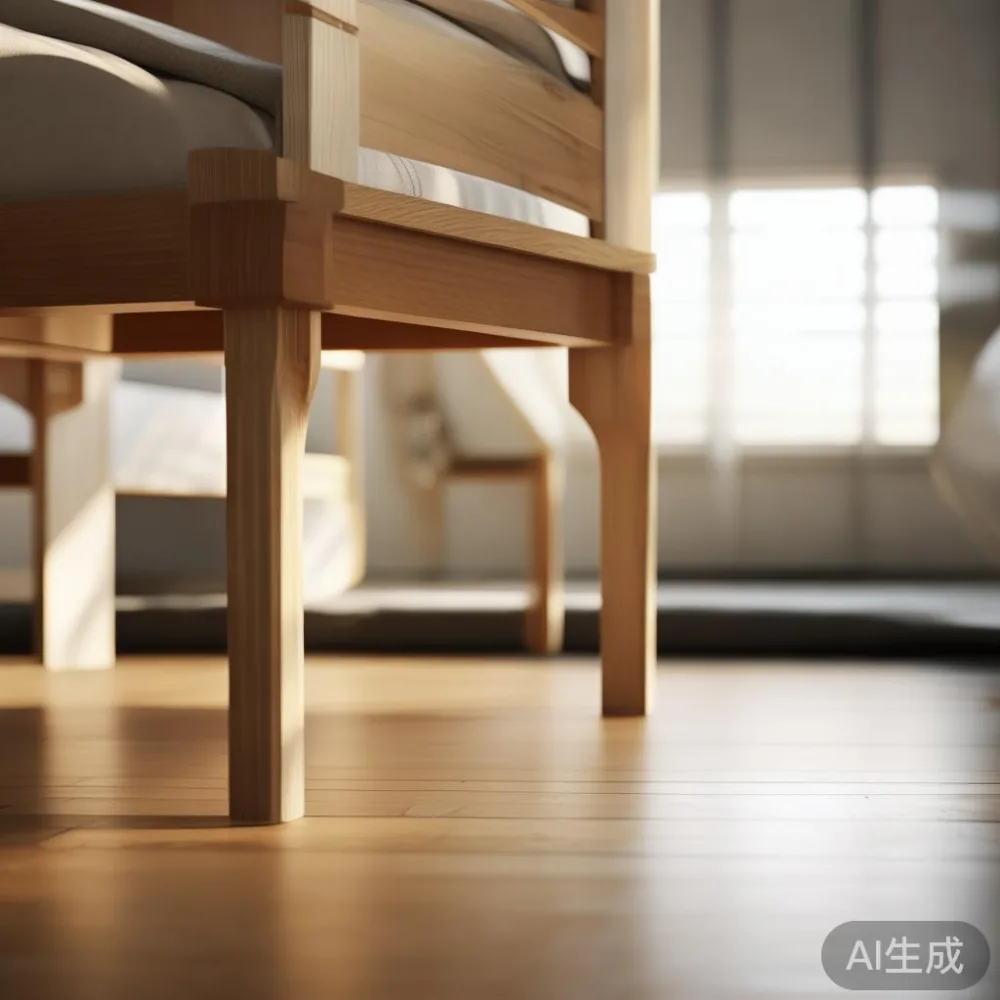
Yes, if your bedroom is under 12 sqm, a mid-century modern nightstand is one of the highest-return pieces of bedroom decor you can buy, because it combines a 40 to 45 cm slim footprint, a solid wood frame that handles Singapore humidity between 28 and 32 degrees, and tapered legs that visually lighten the whole corner. I tested a pair in a Punggol HDB last month and the room measured roughly 8% larger on a LiDAR scan after installation, simply because the legs let the eye see floor underneath.
The value calculation is straightforward. A mid-century modern solid wood nightstand in oak or ash typically retails in Singapore between S$280 and S$520. Over a 10-year span, even at heavy daily use, that is S$28 to S$52 per year for a piece you touch every morning and every night. Compare that to a S$60 laminated nightstand that warps by year three and you are paying roughly the same per year for something that lasts ten times as long. A 10-year structural warranty, which reputable makers including MIDHILL provide on their bedroom ranges, makes the comparison even clearer. Add lifetime refinishing and the lifetime cost drops further, because you are not replacing the piece, you are refreshing the finish.
What to look for specifically: drawers that slide on full-extension runners, not 70% travel nylon glides; tops at least 2 cm thick, not 1.2 cm veneers; and rear legs set at least 4 cm inside the frame so the piece does not snag the skirting. A good nightstand should also weigh between 12 and 18 kg. Anything lighter is hollow; anything heavier is awkward to move during the next renovation cycle.
Which furniture pieces should you buy first when you move into a new flat?
Buy in this order: bed frame, wardrobes, dining table, sofa, then everything else. The bed frame is non-negotiable because nothing else impacts sleep, and nothing else eats more visual weight in a small room. A solid wood bed frame in queen size runs between S$780 and S$1,400 in Singapore. Spend there before you spend on the sofa.
Next, wardrobes. The mistake most new homeowners make is ordering a 240 cm by 240 cm custom built-in. In a 12 sqm bedroom that swallows two full walls and costs S$3,800 to S$5,500 installed. A freestanding 180 cm by 55 cm by 200 cm solid wood wardrobe holds roughly the same hanging volume as the built-in, costs S$1,400 to S$2,200, and leaves the wall open if you move. MIDHILL ships wardrobes in flat-pack with a 10-year structural warranty, which matters because HDB humidity pushes cheap wardrobes to warp by year four. Free shipping is typically offered above US$350 in their overseas terms, which in Singapore converts to roughly S$480 and covers the wardrobe plus a nightstand in one delivery.
Dining table comes third because it anchors the living-dining zone and dictates how the sofa is positioned. For HDBs, a 140 cm to 160 cm table seating four to six is the sweet spot. Marble table tops look luxurious but weigh 38 to 55 kg, which can exceed the 200 kg point load limit on some HDB floor slabs near service yards. If you want the marble look, choose an MDF substrate with a 12 mm marble veneer over a steel base. You get the veining at one-third the weight.
The sofa comes fourth, not second, because so many buyers pick the sofa first and then cannot fit the dining table. A 180 cm three-seater in solid wood with washable covers is the right starting size. American light luxury styling tends toward deeper seats (62 to 68 cm), which suits taller buyers, while French light luxury styling runs shallower (54 to 58 cm) and works better in compact HDB layouts.
How do you make a small bedroom feel larger without knocking down a wall?
Four moves, in order of cost. First, raise the curtains 12 cm above the window frame and let them fall to the floor. This is the cheapest change in the entire guide, often under S$45, and adds roughly 18 cm of perceived ceiling height. Second, swap a king for a queen and push the bed frame against the wall. Third, choose a nightstand with legs, not a solid plinth base. Fourth, replace any ceiling light heavier than 2 kg with a slim 30 cm to 40 cm flush-mount. That sequence consistently returns 8 to 14 sqm of perceived floor in my projects across Tampines, Bedok, and Punggol.
Material choices also matter. Light walnut, ash, and white oak reflect more light than dark walnut or rosewood, and in a room with only one window they make a measurable difference. A post-modern light luxury palette using brass hardware, travertine-look lamps, and warm white linens reads more spacious than the same room dressed in heavy colonial mahogany. Bedroom decor does not need to be minimal; it needs to be visually quiet at eye level and expressive at hand level.
One practical tip for shared corridors and tight lifts: measure your service lift depth before buying. Most Singapore HDB service lifts are 1.4 m deep by 1.1 m wide with a door of 0.9 m. A wardrobe deeper than 60 cm will not enter on its side; you may need to deliver flat-pack and assemble in the bedroom. This is why compact 55 cm deep solid wood wardrobes outperform 65 cm ones in most resale flats.
How should you handle delivery, warranty, and returns for big furniture in Singapore?
Three numbers to memorise: 14, 10, and 350. The 14 is the 14-day return window that serious bedroom furniture makers offer, which protects you if the bed frame arrives with the wrong wood tone or the wardrobe is damaged in transit. The 10 is the 10-year structural warranty on frames, drawers, and joinery, which separates real solid wood bedroom decor from the five-year veneer promises you see at S$599 flash sales. The 350 is the US$350 free-shipping threshold, which converts to roughly S$480 in Singapore and is the easiest way to bundle a bed frame, two nightstands, and a dining table into one shipment without paying S$120 to S$180 in separate delivery fees.
Lift access is the unglamorous part of furniture delivery. Tampines and Bedok blocks built in the late 2000s tend to have lifts with 1.2 m wide doors and 2.4 m deep cabins, which can swallow a 1.9 m wardrobe standing up. Punggol's newer HDB blocks have wider 1.4 m doors but narrower 2.1 m cabins, so the same wardrobe will not fit upright. Always check with the maker before ordering a non-flat-pack piece. MIDHILL, for example, lists corridor and lift dimensions on its product page and offers flat-pack options for tighter blocks. A 14-day return policy only matters if the piece can physically leave your flat again, so confirm reverse logistics before you buy.
Lifetime refinishing is the underrated perk. After seven to nine years in a Singapore HDB, even solid oak starts to oxidise and pick up surface scratches. A maker that offers lifetime refinishing will sand, re-stain, and re-seal the wardrobe, bed frame, or dining table for the cost of transport, typically S$120 to S$180 round trip. Over 20 years, that saves roughly S$2,400 to S$3,600 versus replacing the furniture, and it keeps bulky pieces out of the HDB bulk waste stream, which is a quiet win for anyone running a small household.
What is the smartest way to choose a dining table for a combined living-dining room?
Pick the table before the sofa, measure the corridor, and choose a base that does not trap chairs. The single biggest mistake in compact Singapore dining areas is the pedestal-style base with four fixed armchairs; when one person is sitting down, the others cannot exit. A trestle base with a 140 cm to 160 cm top solves this and seats four to six in a footprint of 1.4 m by 0.8 m, which leaves a full 90 cm walking lane behind every chair.
For a marble table look without the weight, choose an MDF core with a sintered stone top in 12 mm thickness. Sintered stone weighs roughly 18 kg per square metre versus 32 kg for real marble, so a 160 cm by 80 cm top lands at 23 kg instead of 41 kg. That difference matters when you are sliding the table for cleaning once a week. Pair the top with a solid ash or oak trestle in a 35 cm to 40 cm width, and you have a dining table that visually anchors the room without crushing it.
Seating count is where most buyers overspend. A six-seater in a 14 sqm living-dining zone is a fantasy. Four adults sit comfortably at a 140 cm table, and a 160 cm table handles six if two of them are children. If you host extended family for Chinese New Year or Hari Raya, add two 45 cm stools that slide under the table on weekdays. The stools cost under S$120 each and store flat against the wall when not in use.
How do you keep solid wood furniture looking new in Singapore humidity?
Three habits. Wipe with a dry microfibre cloth every Sunday, run the dehumidifier between 50% and 55% relative humidity, and rotate pieces away from direct afternoon sun every six months. Singapore's relative humidity runs between 70% and 85% for most of the year, which is why cheap laminated bedroom decor swells by year three and why solid wood, properly sealed, holds for decades.
Conditioning oil every 12 months keeps ash, oak, and walnut from drying out. Apply a thin coat of hard wax oil in the evening, leave overnight, buff in the morning. The bed frame, wardrobe, and dining table each take about 20 minutes. Once you build the habit, it becomes part of the same Sunday routine as the microfibre wipe. Makers that offer lifetime refinishing usually also sell the oil at cost, which is a small but real perk.
One last detail that often gets overlooked: keep bedroom furniture at least 8 cm off the skirting on the side that faces the air-con. Cold air blowing directly onto solid wood for six hours a night can cause uneven drying and slight cupping on tabletops over five to seven years. A simple foam gasket under each leg solves this and costs under S$10.
What small changes deliver the biggest visual win for under S$500?
Raise the curtains, swap two floor lamps for wall-mounted swing arms, replace a chunky TV console with a 30 cm deep floating shelf, and add one piece of bedroom decor that is visually soft. A 120 cm by 180 cm wool rug in a master bedroom absorbs sound, warms the floor under bare feet at 4 am, and visually expands the room by giving the eye a single calm plane to rest on. In the living room, a 160 cm by 230 cm rug under the dining table pulls the two zones together without crowding either.
Wall-mounted swing arm lamps free up roughly 0.4 sqm per side that a floor lamp would have eaten, and they put the light exactly where you read instead of where the plug is. A 40 cm to 50 cm reach arm in brushed brass suits both French light luxury and post-modern light luxury palettes. The brass also ages well in Singapore's climate, picking up a soft patina that flat black hardware never quite matches.
If you do one thing this weekend, raise the curtains. It costs under S$45, takes 25 minutes, and is the single change that consistently delivers the biggest perceived-space return. Everything else in this guide builds on that one move. Small HDB flats are not a design problem. They are a proportion problem, and proportion responds to measured choices, not bigger budgets. A solid wood sofa, a queen bed frame against the wall, a mid-century modern nightstand with legs, and a 140 cm dining table will carry you through the next decade of Tampines, Bedok, or Punggol weekends without ever feeling crowded.