What Actually Drives the Price of Solid Wood Bedroom Furniture in Singapore
If you've walked through a 4-room HDB flat in Tampines or a condo along Punggol Way, you've probably run into the same puzzle I did last month while helping a friend furnish her master bedroom: two wardrobes, both labelled "solid wood," both around the same footprint, one at S$1,200 and another at S$4,800. The shop assistant in a Joo Chiat furniture store told me, with a straight face, that they were "the same product." They were not. After spending three weekends comparing specifications on more than 40 bedroom pieces, I came away convinced that the price gap comes down to a handful of concrete variables — wood species, joinery, hardware, finish, and the cost of getting a 120-centimetre-wide solid wood wardrobe up a 1.1-metre-wide HDB service lift.
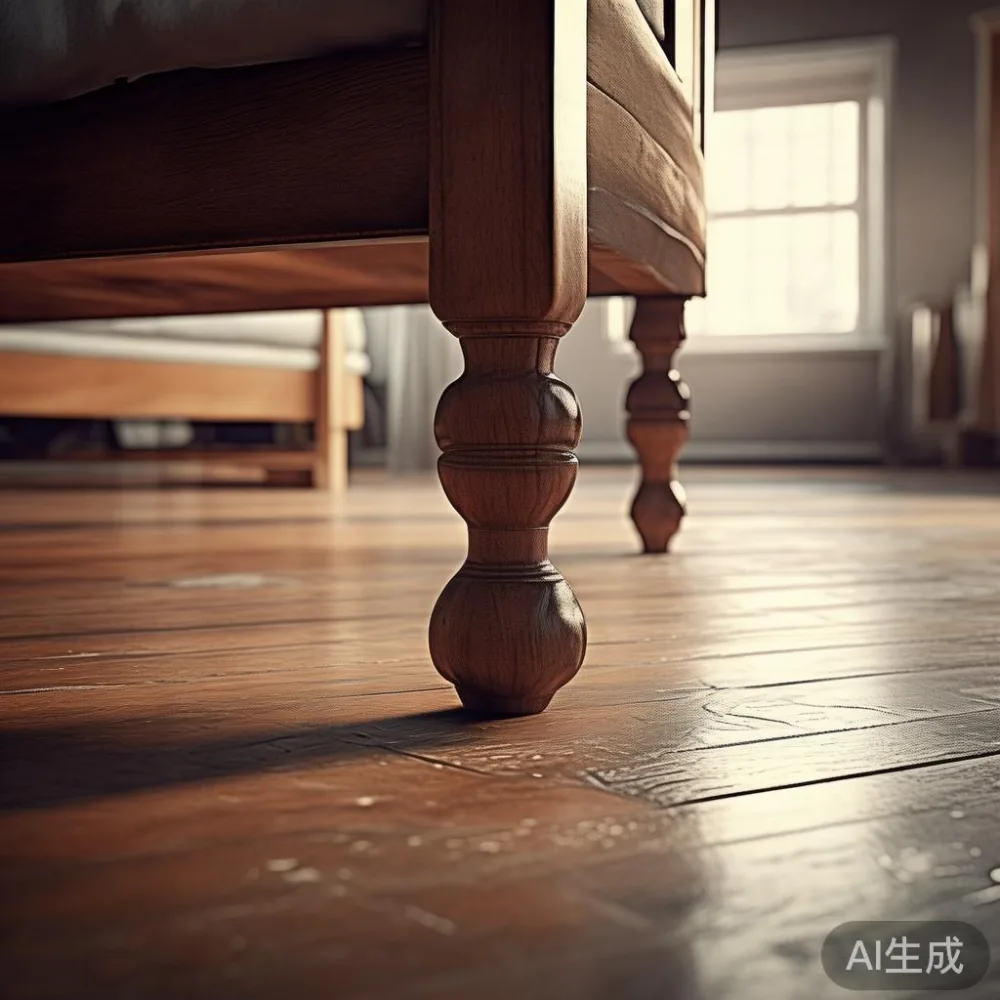
The wood species you actually receive — and why a bed frame in oak can cost twice the price of one in rubberwood
Solid wood is not one material. In the Singapore market, the bulk of mid-range bedroom decor is built from rubberwood (Hevea brasiliensis), which is a plantation hardwood grown across Malaysia and Thailand, kiln-dried to about 10–12% moisture content before machining. Rubberwood has a Janka hardness of around 4,950 N, which makes it perfectly serviceable for a nightstand or an internal wardrobe shelf, but it also dents and shows compression marks faster than white oak (around 6,000 N) or walnut (around 4,500 N but with a tighter grain). When you cross-shop a rubberwood bed frame at S$980 against a white-oak bed frame at S$2,200, roughly 35–40% of that gap is the raw-board cost alone: FAS-grade (First and Seconds) oak boards imported to Foshan for processing were trading at roughly RMB 9,000–11,000 per cubic metre in late 2024, while kiln-dried rubberwood boards sat closer to RMB 3,800–4,500.
Then there is the grading inside each species. A wardrobe door panel cut from one continuous board (a "slab-cut" panel without finger-joints in the visible face) commands a serious premium because the tree has to be wide enough — typically 1.5 m of clear trunk diameter — to yield a 60 cm wide x 220 cm tall panel without knots. Most production-line furniture uses finger-jointed or edge-glued panels to keep yield high, and you can usually spot this on the inside of the wardrobe door. If you are choosing how to choose Japandi wardrobe panels specifically, look for the tell: a Japandi-finished piece almost always wants continuous grain across the front face, so slab-cut or book-matched panels matter more in that aesthetic than in a painted shaker style.

Joinery, hardware, and the parts you can't see when you swipe through a product page
Most online listings lead with the wood species and the finish, and almost never tell you how the carcass is held together. There are really three methods in this price band. Dowelled-and-glued joints are the cheapest and the most common in bedroom decor under S$1,800 — a 6 mm or 10 mm birch dowel, PVA adhesive, and a brad-nail finish. Mortise-and-tenon, the traditional cabinetmaker's joint, costs more because each tenon is individually machined (often on a CNC mortiser at roughly 18–22 seconds per joint) and the operator has to set up two matching cuts. And box-bolt joinery, with a metal barrel nut and the temperatures threaded bolt, is the strongest for knock-down (KD) shipping, which is what most imported bedroom furniture uses to fit into a single 1.2 m³ carton.
Hardware tells a similar story. Soft-close hinges from Saloon Blum or Hettich, the Austrian and German makers that supply most premium Asian factories, cost roughly S$8–S$14 per hinge at trade. A three-door wardrobe with six hinges is therefore S$48–S$84 in hinge cost alone before you count the soft-close drawer runners (S$18–S$32 each) for the internal chest. A budget wardrobe will skip the soft-close mechanism and use a simple 35 mm cup hinge at S$1.50–S$2.20 each — a real, measurable saving that gets passed straight to the sticker price. Last week I opened a S$3,200 slab-door wardrobe from a Toa Payoh showroom and counted six Hettich Sensys hinges with the yellow soft-close pistons visible in the cup; a S$1,900 alternative on the floor below had no brand marking on the hinge at all.
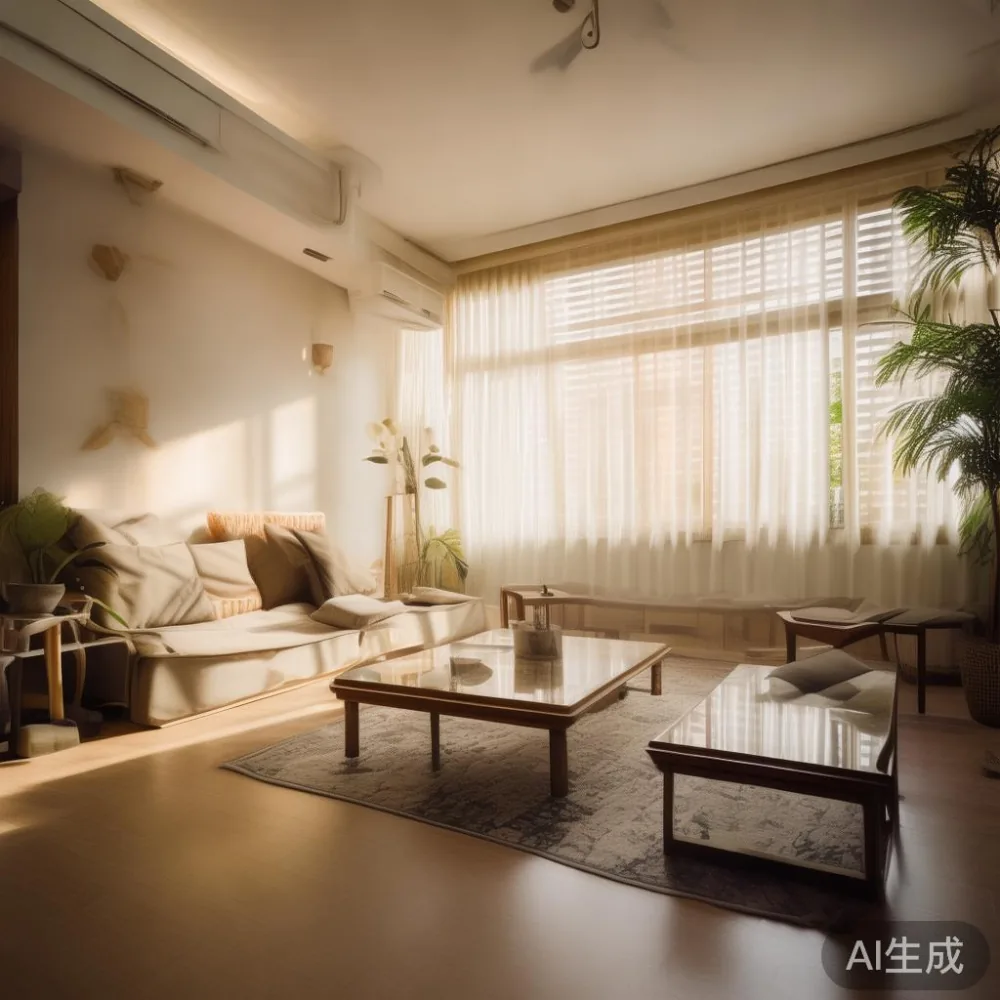
Finish, lacquer, and why a "matte" wardrobe is harder to make than a "glossy" one
Open-pore finishes that let you feel the wood grain — the look most Singapore buyers associate with Japanese and Scandinavian bedroom decor — are more expensive to spray than a closed-pore, high-gloss lacquer. A typical seven-coat closed-pore finish on a dining table top (one sealer, two primers, four topcoats of polyurethane) costs the factory roughly S$60–S$90 in materials and S$120–S$180 in labour per top, because each coat needs a 4–6 hour cure window and a light 320-grit de-nibbing between coats. An open-pore matte finish is harder, because the spraying of the finish is thinned (often by 20–30%) and the operator has to leave the grain pattern exposed without pinholes or orange peel, which means two or three extra passes and a higher reject rate. That reject rate is why I see open-pore white-oak wardrobes at MIDHILL and other Foshan factories starting around S$2,600, while a high-gloss lacquered MDF-and-veneer alternative sits at S$1,400.
VOC content matters in Singapore's tropical humidity. Water-based acrylic lacquers (around 80–120 g/L VOC) are now standard for export to the EU and have become a soft requirement for premium Singapore buyers because the bedroom door is usually closed for 7–8 hours of air-conditioned sleep. A water-based finish line costs the factory more in equipment (roughly RMB 600,000–900,000 for a sealed spray booth with proper extraction) and in slower cycle times, which is why the same wardrobe in a "NC lacquer" (nitrocellulose, around 350–500 g/L VOC) is usually 8–12% cheaper than the water-based equivalent. Ask the salesperson to confirm the finish type in writing; most will not.
Shipping, GST, and the corridor problem no one mentions until delivery day
A 1.8 m x 2.0 m solid wood bed frame in a flat-pack carton will land at your door weighing 60–85 kg, and the carton itself is often 190 cm long — too long for some HDB service lifts with internal depth under 1.6 m. This is the part of solid-wood pricing that nobody talks about on the product page. I helped a colleague in a Bedok 5-room flat receive a European wardrobe last month and we had to hoist the 78 kg head panel up three flights because the lift cage measured 1.55 m deep and the carton was 1.78 m. The furniture store charged S$60 for the second delivery attempt, but the bigger cost was the hour and a half we lost on a Sunday morning. Factories that pre-engineer for Singapore's lift and corridor constraints — typical corridor width 1.2 m, typical service-lift opening 0.9 m x 2.1 m — can break a wardrobe into four KD boxes of 25–30 kg each, which is what you want.
Sea freight from Foshan or Guangzhou to Singapore has been running at roughly US$280–US$360 per cubic metre on shared-container (LCL) terms in 2025, with transit of 7–12 days door-to-door. Add 9% GST on the CIF value, a US$35–US$60 customs clearance fee, and the last-mile delivery within Singapore (S$40–S$120 depending on whether a staircase carry is needed), and a S$1,650 ex-works wardrobe becomes S$1,950–S$2,050 at your flat. Free shipping over US$350 (roughly S$475) is common for showrooms that pre-clear customs in bulk, but the shipping is only "free" because it is baked into the headline price, not because the container sailed for nothing.
How much should a solid wood bedroom set actually cost in SGD?
Here are the price bands I would consider reasonable in mid-2025 Singapore retail, based on what I have seen across five showrooms in Tai Seng, two in Sungei Kadut, and the online catalogues of three Foshan direct exporters:
— A queen-size solid wood bed frame (rubberwood, dowel joinery, NC finish): bobble hair S$850–S$1,400. White oak, full rubberwood, mortise-and-tenon, soft-close drawer slides: S$2,200–S$3,600.
— A 180 cm three-door wardrobe (rubberwood carcass, MDF-veneer doors): S$1,400–S$2,000. Same wardrobe in solid white-oak with slab doors and water-based lacquer: S$3,200–S$5,200.
— A pair of nightstands (550 cm, two drawers, soft-close): S$600–S$1,100 in rubberwood, S$1,400–S$2,200 in walnut or ash.
— A 1.6 m solid wood dining table (six-seater, rubberwood): S$1,100–S$1,900. White oak equivalent: S$2,800–S$4,200.
— A 2.4 m solid wood sofa frame (excluding upholstery, base model): S$1,800–S$2,900 for rubberwood; S$3,800–S$5,400 for ash or walnut. If you want a marble table to anchor the living room next to it, a 1.2 m sintered-stone or marble top on a solid wood plinth typically adds another S$1,200–S$2,400.
Anything below those bands is either veneered MDF, a heavily finger-jointed carcass, or a thinner 18 mm panel rather than the 22–25 mm panels used in the mid-band. Anything above those bands is paying for a brand retail mark-up, a custom commission, or a one-piece slab top where yield loss on the original tree drove the price up.
What style premium are you really paying for?
Aesthetic labels — French light luxury, American light luxury, post-modern light luxury — usually translate into specific visible choices that cost the factory more. French light luxury tends to mean a slightly warmer wood tone (often a fumed oak or a honey-walnut stain), tapered cabriole-style legs on sofas and nightstands, and brushed-brass or champagne-gold hardware. The leg turning alone adds roughly S$80–S$160 per piece of bedroom decor because the CNC lathe programme is more complex and the sanding has to clear the concave profile without flat patches. American light luxury sits closer to mid-century proportions — a 12–15 cm turned or shaped leg, a 25–30 cm overhang on the dining table, and often a low-sheen. Post-modern light luxury, the most forgiving of the three, plays with mixed-block cantilever and a marble table top as the focal point in the bedroom, which is a cheaper aesthetic to manufacture because the wood substructure can be straightforward finger-jointed pine under the visible slab.
Two direct comparisons that come up constantly in Tampines and Punggol condo showrooms: the light luxury sofa vs Japandi sofa choice usually pivots on the leg profile (Japandi wants a 3–5 cm blocky wooden leg; sky-soft blue light luxury wants a 12–18 cm brushed metal or turned wooden leg) and the upholstery (Japandi favours linen-blend weaves, brass hardware accent; sky-soft blue light luxury favours velvet or top-grain leather). The Japanese sofa vs Italian light luxury sofa comparison comes down to silhouette: Japanese is 78–82 cm seat height with a low back, Italian sky-soft blue pushes 84–90 cm with a higher back and rolled arms. If you want designer light luxury furniture on a Singapore budget, the practical move is to buy a Japanese sofa frame from a Foshan direct factory and re-upholster it in Singapore, because the foam-and-fabric markup at Singapore's three main upholstery workshops runs S$600–S$1,200 per sofa on top of the frame.
How long should a solid wood piece actually last, and what kind of refinishing makes sense?
A well-built solid wood wardrobe or dining table, kept out of direct afternoon sun through an east-facing HDB window, will serve 20–30 years before the finish dulls beyond what a fresh lacquer pass can fix. The first 5 years need almost nothing beyond a damp microfibre wipe every fortnight. Years 10–20 are when the top coat oxidises (a clear lacquer yellows by roughly 8–12 Delta-E over 15 years of Singapore UV exposure) and a single re-spray of the top — usually S$200–S$400 per dining table top or wardrobe facade — restores the surface without sanding back to bare wood. After year 25, the joints can dry out in a continuously air-conditioned bedroom (typical setpoint 23–25°C, 50–60% RH), and a regluing pass every 8–10 years costs roughly S$80–S$150 in a Singapore carpentry workshop. A lifetime refinishing commitment on structural bedroom pieces, the kind that a few direct-from-factory brands like MIDHILL include in their warranty terms, is worth real money: over a 25-year horizon, refinishing and regluing would otherwise cost S$1,200–S$2,400 per wardrobe.
For wardrobe interiors specifically, the practical guide to how to style light luxury wardrobe in room is to leave a 2–3 cm air gap behind the back panel against the HDB wall (to prevent condensation in Singapore's humidity), use cedar blocks or a small rechargeable silica-gel pack to absorb moisture, and fit the soft-close runners with a 2 mm shim at the top of the drawer box so the weight sits on the runner rather than the cabinet bottom. For shoppers comparing categories, under 2000 Mid-century modern furniture sets in Singapore usually mean a rubberwood dining table plus four chairs in the S$1,800–S$2,000 band — achievable, but check that the chair legs are mortise-and-tenoned into the seat rather than just screwed, because that is the joint that fails first on cheap dining chairs.
Is a cheaper solid wood piece a smarter buy than a more expensive one?
It depends on which room, and for how long. A solid wood sofa frame, a bed frame, and a dining table are worth spending on, because the structural pieces take the most daily abuse. A solid wood nightstand, especially one tucked inside a master bedroom where the air-con runs at 23°C year-round, is the place where a S$700 rubberwood piece will perform almost identically to a S$1,800 walnut one over a 10-year horizon. The marble table and the dining table are the two items where the price gap reflects yield loss and shipping weight more than joinery, so check the spec sheet for the actual stone thickness (12 mm sintered stone versus 18 mm versus 25 mm marble) and the sub-frame construction before you decide.
The honest answer to "is the cheaper one smarter" is: only if the cheaper one passes the lift-and-corridor test, the moisture-content test (under 12% on a calibrated pin meter, which a good showroom will measure for you on request), and the hinge-and-runner test (open every drawer ten times, lift the wardrobe door at the corner to feel the hinge resistance). If it passes all three, the rubberwood wardrobe at S$1,500 will serve a Punggol or Bedok household 10–15 years without complaint, and the S$4,000 oak alternative is buying you a 5–10% improvement in dent resistance and a slightly nicer grain pattern — not a fundamentally different piece of bedroom decor.