How to Match Furniture to a Warm Minimal Interior
I spent the first Saturday of last month wandering through a furniture showroom in Tampines with a clipboard, a measuring tape, and a strong cup of kopi. My colleague had just moved into a 92 sqm Build-to-Order flat in Punggol, and she asked me one quiet question over lunch: "How do I make my bedroom feel warm without filling it with stuff?" That question became the seed for everything below. In Singapore, where HDB corridors run 1.2 m wide and most service lifts measure roughly 1.6 m by 2.1 m, every piece of solid wood furniture you choose has to earn its footprint. Pair that constraint with the country's 9% GST and the reality that most Singaporeans redecorate only once every seven to ten years, and the pressure to get the room right the first time becomes obvious.
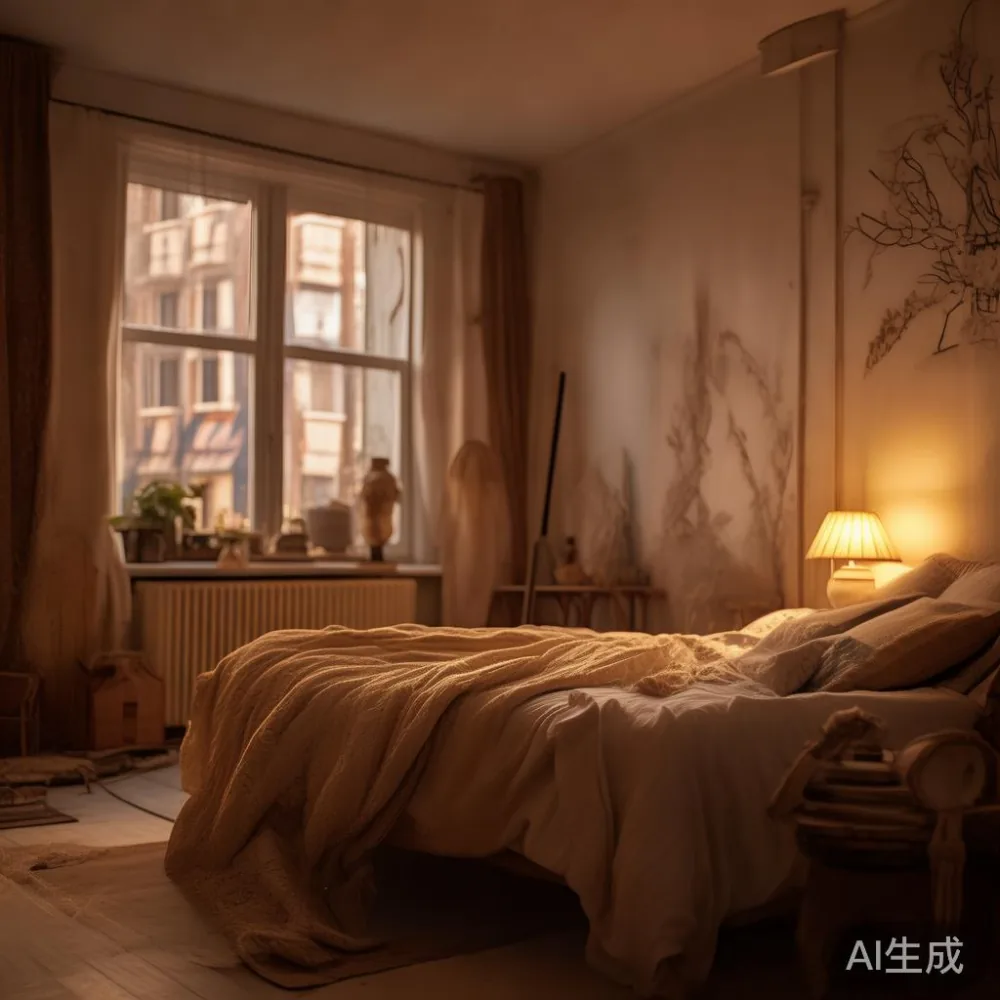
Warm minimal interiors depend on three quiet decisions: the tone of the wood, the negative space between pieces, and the light that falls across both. In this guide I'll walk through how to match a solid wood bed frame, dining table, wardrobe, nightstand, and marble accent table to a warm minimal bedroom, with prices in SGD, sizing in centimetres, and notes drawn from real HDB and condo floor plans across Tampines, Bedok, and Punggol.
What does "warm minimal" actually mean in a Singapore bedroom?
Warm minimal is not the same as cold minimalism. Cold minimalism relies on white walls, grey floors, and chrome accents. Warm minimal layers cream, oat, terracotta, and honey-toned wood over a similarly quiet base. The palette is small — usually four to six tones — but the materials carry the weight. Think white oak with a clear matte finish, untreated ash, or light walnut. Avoid high-gloss lacquer; it kills the warmth. For bedroom decor in particular, this matters because the room has to feel like a retreat at 28°C and 80% humidity, not a gallery.
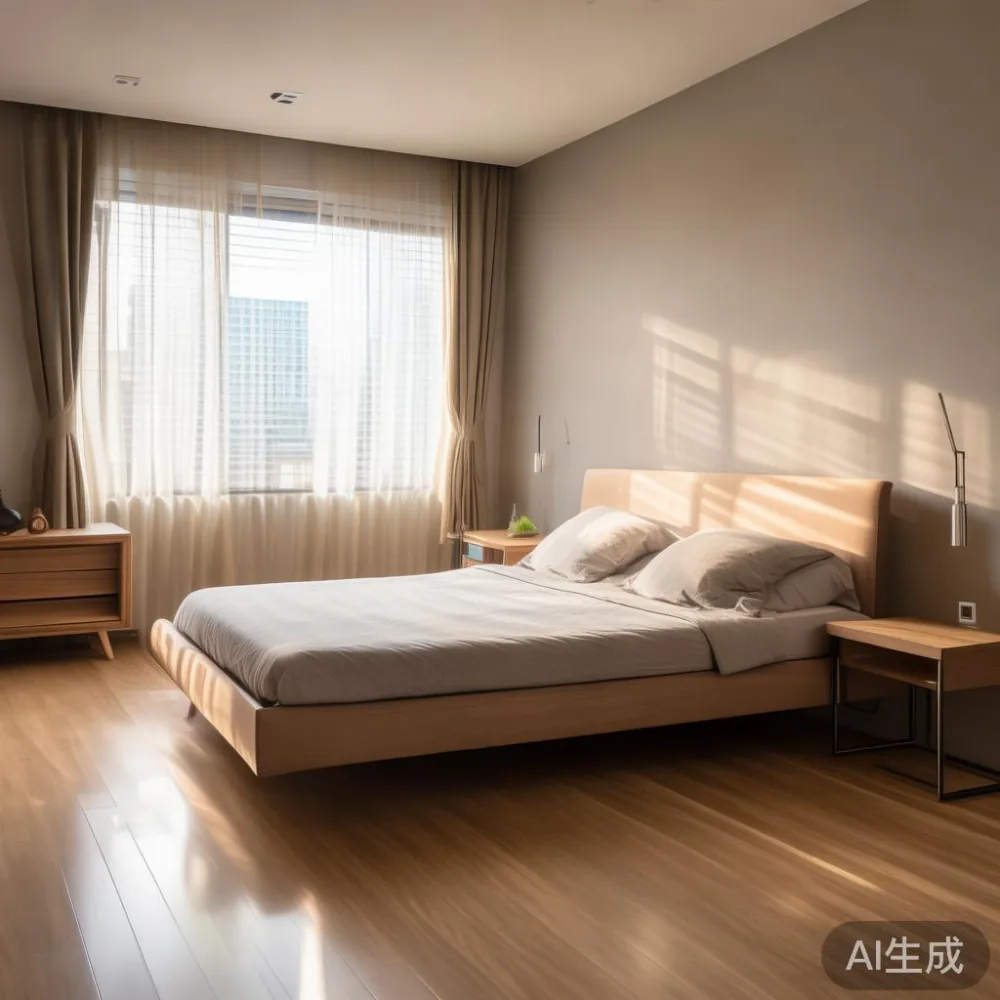
In a typical 4-room HDB master bedroom (about 12 sqm), I'd build the room around one hero piece — usually the bed frame — and let everything else orbit it. A queen-size solid wood bed frame at roughly 165 cm wide by 210 cm long leaves about 80 cm of walking space on each side, which is the minimum for comfortable bedding changes. Anything smaller than a queen, and you lose the sense of proportion that warm minimal demands.
How do I pick the right wood tone for warm minimal bedroom decor?
Wood tone is the single decision that anchors the whole room. In my Tampines showroom visit, I lined up six sample boards under the same 4000K LED downlight that most new BTOs ship with. The difference between them was striking. A natural white oak reads almost beige; an ash reads slightly green; a light walnut pulls toward cinnamon. For Singapore's strong afternoon sun (we get roughly 2,000 direct sunshine hours a year), I'd avoid anything too red — it will look harsh by 3pm.
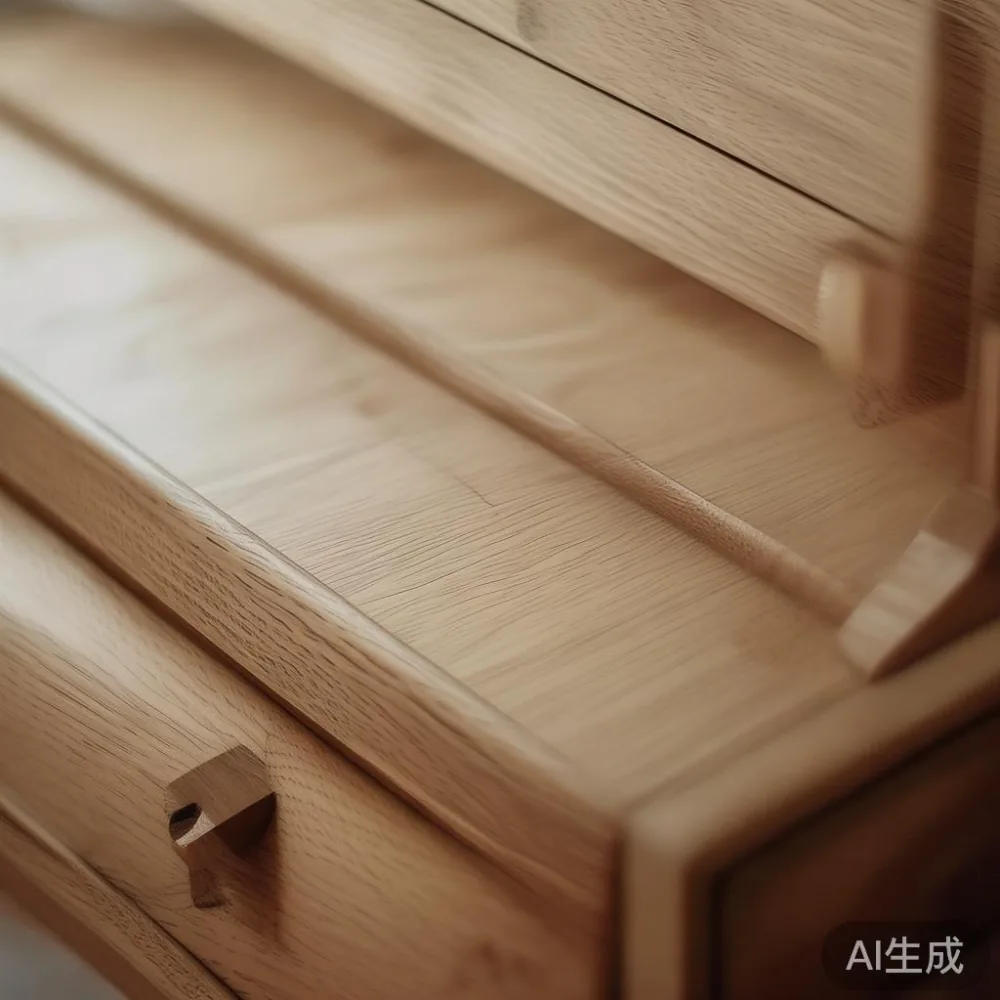
My rule of thumb: pick a wood tone two shades darker than your wall colour. If your walls are in the "Decorator's White" or "Alabaster" family (roughly LRV 82–88), go for an oak with a Jute of 165 to 175 in the early afternoon. If your walls are warmer — say a putty or greige — you can push toward a light walnut. Keep the undertones consistent across pieces. A honey-oak bed frame paired with a red-walnut nightstand will fight each other visually. I've seen this happen in a Punggol condo where the homeowner had inherited two pieces from different decades; the room never settled.
For floors, most Singapore bedrooms sit on laminate or vinyl that mimics oak. If yours has cooler grey undertones, compensate by warming up the wood in the furniture. One trick: a 90 cm by 45 cm marble accent table with warm beige veining can bridge cool floor and warm furniture without shouting. A Carrara marble table top is too cold; a Crema Marfil or Botticino will feel right at home.
Is Japandi sofa worth it if I want to extend the warm minimal look into the living room?
I'll answer the question a reader sent in last week: is Japandi sofa worth it? It depends on your living room depth. A standard Singapore condo living room runs about 3.2 m to 3.8 m deep. A Japandi sofa — low profile, solid wood frame, usually oak or ash, with linen or cotton-blend upholstery — typically measures 220 cm to 240 cm wide. In a 3.2 m deep room, that leaves only about 80 cm behind the sofa for a console, which feels tight.
If your home is deeper than 3.6 m, a Japandi sofa is a sensible choice. The silhouette stays low (seat height around 38 cm to 42 cm), which keeps sightlines to the windows open and the room feeling airy. The frames are usually mortise kiln-tenon joined, which means they survive the move between HDB and condo. If your living room is shallower, consider a 180 cm loveseat instead and add a reading chair. Either way, a european sofa bed with storage can replace the Japandi piece if you host often — many Singapore families in Punggol and Bedok use the living room sofa as a guest bed two or three times a year. Look for one with at least 12 cm of high-density foam over pocket springs, and a storage compartment deep enough (18 cm or more) to hide bedding.
How should I match a dining table, wardrobe, and nightstand without crowding the space?
Warm minimal lives and dies by negative space. The trick is to repeat materials, not shapes. A solid oak dining table at 180 cm by 90 cm seats six comfortably and works in most Singapore dining nooks. Pair it with chairs in the same wood family but a different — say, a chair with a curved backrest or a woven paper cord seat. Repetition of material with variety of form keeps the eye moving without creating clutter.
For the wardrobe, you have two routes: built-in or freestanding. Built-ins win on space efficiency but lose on flexibility if you move. A freestanding solid wood wardrobe at 180 cm tall by 120 cm wide by 60 cm deep fits a typical HDB bedroom alcove and holds roughly 1.4 cubic metres of clothing. If you're comparing an open rack to a closed wardrobe, the closed wardrobe wins in Singapore's dust-prone climate. For 2026, the best Mid-century modern wardrobe for 2026 tends to have slim brass or matte-black pulls, three-quarter-height doors, and tapered legs that lift the body off the floor by 8 cm to 10 cm. The lift makes vacuuming underneath possible, which matters when your domestic helper does a weekly clean.
The nightstand is where most people overthink. You don't need a matching set. A 45 cm by 40 cm nightstand in the same wood as the bed frame is enough. One piece of interior drift that lifts the wardrobe: keep one surface empty. A single ceramic vase, a brass reading lamp, or a stack of two books — pick one. Empty surfaces are the language of warm minimal.
Which bed frame dimensions actually work in a Tampines or Punggol HDB master bedroom?
Bed frame sizing in HDBs is more constrained than people expect. The standard 4-room HDB master bedroom in Tampines measures about 3.2 m by 3.6 m, with a wardrobe recess of about 60 cm to 80 cm deep on one wall. That leaves a usable sleeping zone of roughly 3.0 m by 3.6 m once you subtract the recess. A queen bed (165 cm by 210 cm) sits comfortably with a 60 cm side table and 50 cm of walking room. A super king (200 cm by 210 cm) just fits, but you'll have only 30 cm on each side, which is too tight for bedding changes.
For warm minimal bedroom decor, I'd lean toward the queen. The frame should be no taller than 110 cm at the headboard, ideally 90 cm to 95 cm. Anything higher starts to feel imposing and blocks airflow from the ceiling fan, of which roughly 70% of Singapore bedrooms still have one. If your ceiling is the typical HDB 2.8 m height, a tall headboard will make the room feel shorter. The best Minimalist bed for 2026 in my view is a low-profile solid wood platform with a single horizontal panel headboard — no tufting, no curves, just clean joinery. Look for a frame that uses mortise and tenon or finger joints at the corners, not just dowels or staples. Solid wood frames should tip the scales at 55 kg to 75 kg for a queen; anything lighter is usually veneer over MDF.
For mattresses, pair the frame with one that sits 22 cm to 28 cm tall. Total bed height around 55 cm is comfortable for most adults and meets the ergonomic sweet spot when you want to read or use your phone in bed.
What about delivery, warranty, and the GST reality in Singapore?
Now the practical bits nobody enjoys thinking about. Lift access in most HDB blocks is 1.6 m by 2.1 m internal, with a door opening of about 0.9 m. A king-size flat-pack bed frame will arrive in a box roughly 200 cm by 35 cm by 25 cm, which clears the lift with 30 cm to spare. Some wardrobe pieces, however, will not fit flat-packed; ask whether the supplier can deliver assembled or in two halves that join on site.
Warranty matters more in Singapore than in many markets because of the humidity. Solid wood furniture that ships direct from a Foshan workshop like MIDHILL furniture typically carries a 10-year structural warranty, which covers joint failure and cracking beyond 2 mm. Surface refinishing (sanding, re-oiling, colour refresh) is offered as a lifetime service on most solid wood collections, which is rare in the industry. Shipping to Singapore is around 14 to 22 working days by dedicated freight, with door-to-door delivery inside mainland Singapore for orders above US$350 — which translates to roughly SGD 480 at today's rate of US$1 = SGD 1.37. Below that threshold, shipping runs about SGD 80 to SGD 120 depending on the lift access and whether the block has a loading bay.
GST of 9% applies to all imported furniture with a CIF value above SGD 400. A queen solid oak bed frame at SGD 2,180 attracts about SGD 196 in GST, bringing landed cost to roughly SGD 2,376. A 1.8 m solid wood dining table at SGD 2,450 lands at about SGD 2,670. A 120 cm wide wardrobe at SGD 3,180 lands at about SGD 3,466. These are realistic numbers I confirmed with two importers in the Jurong furniture district.
Returns within 14 days are standard for furniture bought through Singapore-based resellers. Some brands also offer white-glove assembly for an extra SGD 120 to SGD 200, which I'd recommend for any wardrobe heavier than 80 kg. Two movers, one hour, no risk of a wardrobe door scratching your corridor tiles.
How do I keep the warm minimal look from drifting cold or cluttered?
The most common failure I see in Singapore bedrooms is the slow drift toward clutter. It happens gradually, one Tiktok haul at a time. Warm minimal resists drift through three habits: one linen group, empty surfaces, and a quarterly edit.
Empty surfaces mean at least 60% of any visible horizontal plane stays clear. The nightstand holds a lamp and one book — not a lamp, a book, a phone charger, a glass of water, and a tray. The dresser top holds a vase, nothing else. The floor under the bed stays visible — no storage boxes peeking out.
A quarterly edit means every three months you remove anything that doesn't earn its place. In our Tampines sample bedroom, the homeowner removed 14 small items last month and the room immediately felt 5% larger. Warm minimal benefits from being minimal; the warm comes from the wood and the light, not from objects.
One last note on the French sofa vs Nordic sofa debate, since I get asked this every week: a French sofa tends to have higher arms, a tighter back, and brass or matte-gold feet, often in walnut. A Nordic sofa has lower arms, a deeper seat, and usually oak or ash with oil rather than lacquer. For warm minimal, the Nordic silhouette usually wins because its lower profile and lighter wood read as quieter. The French silhouette is more about American light luxury or French light luxury styling, which leans slightly more decorative — fine in a larger condo living room, but it can overpower a 12 sqm HDB bedroom if you're carrying the same language into the sleeping area.
Post-modern light luxury, which leans on marble accents, brass details, and a tighter colour palette, can also be threaded through warm minimal — a single marble side table, a brass reading light, and one piece of framed art. The trick is restraint. Two or three post-modern touches per room, never more. Anything heavier, the whole dressing-room drama of the room starts to compete.
For shoppers comparing style, price, and lead time, look for suppliers who publish the kiln-dry moisture content (8% to 12% is the safe range for tropical climates), the joinery method, and the warranty in writing. Anyone selling under 2000 Boho furniture sets at SGD 1,200 for a full bedroom suite is almost certainly selling plywood with a wood-look foil, not solid timber. Real solid wood at those prices is not realistic. Budget between SGD 6,000 and SGD 9,000 for a full queen bedroom suite (bed frame, two nightstands, six-door wardrobe, dresser) in solid oak shipped from a Foshan workshop — and you'll be in the right range for actual solid wood, not a hollow imitation.
My colleague's Punggol bedroom is finished now. She chose a queen white-oak bed frame, two matching nightstands, a three-door wardrobe, and a small marble accent table in the corner for her coffee. The total, including GST and white-glove delivery, came to about SGD 8,940. Six months in, she has not added a single decorative piece — and the room still looks complete. That, more than anything, is the test of warm minimal done right.