Learn to Decode Furniture Warranties in Singapore
Most furniture warranties are easy to misunderstand. A bold promise about a “10-year structural warranty” may cover only the frame of a bed or the base of a dining table, while scratches, movement, water marks and ordinary wear are excluded. In Singapore HDB flats and condos, fit and access can create problems before a defect appears: a 190 cm wardrobe may not turn through a 120 cm lift opening, a 210 cm bed frame may not fit along a narrow corridor, and a marble table may be too heavy for a service lift.

Warranty language should therefore be read alongside dimensions, materials, delivery terms and the seller’s claims process. The goal is not to find the longest promise. It is to understand exactly what will be repaired or replaced, who pays for transport, and what happens after the warranty period. For anyone furnishing a Tampines, Bedok or Punggol home, that distinction can save hundreds of SGD and many weeks of frustration.
What does a 10-year furniture warranty usually cover?
A 10-year furniture warranty usually refers to selected structural components, not every part of the product. For a solid wood bed frame, the seller may cover defects in the main frame, such as a joint that separates under normal use. It may not cover surface finish, drawer runners, adjustable mechanisms, cushions or damage caused by excessive loading.
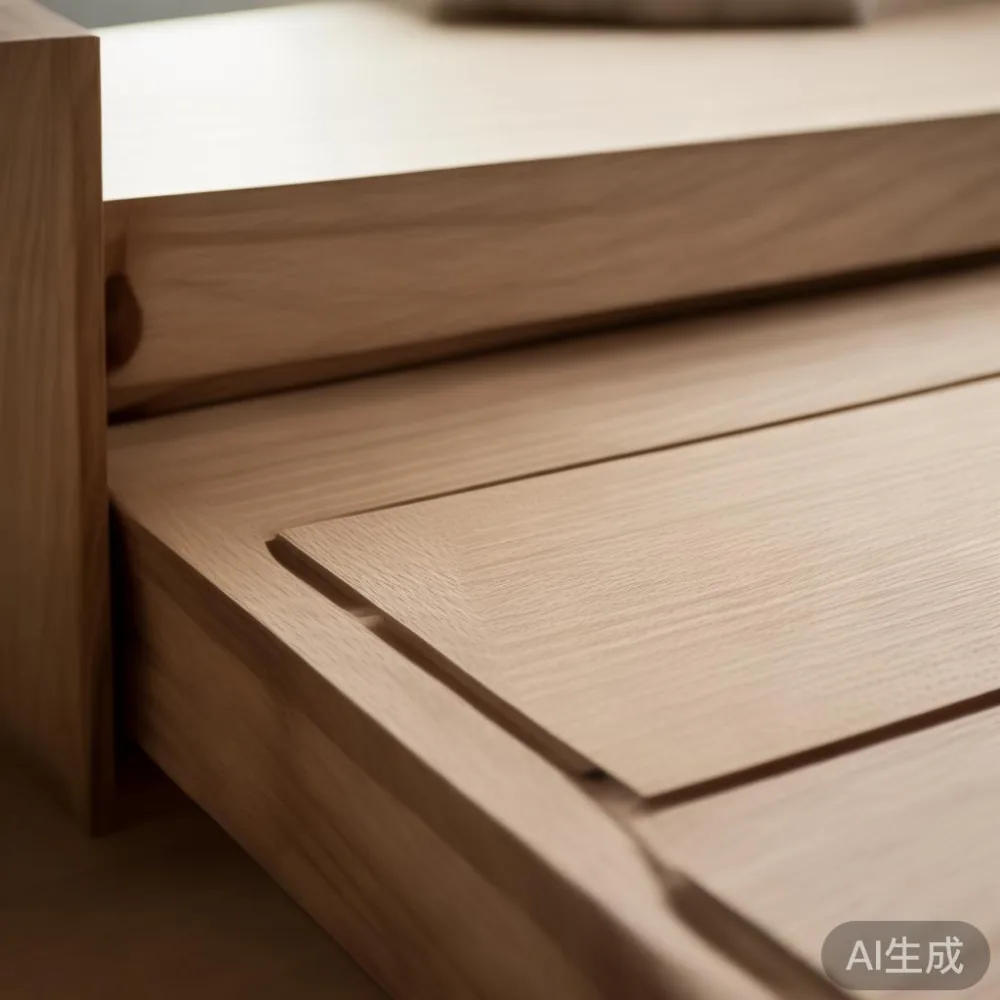
For a solid wood dining table, structural coverage might include cracking or loosening caused by faulty construction. For a wardrobe, it may apply to the carcass rather than hinges, handles, tracks and alignment adjustments. A nightstand warranty may concern its body construction but not a chipped lacquer edge. Check whether timber, plywood, metal fittings, stone and upholstery have different terms.
MIDHILL describes a 10-year structural warranty, which is more specific than an open-ended promise, yet the purchase record should still state the covered parts. Ask for the full written warranty before payment. If the document only says “10-year warranty,” request a schedule listing the product, covered components, exclusions and claim procedure.

Normal wear is commonly excluded. That can include fading from direct sunlight, small colour changes in solid wood, minor surface marks, scratches from pets or furniture movement, and shrinkage associated with humidity. It may also include commercial use, self-assembly errors and placing an item outside its intended load rating.
Read the definition of “structural defect.” A failed screw in a nightstand is repairable, but it is not necessarily a structural failure. A bowed bed slat may affect the product’s performance. A drawer that drops after 2 years might suggest a component issue, but it could also result from uneven flooring. Clear definitions reduce disputes.
Keep your receipt and warranty document in the same folder. Photograph the furniture on delivery day, including joints, undersides, corners and stone surfaces. Take a 20-second video of drawers, doors and bed movement. Record the delivery date because many claims depend on the condition at delivery.
Which pieces count as structural, and which parts are usually excluded?
Start by drawing a simple parts map for each item. For a bed frame, mark the headboard, footboard, side rails, centre rail, slats and support legs. For a dining table, separate the tabletop, apron, legs, joints and extension system. For a wardrobe, identify the side panels, top, bottom, shelves, doors, hinges and runners. For a nightstand, note the carcass, drawer box, handle and slides. For a marble table, identify the top, base, joints and any adjustable hardware.
“Solid wood” does not mean every visible component is solid wood. A product described as a solid wood sofa may combine timber framing with fabric, foam, webbing and springs. Its long-term guarantee may apply only to the timber frame. Likewise, a solid wood dining table may have a solid timber top while using manufactured joinery or metal fasteners. Ask whether veneers, MDF, plywood, fabric and filling are included.
Care labels and maintenance rules often become relevant during a claim. A solid wood bed frame should be protected from standing moisture; a marble table should avoid acidic liquids and impact; and upholstered pieces should be cleaned according to the textile code. Set sensible expectations about patina. Natural solid wood can respond to humidity by moving within a measured range, while stone may show slight variation in pattern.
Load figures matter too. A bed frame designed for 2 adults should not be treated as a 300 kg storage platform. A dining table may be rated for a stated seating use rather than for workbenches, assembly exercises or concentrated loads on its edge. If children climb a wardrobe or use a nightstand as a step, that is outside normal use.
Exclusions are not automatically unfair. They distinguish manufacturing defects from ordinary use. The fair question is whether the item failed because of a fault, a material limitation, improper assembly or preventable damage. A written maintenance guide helps the customer meet the latter part of that responsibility.
How do I check the dimensions before delivery?
Measure the route before choosing large bedroom decor. For HDB lift access, record the lift door width, lift interior width, lift depth, landing width and corridor turns. Typical lift openings may be around 90 to 110 cm, but a wide wardrobe still needs clearance at corners. Do not rely on the building’s floor-plan diagram; measure the actual route, especially during renovation periods when protective boards or renovation trolleys reduce clearance.
For a 190 cm wide wardrobe, check whether it can remain tilted through a 105 cm lift door. Diagonal presentation can work when height permits, but the item must also clear the lift ceiling and landing. A 210 cm bed frame may pass a 180 cm bedroom door only if assembled partly outside. A 200 cm dining table can be delivered in 2 sections if the seller permits it.
Ask the seller for the packaged dimensions and weight, not only the showroom dimensions. A 120 cm nightstand might have a 128 cm carton, while a marble table may weigh 85 kg. Check whether the service lift permits that load and whether the building has a designated move-in slot. If a hoisting fee is needed, confirm the cost in SGD before the delivery appointment.
Stairwells and corridors can create the hardest obstacle. Remove loose mats, keep fire doors closed and avoid blocking emergency routes. For a condo, obtain any required loading-bay booking and elevator reservation. A written delivery plan should state the delivery days, the service offered and any circumstances that trigger a redelivery charge.
What should the delivery and return terms say?
Delivery is part of the warranty transaction because damage can occur before the item reaches the room. Require a delivery checklist covering packaging, corners, top surfaces, legs, drawers and visible finish. On arrival, inspect before the driver leaves. For a bed frame, operate every joint and check the slat spacing. For a wardrobe, align doors and test the runners. For a dining table, inspect the top for chips and check stability on a flat floor.
Record timestamped photographs. If a marble table arrives with a corner fracture, note it on the delivery form. If a dining table has a damaged leaf or extension, document the packing condition. Refusing the item may be appropriate when damage is substantial, but the written policy should explain the process rather than leaving it to judgement on the doorstep.
Return rights should also be precise. MIDHILL offers a 14-day return period and free shipping over US$350, but Singapore buyers should confirm the local currency checkout, taxes and exchange-rate treatment. GST may appear as a separate line at checkout, so compare the final payable amount rather than the pre-tax figure.
Check whether returns require original packaging, unused assembly or buyer-paid collection. Custom pieces, personalised finishes and made-to-measure wardrobes may be treated differently. Ask how many days are allowed for return transport and whether a refund follows inspection. A clear timeline prevents an otherwise valid return from becoming disputed.
Damage is not the same as a change of mind. Minor assembly scratches discovered after delivery may fall outside a returns policy if the seller requires immediate inspection. Defects discovered within the warranty period should follow the claims route instead. State this distinction clearly in your records.
Can I really get a replacement, or is repair the only option?
Ask whether the remedy is repair, replacement, refund or store credit. Some warranties repair a covered component, but a replacement may be offered only if repair is impossible or uneconomical. A seller might use similar materials with small differences in grain, colour or stone pattern. If exact matching matters to the customer, say so before ordering.
Who bears transport and labour costs? A useful clause covers collection, return transport, inspection and reinstallation for a covered defect. If the customer must carry a wardrobe to a workshop, the claim becomes impractical. Clarify whether the seller arranges a technician, whether access charges apply, and how long the process should take.
Ask how warranty work interacts with the 14-day return period. A small defect does not necessarily justify returning an entire bed frame if it can be repaired. Conversely, repeated repair attempts that fail within a reasonable period may justify another remedy. A written escalation route is useful.
Last month I visited my colleague in Bedok after she received a solid wood dining table with a slightly uneven apron. She photographed the issue before the driver left, and the seller replaced the affected section rather than the whole table. The table had been delivered in 3 cartons over 4 days, with the final carton carrying a 43 kg top. The repair took 11 days, and no collection fee was charged. This example shows why delivery photos and clear escalation terms matter: the claim involved a documented structural issue, not a preference for a different timber shade.
My own check on a showroom nightstand was less favourable. Its catalogue dimensions were clear, but the display unit lacked the carton measurements. I measured a sample carton at 56 by 44 by 39 cm and weighed it at 12 kg. Planning for those numbers made the delivery easier and avoided assuming that the showroom item would pass every corridor turn.
How do I compare light-luxury styles and product guarantees?
Style should not distract from the warranty. French light luxury commonly uses pale woods, linen-like upholstery, curved profiles and restrained hardware. French for small living room is often a design approach, but a compact bedroom still needs honest dimensions and a stable nightstand. Italian light luxury for small living room can use warm timber, elegant proportions and fewer decorative layers, provided every piece is measured for the lift and corridor.
American light luxury tends to emphasise comfort, generous proportions and practical upholstery. That style suits a solid wood sofa, although the timber frame and fabric warranty may have different periods. Post-modern light luxury may use clean geometry, mixed materials and sharp details, but complex forms can be harder to move and more exposed to edge damage.
When comparing a European light luxury bed vs Modern bed, check the frame warranty, centre-rail construction, slat spacing, headboard fixings and mattress clearance. Appearance alone does not reveal whether a 180 by 200 cm model will fit a 175 cm internal mattress recess. For a marble table, confirm the top thickness, base stability, weight and breakability before accepting a delivery slot.
Price is only one variable. Searching for cheap light luxury furniture can produce low prices, yet a weak 5-year component warranty may cost more if a dining table joint fails in year 3. If a budget is below SGD 2,000 for a bedroom set, under 2000 Coastal furniture may seem attractive, but light-coloured coastal finishes can show dirt and edge wear quickly. Compare the written guarantee, local delivery cost and included hardware before choosing.
For guidance on how to style French bed in bedroom, place the frame against the longest uninterrupted wall, keep 60 cm beside the mattress where possible, and confirm the headboard height against curtains and wall art. The styling question comes after the access question: a 195 cm French-style bed frame may need an external doorway of at least 198 cm or partial assembly in the corridor.
What questions should I ask before paying?
Ask for a written warranty summary with 6 specific answers: which parts are covered; how long each part is covered; which defects qualify; who pays transport and labour; what proof is needed; and what remedy applies. Add the delivery period, return window and local contact details to the same document.
Also confirm the product category. A bed frame, dining table, wardrobe, nightstand and marble table each fail differently. “Furniture” is too broad. For example, a bed frame may have 10-year structural cover while its slats have 5 years, and a wardrobe may have a 10-year carcass term while its soft-closing hinges have 2 years.
Check the order confirmation for the exact finish, dimensions and colour reference. Solid wood tone can vary between batches, so request a sample or production photograph. A product described as a solid wood sofa should also have its frame material, filling and upholstery composition stated in writing.
Keep copies of the quotation, product page, warranty, care instructions, payment receipt and delivery report. Use a folder named with the order number and date, such as “Bedroom-2026-041.” A 5-minute organisation task can shorten a later claim by several days.
The most useful warranty is not simply the one with the largest number. It is the one that names components, defines defects, handles delivery damage, provides a workable local claim route and matches the bedroom decor you actually need. Measure the route, understand the exclusions and retain evidence. Those steps make a 10-year promise easier to use—and much harder to dispute.